Behind The False Front
Flat roofs hide behind tall storefront parapets, where the inside face of the wall and its base flashing take the runoff. The inside face of the wall needs as much attention as the roof.

Commercial roof repair in Tombstone for historic storefront buildings, with leaks held in check out of sight while visible work waits on approval.
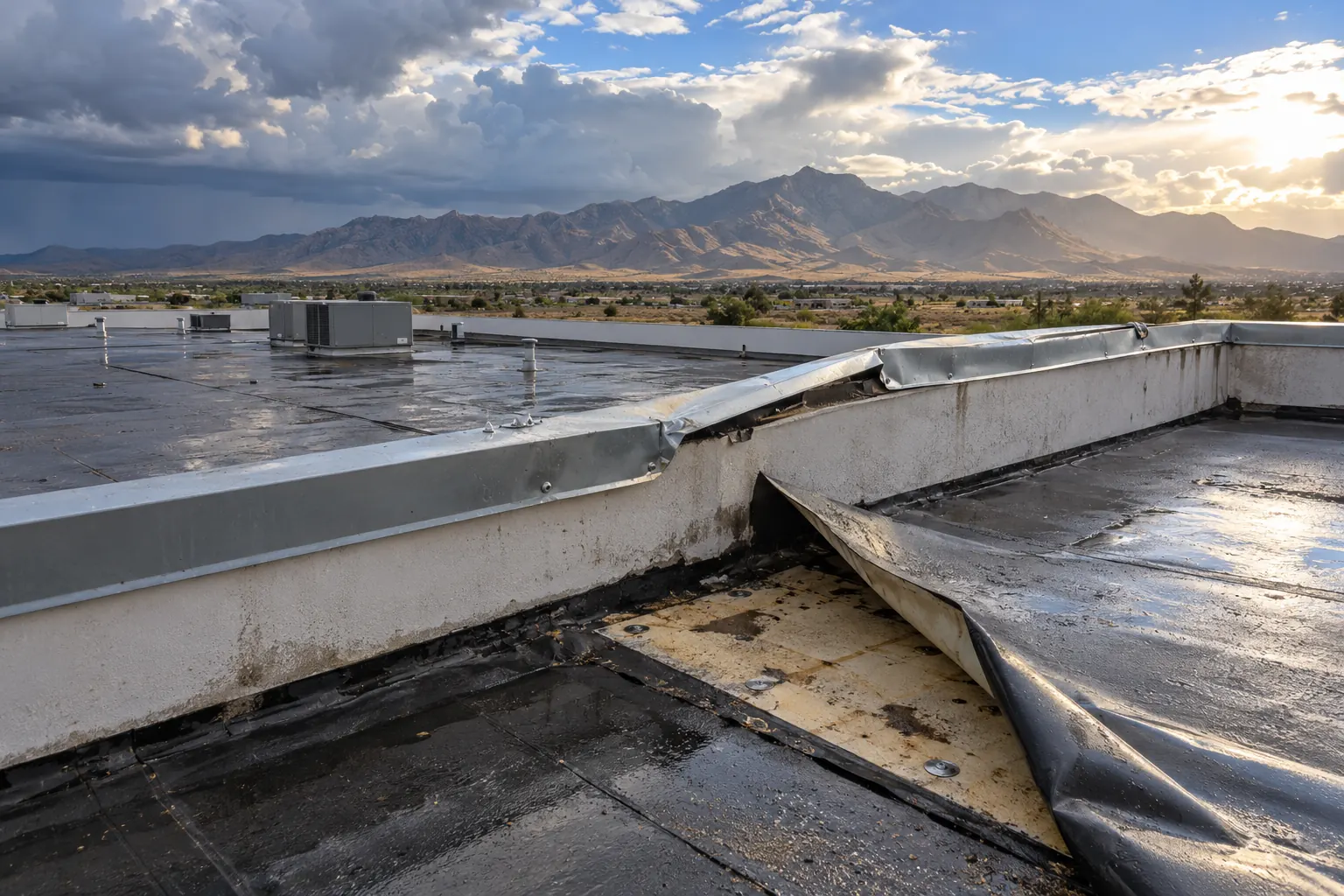
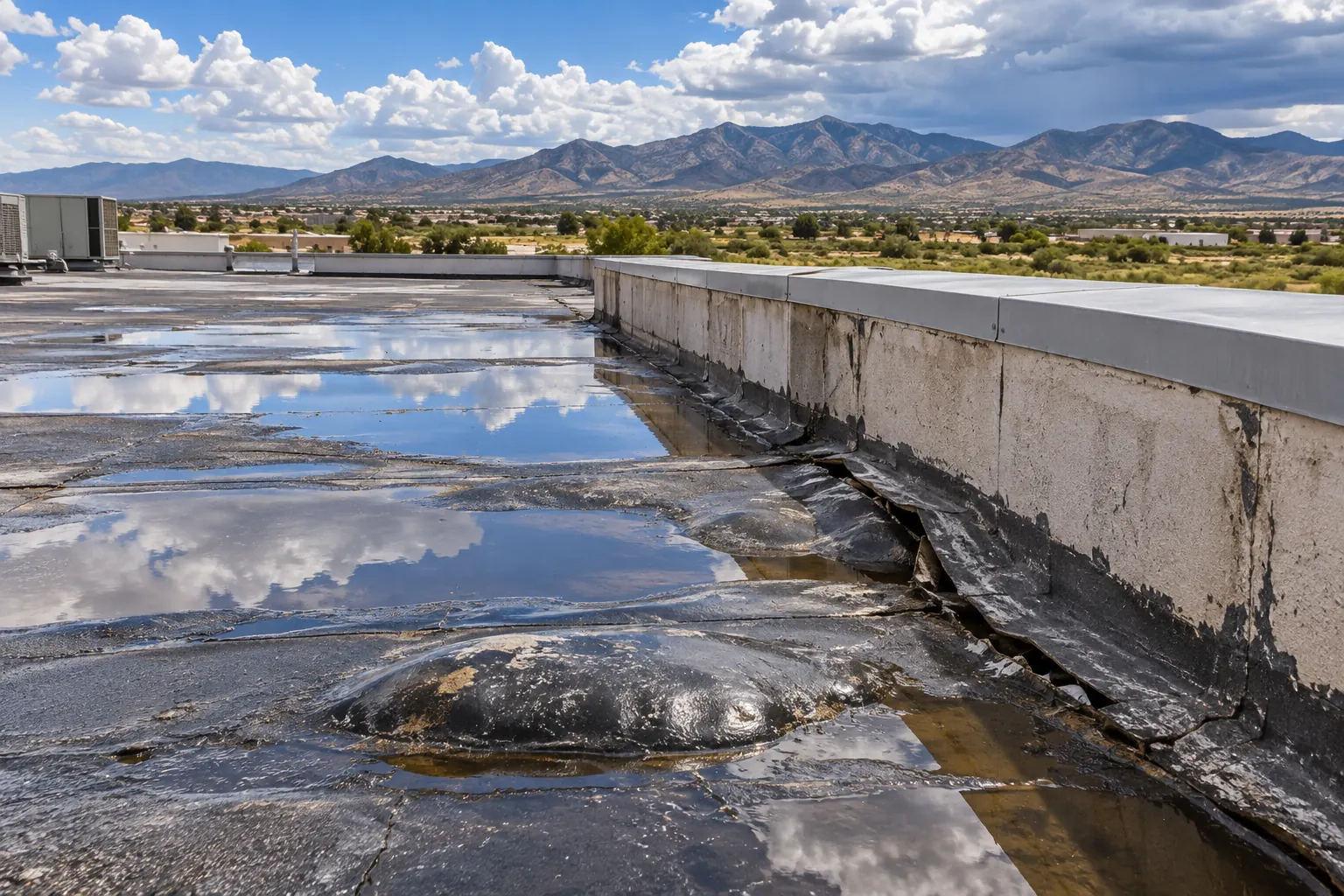
Tombstone is a National Historic Landmark, and visible exterior work on buildings in the historic district needs approval from the historic preservation commission. Repairs hidden behind a parapet or at the rear can count as minor alterations, though the building inspector makes that call.
That review takes time, and the leak keeps going. So the first job is controlling water without changing what anyone sees from the street. Hidden roof areas behind the front can often be repaired right away.
Old commercial buildings in the district share a few weak points.
Flat roofs hide behind tall storefront parapets, where the inside face of the wall and its base flashing take the runoff. The inside face of the wall needs as much attention as the roof.
Small scuppers through old walls clog with debris, and water backs up against the parapet until it finds a crack. Clearing them before each monsoon prevents most backups.
Decades of mastic over the same spots dry out and lift, and water travels under them before it shows inside. Cutting back to solid material shows what the patches were hiding.
Edge metal and trim seen from the street need approval to change, so leaks there call for careful temporary control. Photos of the leaking edge help city staff weigh the temporary work.
Abandoned vent pipes, flues, and conduit holes from past tenants leave openings that were patched over many times instead of closed off. Each one gets closed off properly so it stops needing patches.
Roofs behind tall fronts often drain to one scupper, and any low spot holds water against the wall base after storms. A cricket or tapered insulation can steer water toward the scupper.
Stopping water now keeps the building ready for the permanent fix.
Shops below old roofs often hold displays and goods that water ruins quickly. Temporary control keeps them dry during review. Old wood and plaster interiors dry out slowly, so prevention matters.
Out-of-sight patches leave the storefront looking the same while the permanent repair is approved. No visible work happens before the commission weighs in.
Keeping water out of the wall and deck now limits the hidden damage the permanent repair has to deal with. Adobe and old wood suffer most from water left inside the wall.
Photos of the leak and the temporary work give city staff a plain picture of what the permanent repair has to fix. Clear photos make the conversation with city staff shorter.
Tombstone work usually draws on these two services.
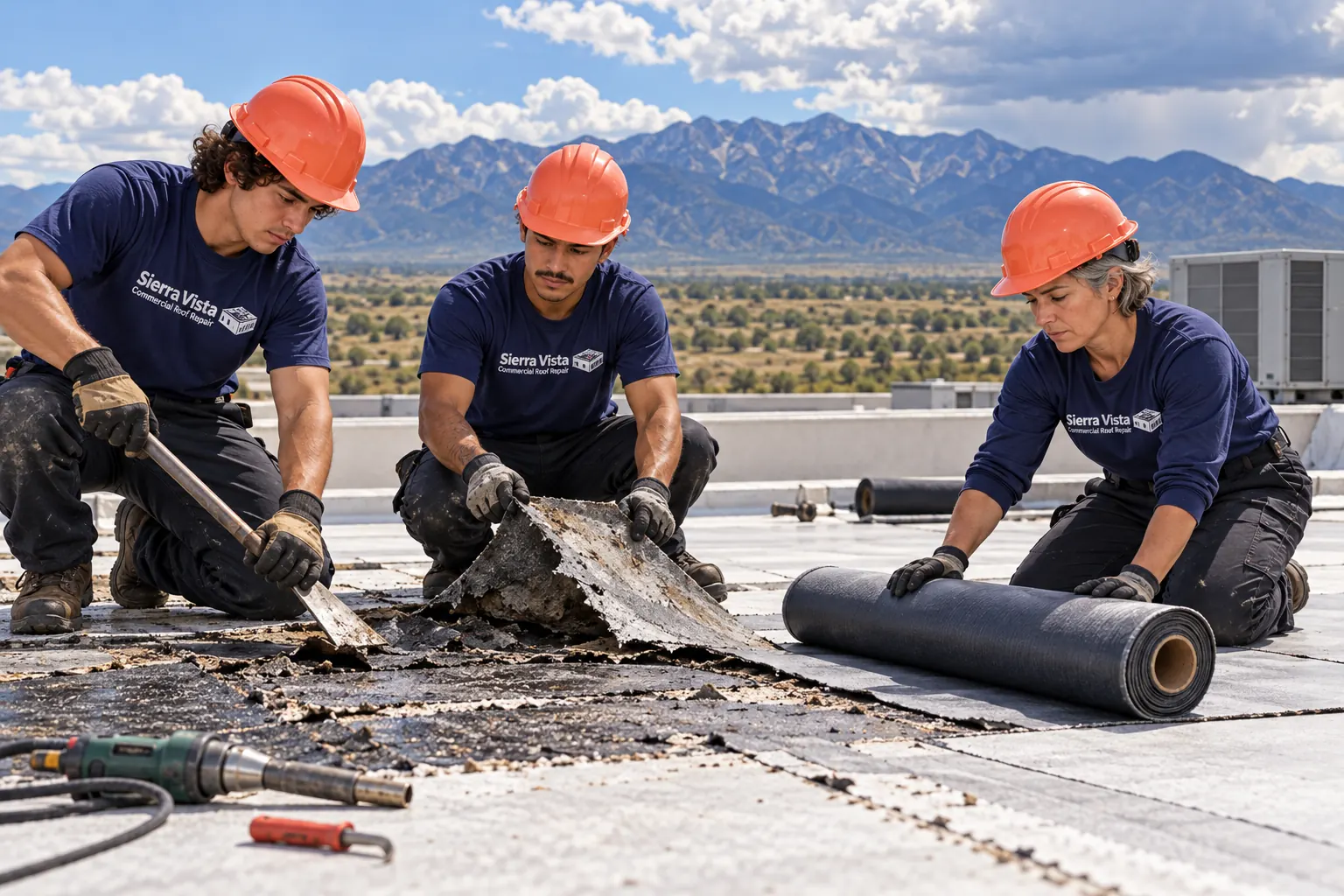
The low-slope roofs behind storefront parapets get seams, base flashing, and scuppers repaired in matching material.
Flat roof repair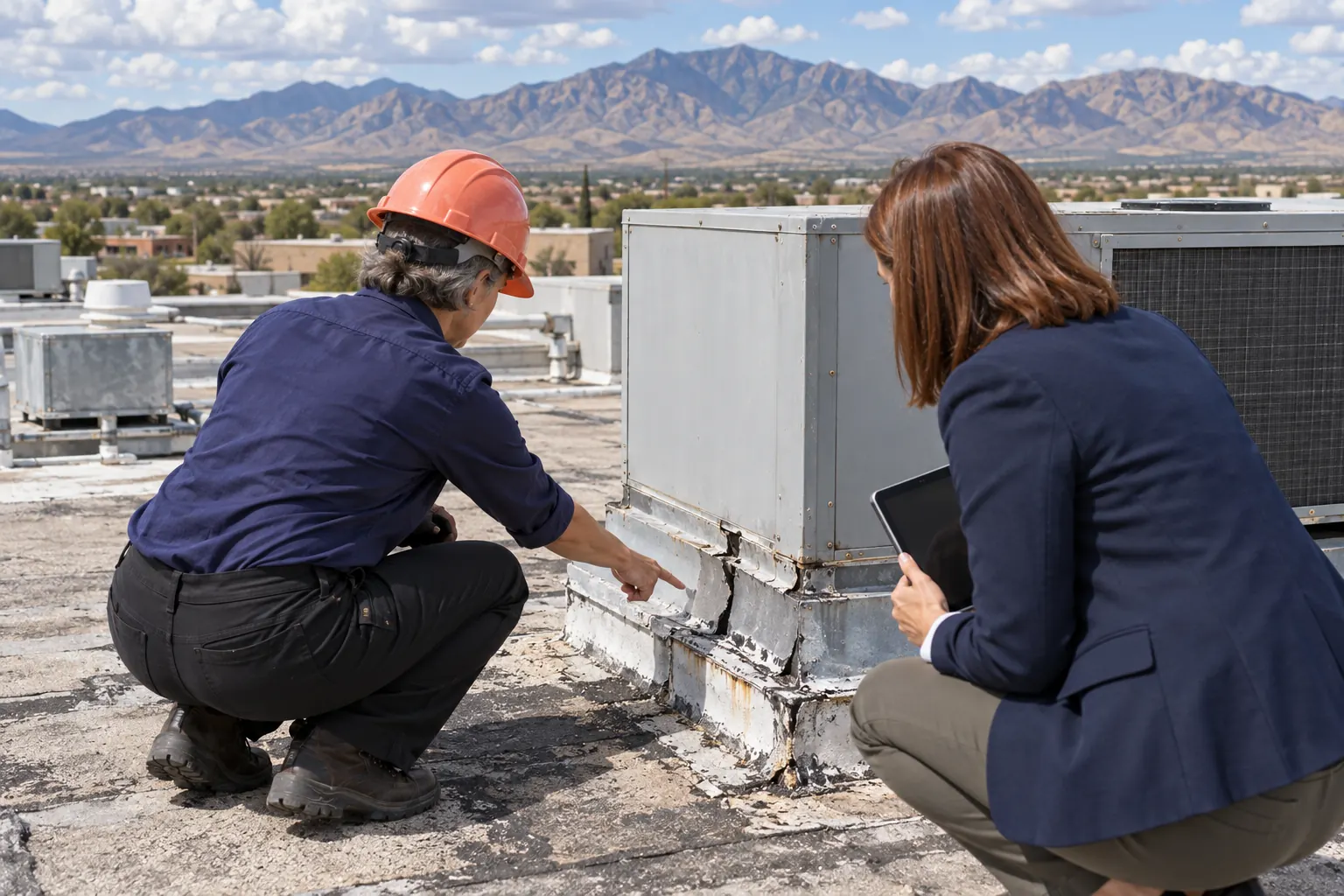
Water in an old building can travel far through the structure, so tracing finds the true opening first.
Commercial roof leak repairCall before anyone patches what can be seen from the street. We will control the water first and talk through the review.
Four steps that keep the building dry and the review on track.
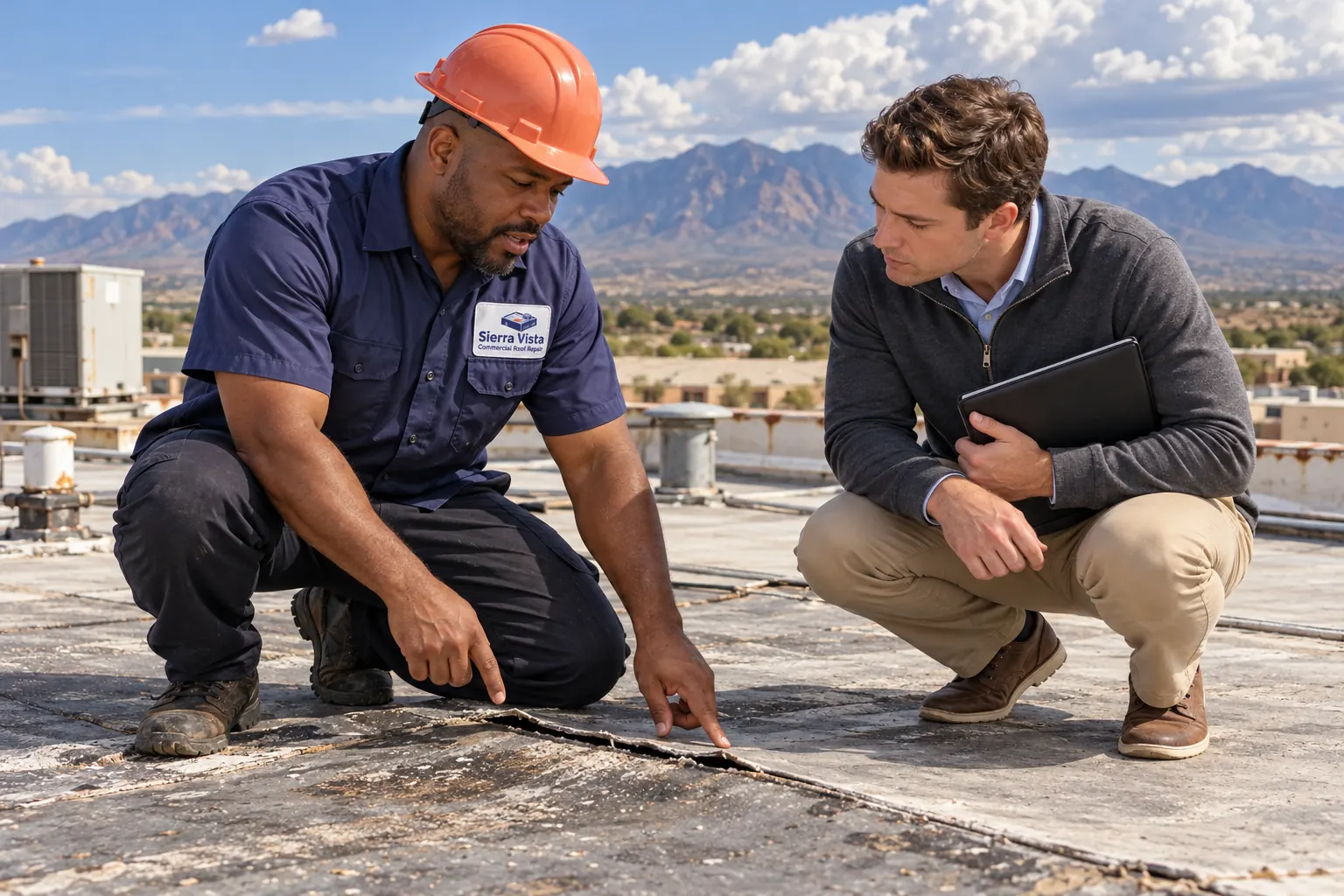
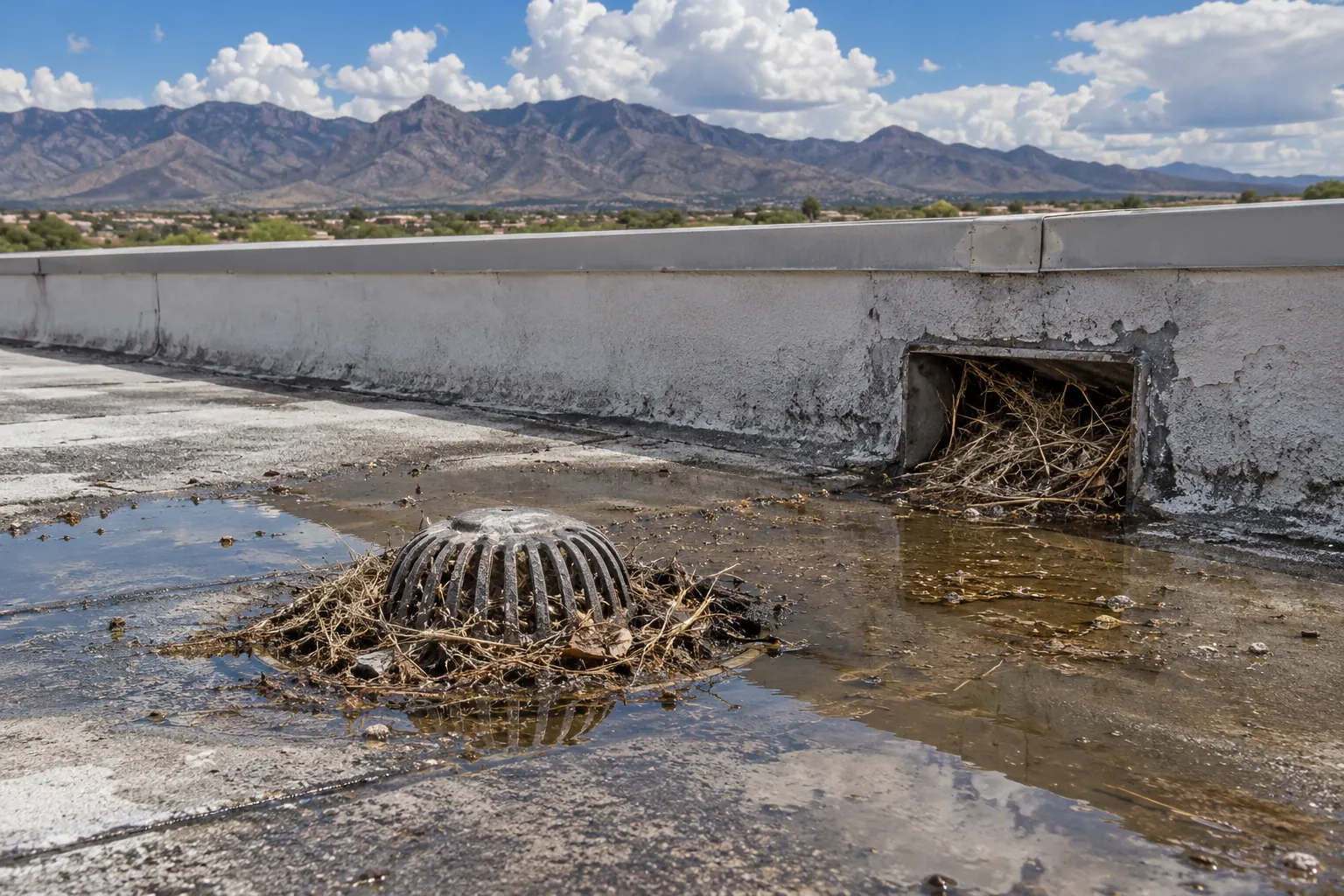
The roof behind the false front is walked, including the inside face of the parapet, scuppers, and old patches, and what shows from the street is noted. Interior plaster stains are photographed for the record.
Stains inside are matched to the roof above. In older buildings, water also runs inside walls, so the trace covers the parapet as well as the deck. Old patches are probed to see what lies underneath.
Hidden roof details get repaired right away. Visible work is held under temporary control until city staff and the commission sign off. Temporary covers are weighted and kept below the parapet line.
Repaired areas are tested where safe, and photos of both temporary and permanent work go to you for the city file. The photo set is organized for city staff to review.
Tombstone sits northeast of Sierra Vista, reached by SR 82 or SR 80. Its unit is highlighted on the map.
Rooftop units on off-post businesses, under town permits.
Long metal storage rows where eaves carry the runoff.
Wide warehouse roofs along the rail line and I-10.
Metal barns and equipment buildings checked after hail.
Shops on SR 92 with aging skylight panels.
Yes. A temporary patch with compatible tape or mastic, or a weighted cover sheet, slows the water, and a cleared drain or scupper stops backups. These hold the interior until the permanent repair is approved and done.
Visible exterior work in the historic district goes to the commission. Repairs hidden behind a parapet or at the rear can count as minor alterations, and the building inspector decides.
The City of Tombstone, with historic review added inside the district. Talk with city staff before ordering metal or flashing for a visible repair.
Hidden roof areas get modern repair materials. Visible edges and trim are matched to what the commission expects for the area's historic buildings.
On storefront buildings, water often enters at the parapet cap or base flashing and runs down inside the wall, appearing far from the roof surface.
Weeks rather than seasons. Mastic over a split seam weathers quickly in strong sun, so the permanent repair should follow as soon as approval allows.
They are kept behind the parapet line wherever possible. Where a visible edge is leaking, the lowest-profile option is used and city staff are told about it.
The roof side of the parapet, its base flashing, and the cap are repaired. Masonry rebuilding of adobe or brick walls goes to a masonry contractor.
Send the building address and where water is showing, and mention whether the roof can be seen from the street.
Leave your name and number and we will call you to talk through the leak or damage.
Rather talk now? Call (623) 310-0177