Split Seams And Laps
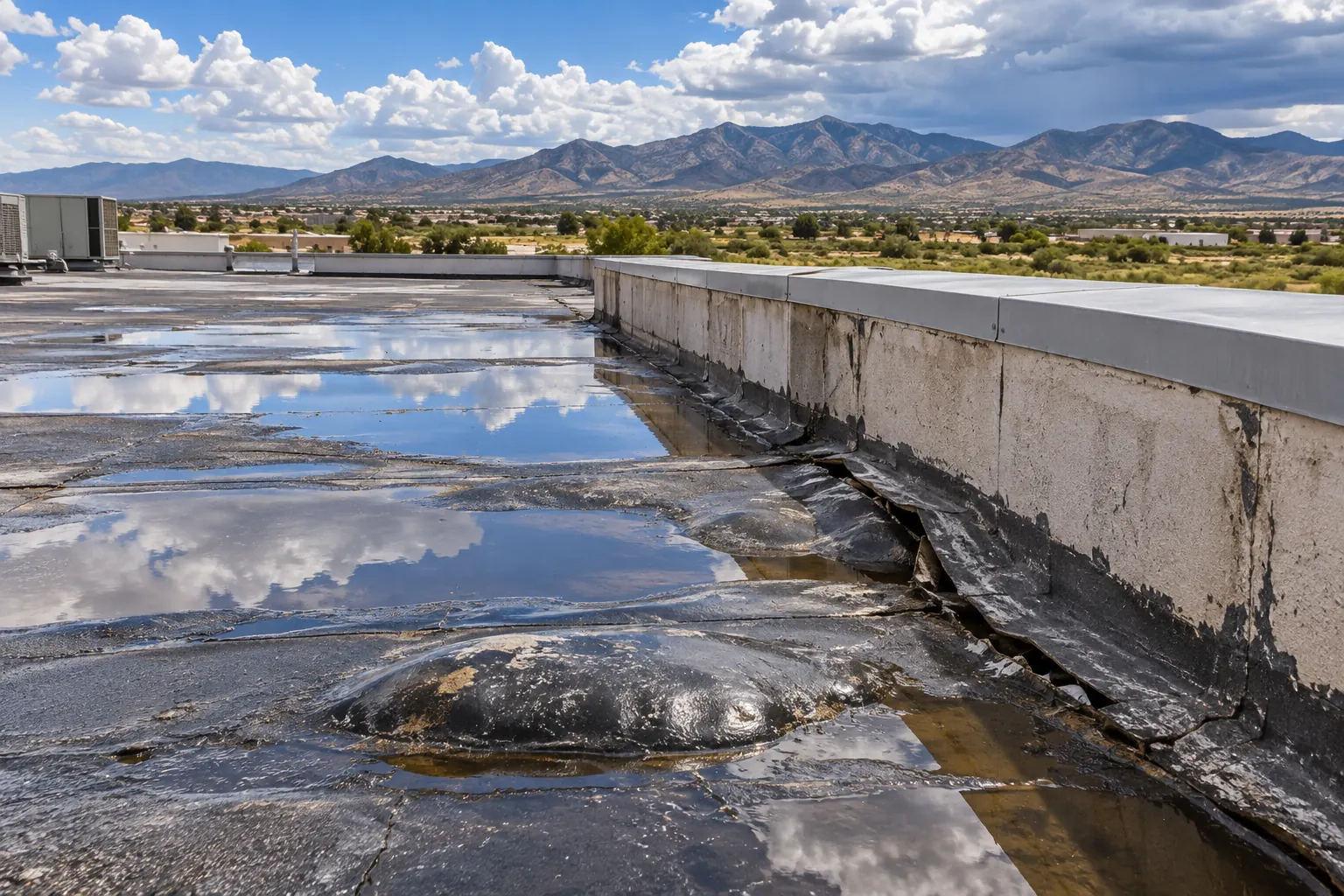
Heat welds and adhesive laps open after years of hot afternoons and cold nights. Water slips under the lap edge and spreads through the insulation before it shows inside.

We find and fix leaks, split seams, loose fasteners, and storm damage on commercial flat, metal, and industrial roofs in Sierra Vista and nearby Cochise County towns.
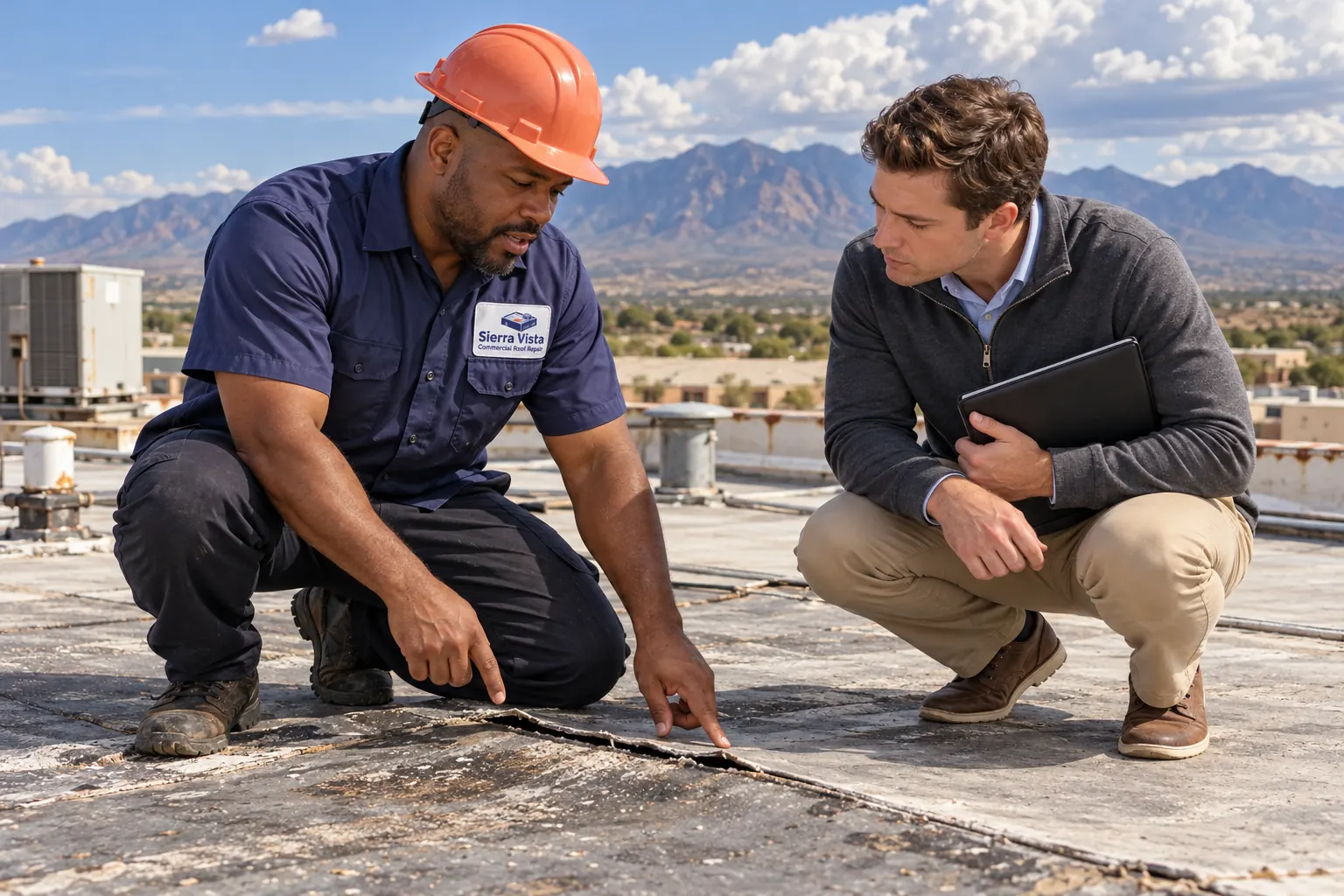
Most leaks we trace start at a joint, an edge, or a drain, and only rarely in the open field of the roof. These six spots get checked first.
Heat welds and adhesive laps open after years of hot afternoons and cold nights. Water slips under the lap edge and spreads through the insulation before it shows inside.
Dust, leaves, and nesting material collect in drain baskets. A monsoon downpour then backs water over the clamping ring and into seams that stay dry in light rain.
Curb flashing under air handlers and exhaust fans takes vibration, sun, and service traffic. Cracked base flashing here explains many stains near the middle of a building.
Open coping joints and loose counterflashing let wind-driven rain into the wall cavity. That water runs down inside the parapet and surfaces along an exterior wall.
Panels grow and shrink every day, slowly backing screws out and cracking their rubber washers. Each loose screw becomes a small open hole above your ceiling.
Strong sun at about 4,600 feet dries out pipe boots and the sealer in pitch pans first. A brittle boot splits around the pipe, and water drips straight down into the building.
Find the row that matches your building. Each ticket names the calls we answer most and the roof systems that service covers.
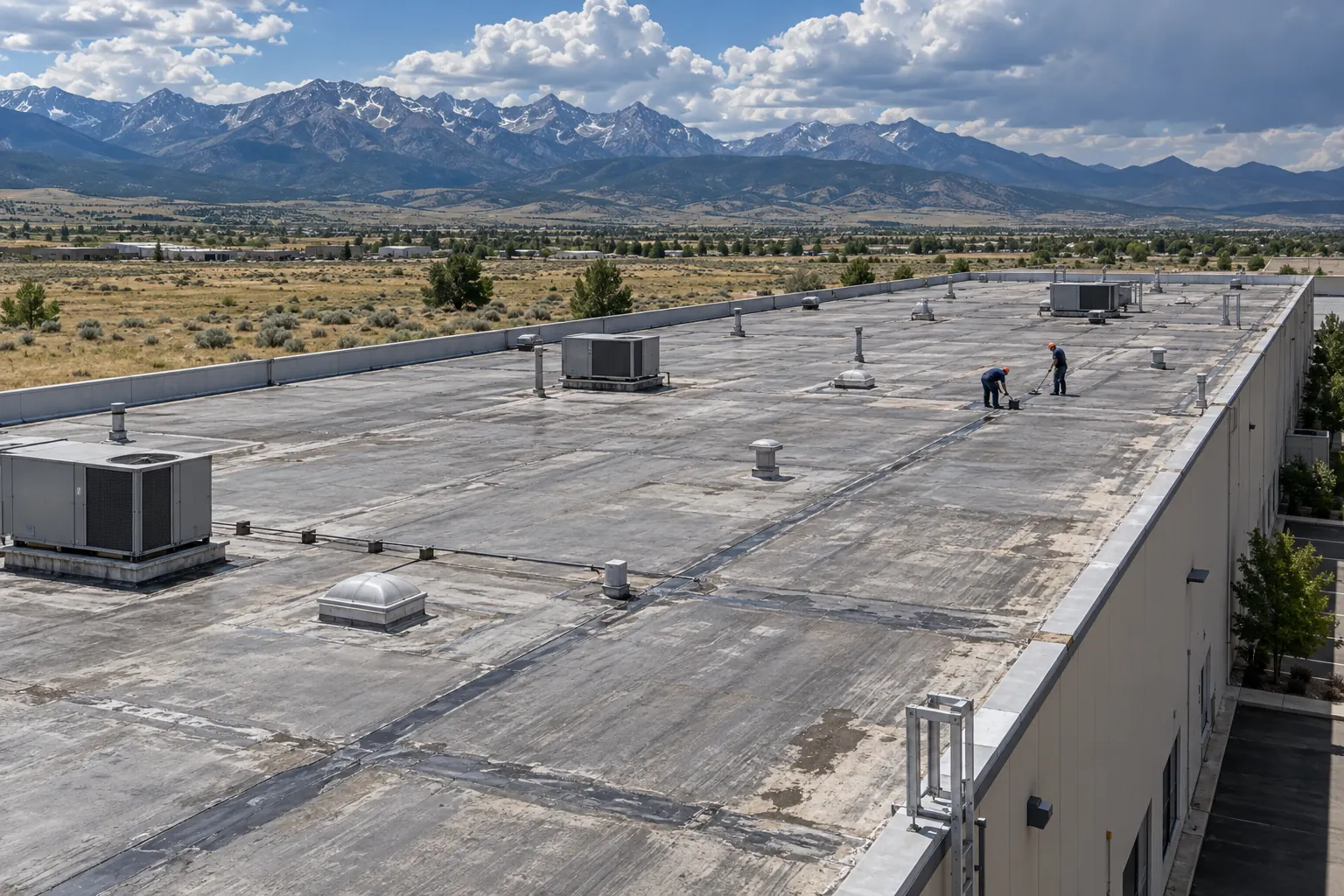
Membrane roofs on offices, clinics, and retail buildings: we reweld or patch seams, rebuild flashing at curbs and parapets, reset drain clamping rings, and replace wet insulation under the damaged area.
Typical Calls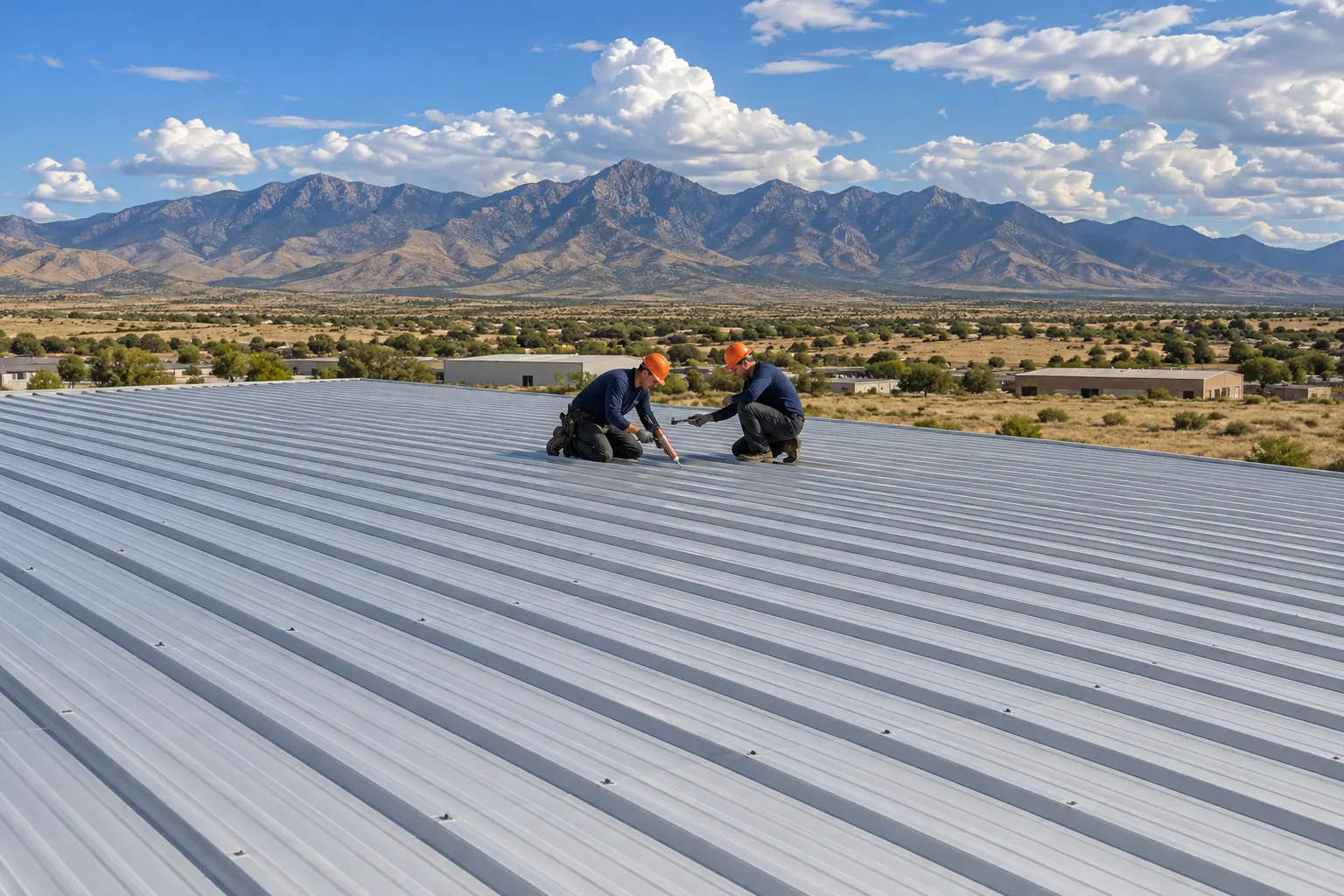
Standing-seam and exposed-fastener roofs on shops, warehouses, and barns: we replace backed-out screws with oversized ones, reseal laps with butyl tape, treat rust bloom, and swap cracked skylight panels.
Typical Calls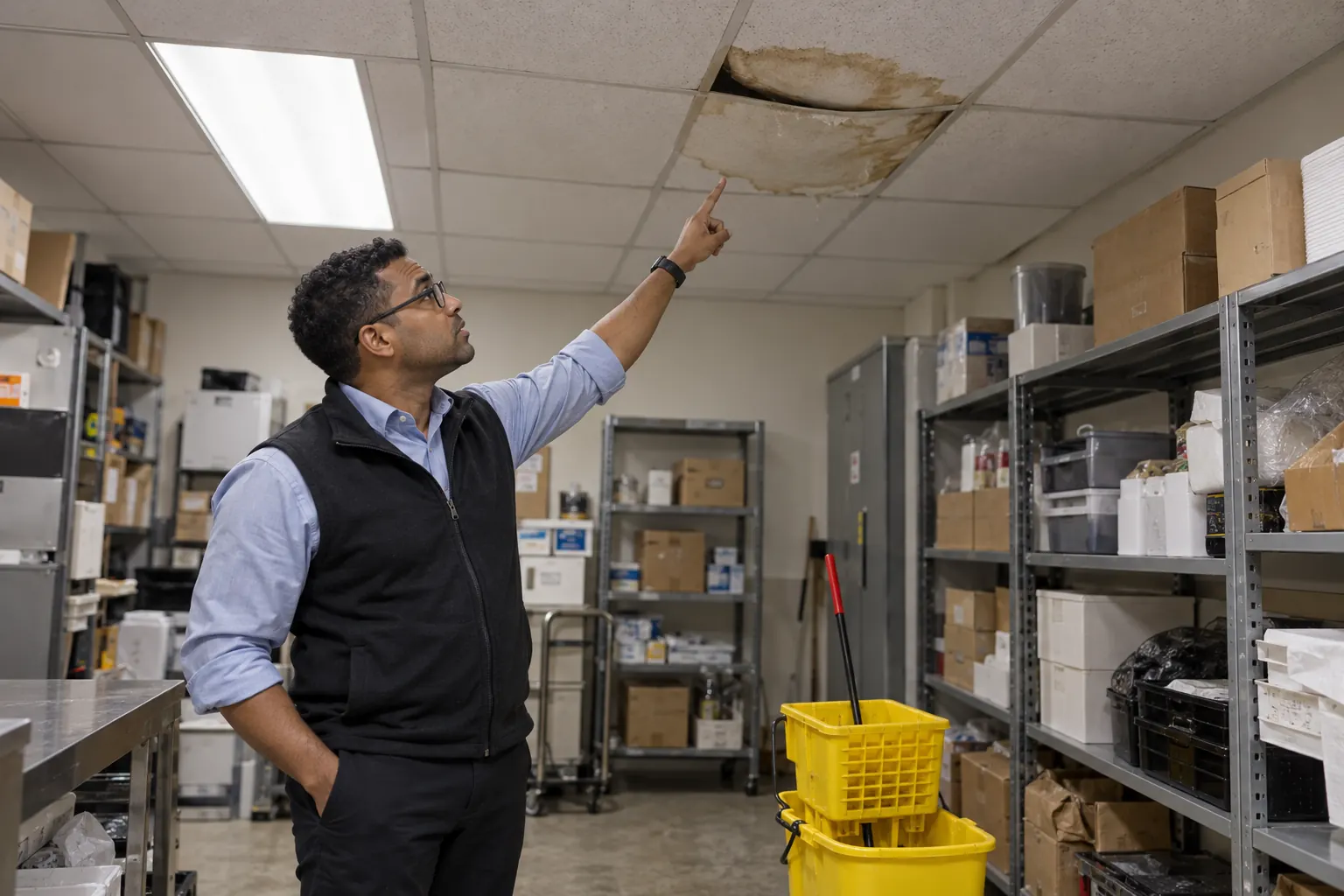
Leaks with a stain in one place and the source somewhere else: we mark the stain, work upslope across the roof above it, confirm the wet path with a meter, and fix the entry point.
Typical Calls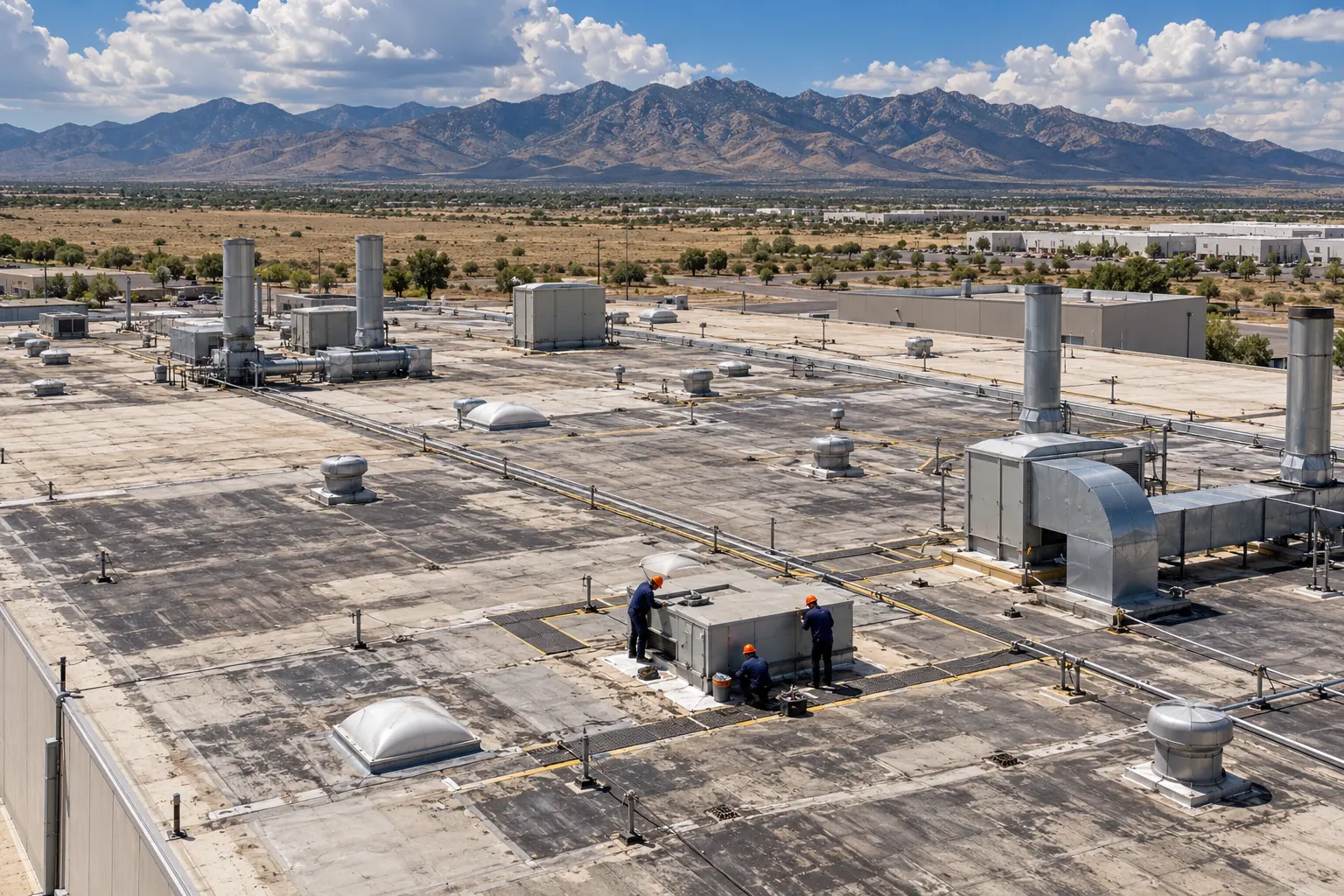
Plant and warehouse roofs with stacks, process vents, and heavy curbs: repairs are planned with your facility manager around lockouts, exhaust shutdowns, and production that keeps running below.
Typical CallsPut a bucket under the drip, move stock out of the way, and call. Tell us where the stain is and whether it grew during the last storm.
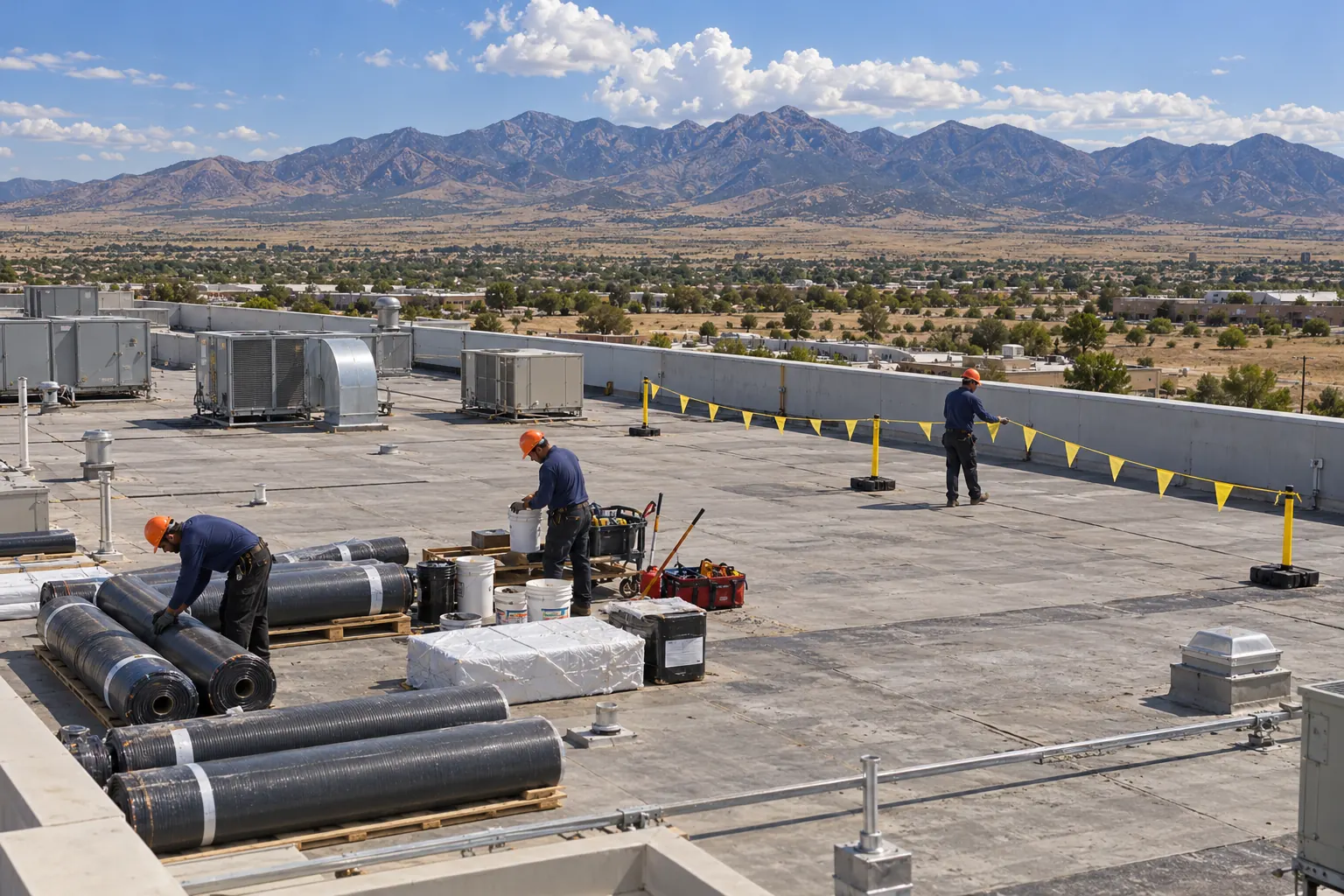
Every repair follows the same four steps, so you know what was checked and what was fixed before the crew climbs down.
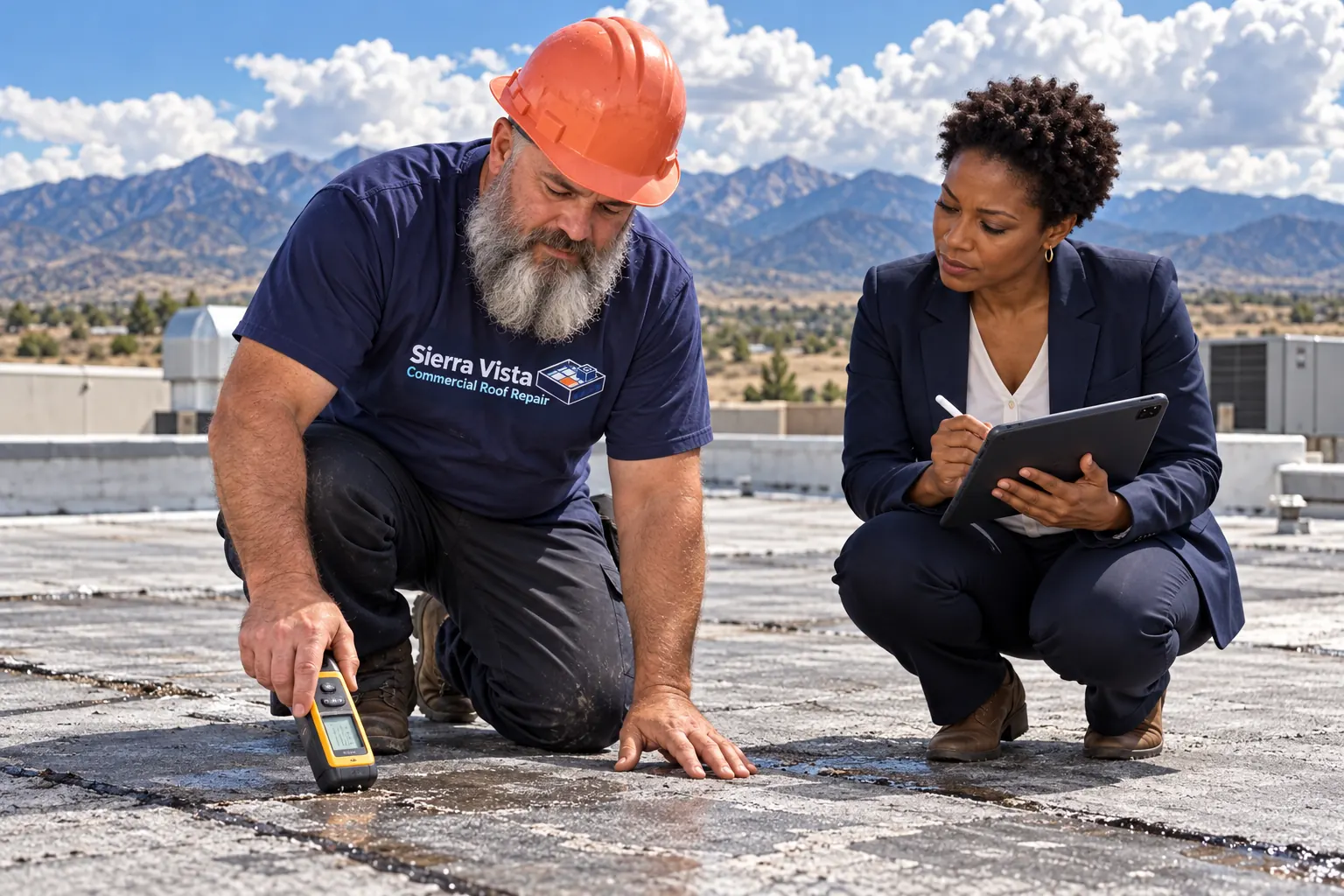
The roofer walks the whole roof, starting at the wet corner. Seams, flashings, drains, curbs, and fasteners get checked, and each interior stain is matched to the roof area above it.
Water runs along deck flutes and insulation joints before it drips. We work upslope from the stain toward drains, curbs, and seams while a moisture meter shows where the wet path begins.
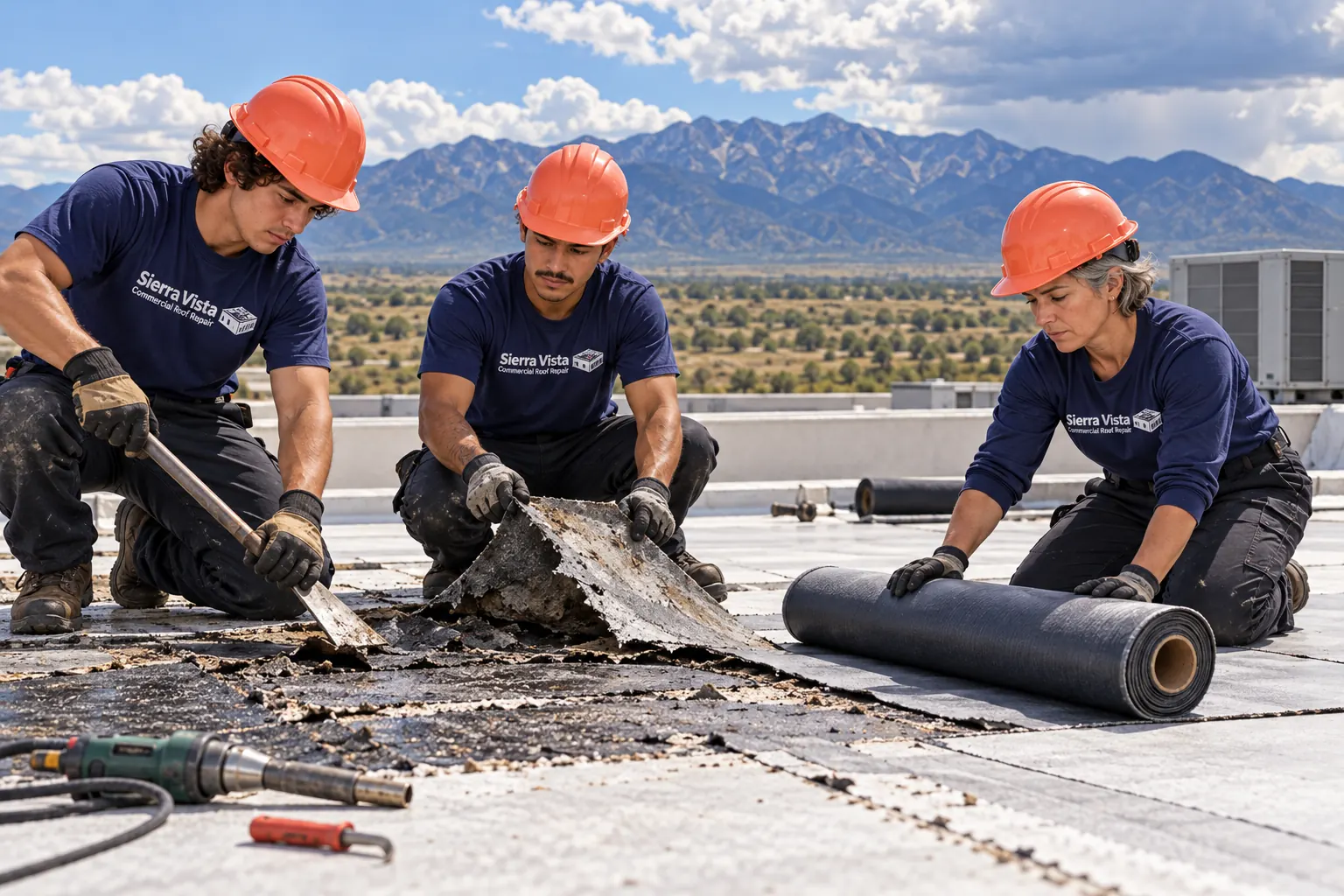
Repairs use material that matches the roof: welded TPO patches, EPDM tape and cover strips, oversized screws with new washers, or rebuilt curb flashing. Wet insulation under the area is cut out first.
Once the repair cures, the area gets a controlled water test where one is safe to run. You receive photos of each fixed detail and a plain list of anything that can wait.
Isolated problems favor repair. These signs from the roof walk and the moisture readings decide which side your roof falls on.
Fixing the failed detail early keeps a small leak from turning into a larger, wetter repair.
Insulation soaks up water long before a ceiling stains. Catching a split seam early limits how many wet boards get cut out and keeps the roof insulating as it should.
Inventory, records, and machinery under a dripping deck are the costly part of a leak. A repair at the curb or drain protects what sits below it.
Repairing failed details on a membrane that still folds cleanly buys time to plan a full replacement on your schedule instead of after the next storm.
Ceiling tiles stay up, floors stay dry, and work below the roof keeps going. Nearly all repair work happens up top, with only a quick stain check indoors.
Each town is drawn as a rooftop unit on one roof, placed by its direction from Sierra Vista. Every name links to that town's page.
Off-post businesses near Fort Huachuca, where rooftop units get frequent service visits and the town issues permits.
Metal shops and storage rows on county land, where long eaves and end laps take the runoff.
Historic storefronts where visible repairs face commission review, so leaks need quiet temporary control first.
Rail and highway warehouses with long drain runs and wide roofs that hide wet insulation.
Metal barns and equipment buildings on open land, checked after hail for dents and broken washers.
Shops along the highway with skylight panels that yellow and crack, permitted through Cochise County.
In three ways at once. At about 4,600 feet, strong sun dries sealant at curbs and pitch pans first. Hot days and cool nights work seams and metal panels loose, and monsoon storms from June 15 through September 30 test drains and scuppers with downbursts and hail.
Yes. Almost every call is for a roof another company put on. We identify the system first, then repair it with matching material: TPO with TPO, EPDM with EPDM, and the same panel profile on metal roofs.
Waiting usually costs more. Each storm pushes more water into the insulation, and wet boards widen the repair area. Temporary control can hold a leak for a few weeks, and the permanent repair is best finished before the next big storm.
Photograph the stain and any wet stock, note when the leak started, and clear a path to the roof hatch or ladder. Old repair invoices or roof drawings help, so set them out if you have them.
Nearly always. Repairs happen up on the roof, materials go up by ladder hoist away from entrances, and noisy work like fastener replacement can be timed around your hours. Tell us when deliveries arrive so the staging area stays clear.
Plainly, and with evidence. When moisture readings show soaked insulation well past the leak or the deck flexes underfoot, you get the photos and readings with a recommendation to plan replacement rather than another patch.
Request a free estimate online or call. Tell us the building type, the roof system if you know it, and where water is showing.
Leave your name and number and we will call you to talk through the leak or damage.
Rather talk now? Call (623) 310-0177