Stain Far From The Source
Water runs along deck flutes, insulation board joints, or a beam until it finds a low point. The stain can sit many feet from the opening.

We trace commercial roof leaks in Sierra Vista from the ceiling stain to the real entry point, then repair it with material that matches your roof.
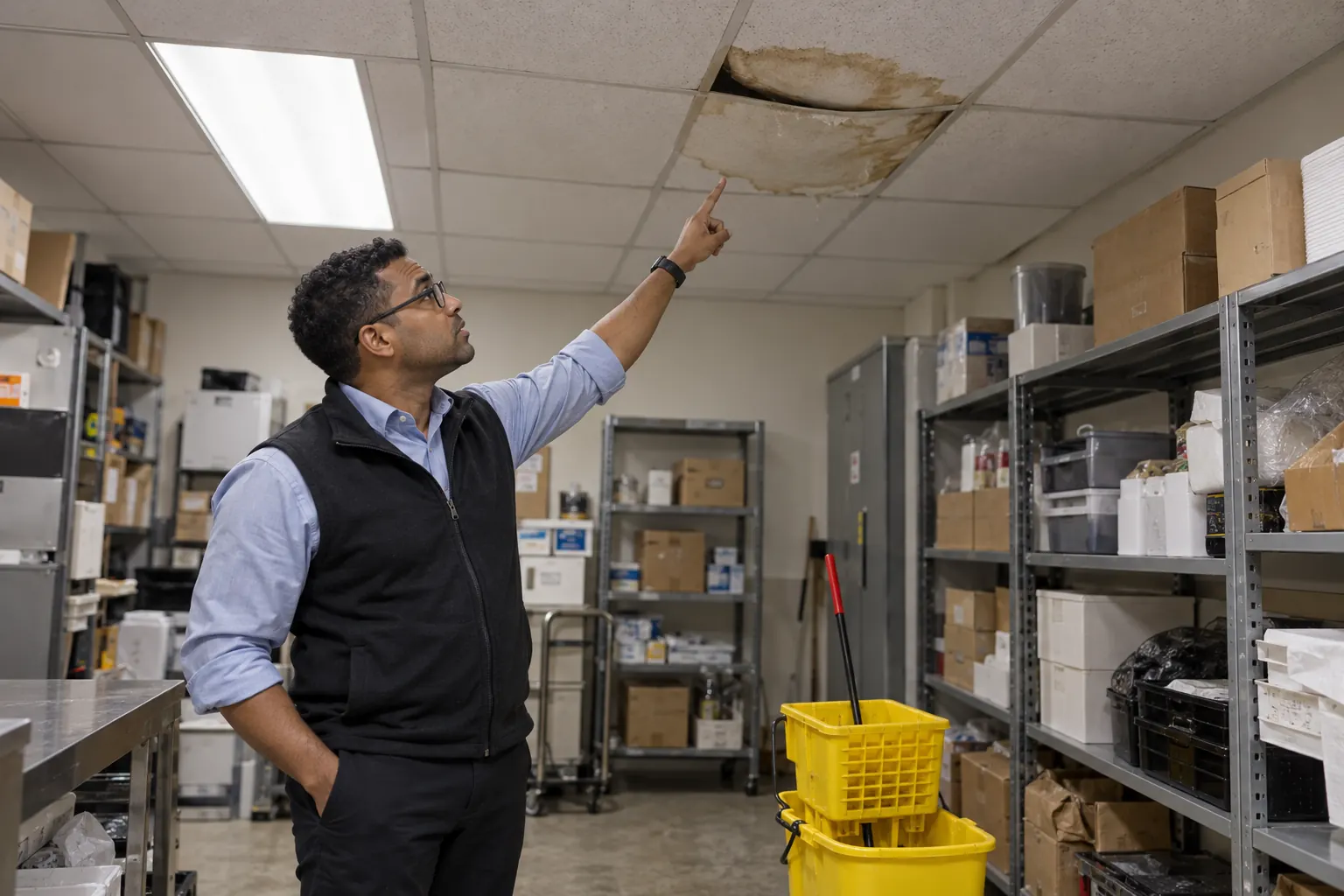
Once the entry point is found, the readings around it decide whether one repair finishes the job.
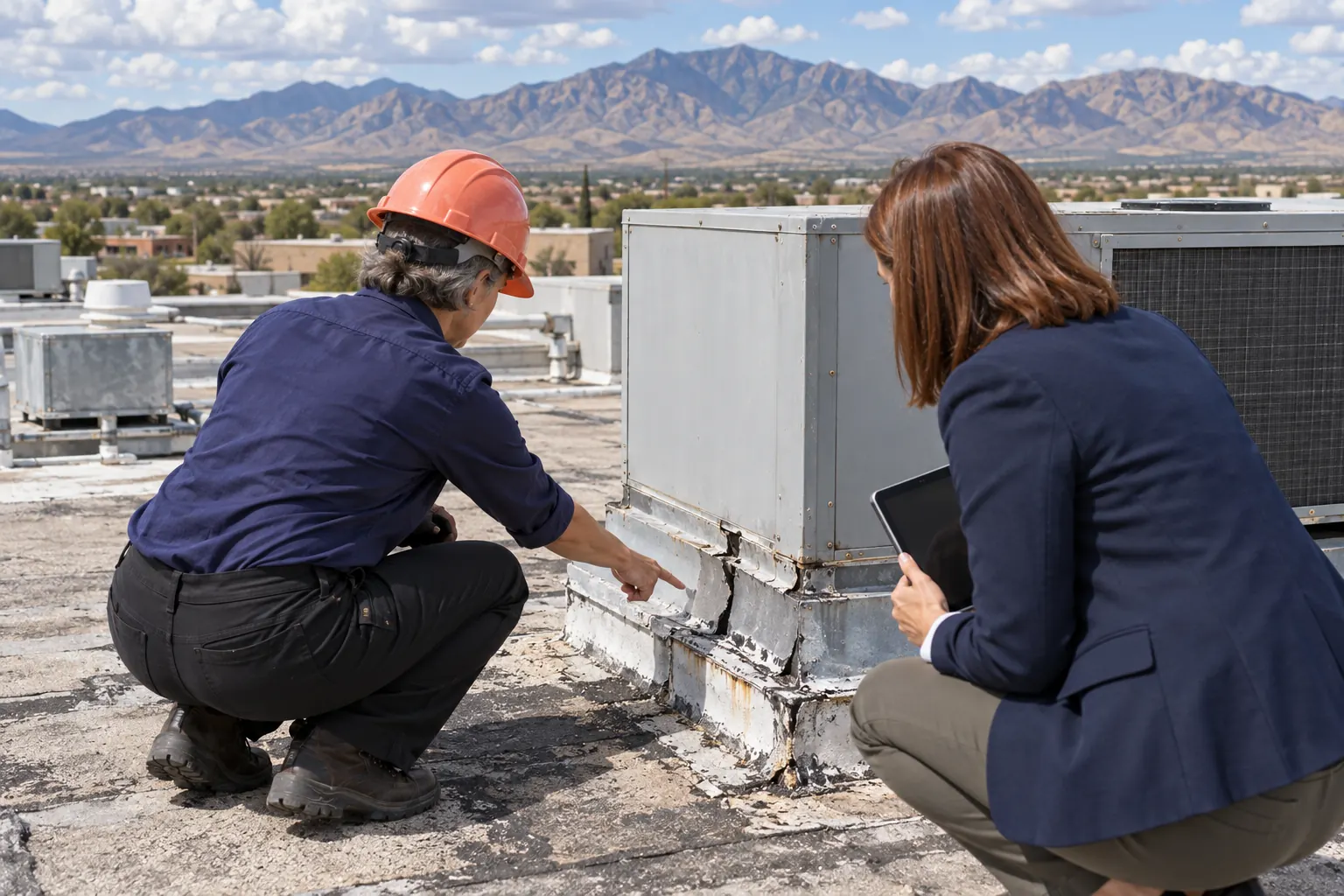
Water rarely drips where it gets in. These are the paths it takes on Sierra Vista commercial buildings.
Water runs along deck flutes, insulation board joints, or a beam until it finds a low point. The stain can sit many feet from the opening.
A partly blocked drain lets heavy rain climb over a seam that stays dry in light rain. These leaks show up only in monsoon downpours.
Sideways rain gets under loose counterflashing and parapet coping. The leak appears only when a storm blows from one direction.
At a cracked curb or a loose duct boot, rain gets inside the curb and travels along it before dripping near the unit below.
A split pipe boot drips straight down the pipe, so the leak often shows at a light fixture or sprinkler head.
Mastic smeared over past leaks dries and lifts. A repeat leak at an old patch means the detail underneath was never rebuilt.
Leak work comes in two stages: control the water now, then rebuild the detail that let it in.
| Stage | What Happens | Why It Matters |
|---|---|---|
| Interior check | Stains are marked and photographed | Gives the trace a starting point |
| Roof trace | Work upslope toward drains, curbs, and seams | Finds the entry point instead of the drip |
| Temporary control | Patch tape, mastic, or a weighted cover sheet | Protects stock until the repair is scheduled |
| Permanent repair | Welded, taped, or flashed in matching material | Replaces quick fixes that weather fast |
| Water test | Controlled water on the repaired detail | Confirms the leak is closed |
A patch over the wrong spot costs a second visit and more wet insulation.
Tracing the water first means the fix lands on the opening that let it in, so the same leak does not come back next storm.
Closing the real entry point stops water from spreading through the boards, which keeps the cut-out area small.
Inventory and ceiling tiles under the wet path stay dry once the source is closed.
Photos of the entry point and the repair show exactly what was done if water ever appears in that room again. That record also helps when you sell or lease the building.
Mark the edge of the stain with tape and note the date. Then call, and tell us how fast it has grown.
Four steps that start inside your building and end at the repaired detail on the roof.



Inside first: stains, wet stock, and drip points are marked. Then the roof above is walked, with every drain, curb, seam, and boot in that area checked. A floor plan with each stain marked guides the roof trace.
Working upslope from the stain, the roofer follows deck flutes and insulation joints toward likely openings. Meter readings narrow the search to one detail. Suspect details are tested one at a time, never all at once.
Temporary control comes off and the detail is rebuilt in matching material: a welded patch, new seam tape, a new pipe boot, or fresh curb flashing. Wet insulation found during the trace is replaced in the same visit.
Controlled water runs over the repaired spot while someone watches the stain inside. Photos of the entry point and the repair go to you. If the stain stays dry through the test, the trace is closed.
Once the source is found, the repair falls under one of these.
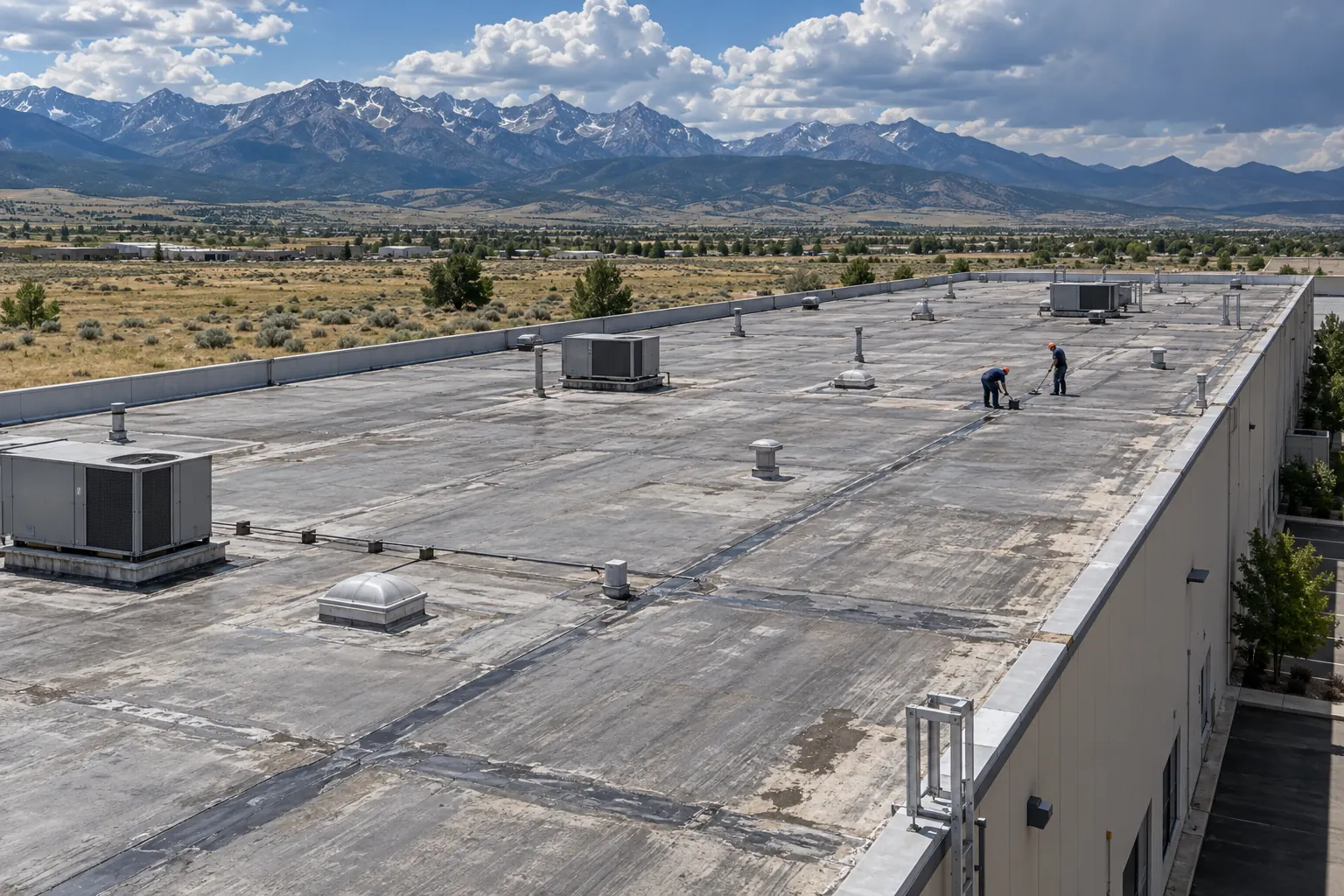
Most traced leaks on membrane roofs end at a seam, drain, or curb, which flat roof repair rebuilds in matching material.
Flat roof repair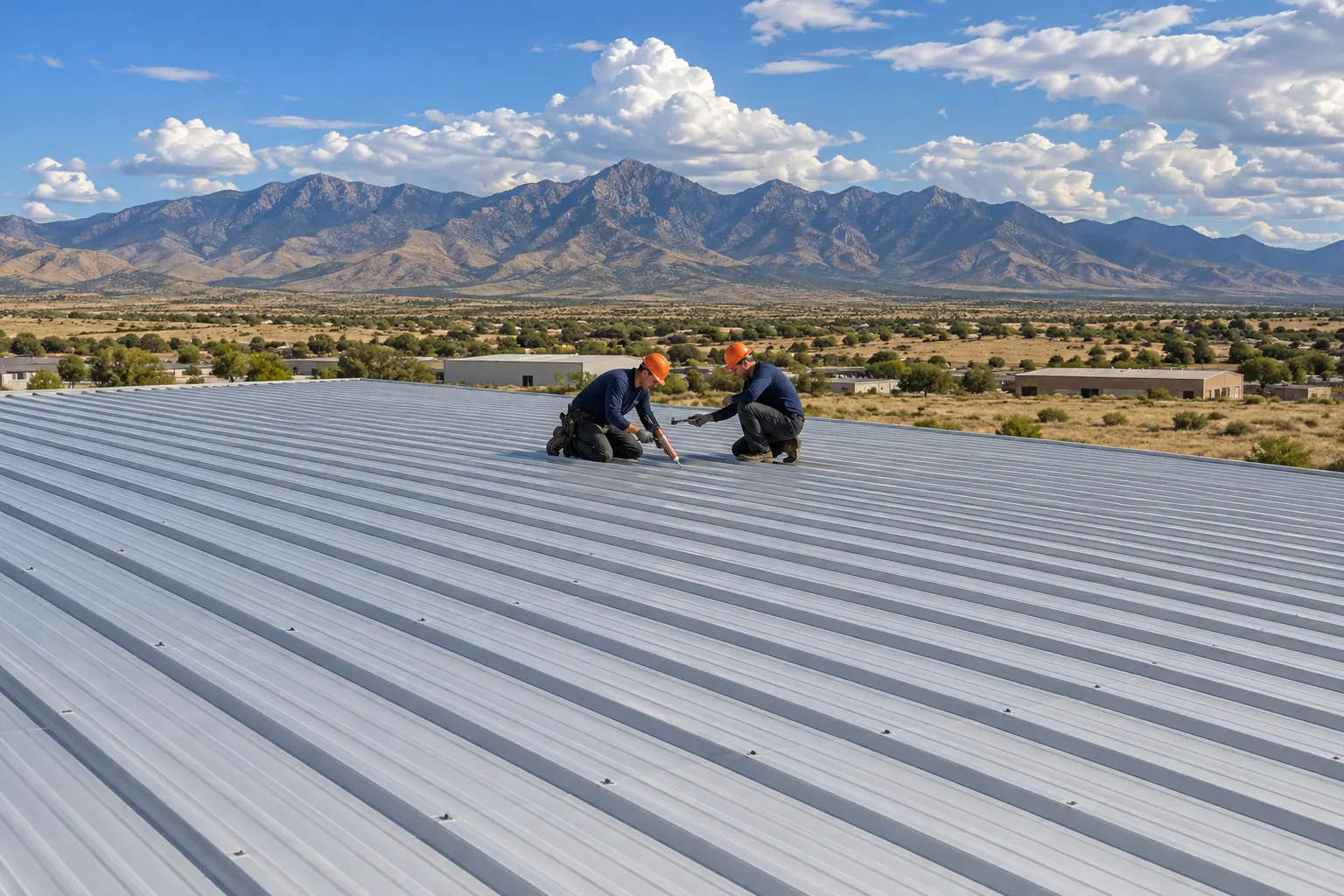
On steel roofs the trace usually ends at a screw row, a lap, or a skylight panel that metal roof repair replaces.
Commercial metal roof repairWater travels before it drips. After getting past a seam or flashing, it follows deck flutes, board joints, or a beam to a low point, often many feet away. Tracing works upslope from the stain toward drains, curbs, and seams.
Yes. Patch tape, mastic, or a weighted cover sheet can slow the water, and clearing a clogged drain helps right away. A permanent repair still has to follow before the next big storm.
Moisture readings show where insulation is wet, and a controlled water test on suspect details reproduces the leak while someone watches inside.
Then the trace continues. A second leak nearby often means water was entering at two details, and a full roof walk catches the other one.
Move anything that can be damaged by water, and leave the stain visible. Buckets and tarps are fine; they help show where the drip lands.
Over time they can. Steel deck rusts where wet insulation sits on it, and a deck that flexes underfoot needs repair before new insulation goes down.
Heavy monsoon rain can overwhelm a partly blocked drain and raise water above a seam, and wind pushes rain under loose counterflashing. Light rain never reaches those details.
Treat it as one. Turn off that circuit, keep people clear, and call an electrician if water reaches wiring. On the roof, the source is often a pipe boot or curb directly above.
Describe where the stain is, when it started, and whether it shows only in heavy storms.
Leave your name and number and we will call you to talk through the leak or damage.
Rather talk now? Call (623) 310-0177