Exhaust Stack Flashing
Heat and chemical exhaust break down standard flashing at stacks. Heat- or chemical-resistant materials replace it where the discharge lands. Discharge patterns are mapped so new flashing covers the whole zone.

We repair industrial roofs in Sierra Vista around stacks, ducts, and heavy equipment, with work planned so production underneath keeps running.
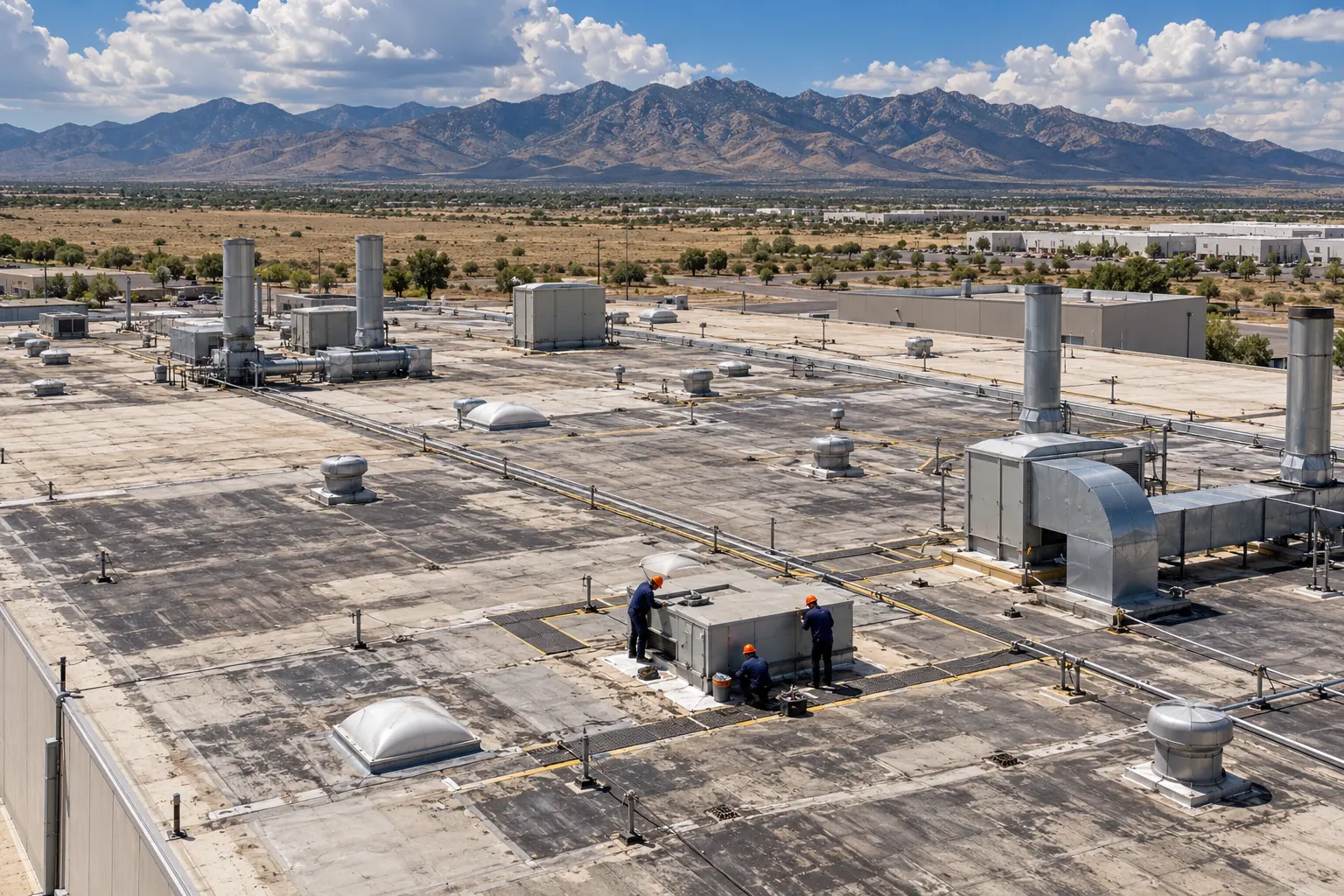
Industrial roofs take heat, chemicals, and constant foot traffic. The question is whether the damage is local or spread across the roof.
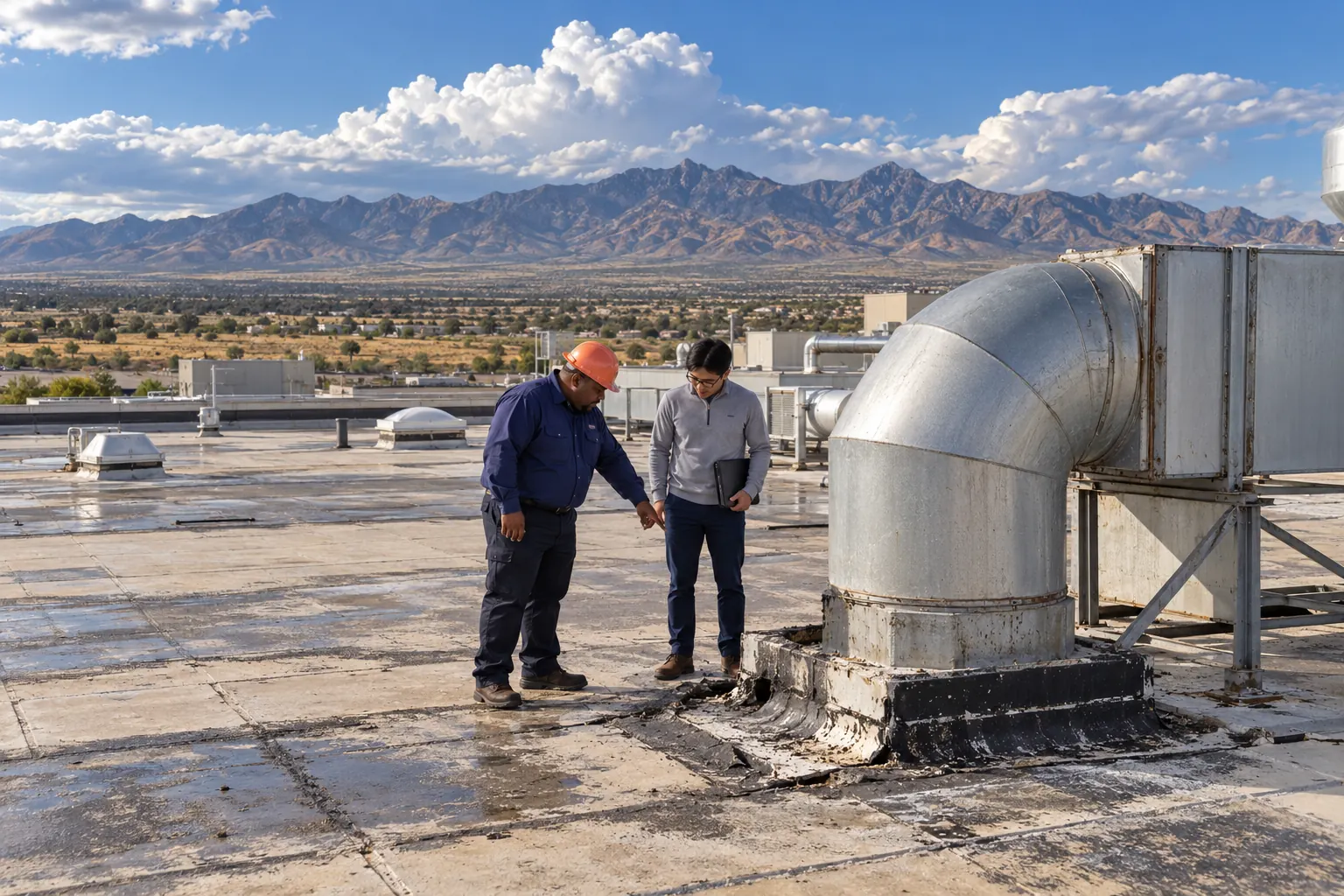
Plant roofs fail around the things bolted to them. These six account for most industrial calls.
Heat and chemical exhaust break down standard flashing at stacks. Heat- or chemical-resistant materials replace it where the discharge lands. Discharge patterns are mapped so new flashing covers the whole zone.
Vibration from large units cracks curb flashing and loosens counterflashing. The curb is reflashed and the counterflashing refastened. Counterflashing screws get new washers while the curb is open.
Technicians walking the same route wear through membrane. Walkway pads go down along those paths after the sheet is patched. Pads are set wherever the membrane shows scuffing, including away from the hatch.
Small vents and conduit runs multiply on plant roofs, and each boot or pitch pan is a leak point. Failed ones get new boots or pans. Unused penetrations are cut out and patched flush with the roof.
Exhaust residue collects in low spots and softens membrane where water stands. Cleaning and patching those areas stops the breakdown. Residue is cleaned with a cleaner the membrane maker allows.
Large metal plant roofs flex across long spans, opening laps and loosening screws. Fasteners and laps get the same repair as any metal roof. Long laps get stitch screws spaced closer near the equipment.
Each repair is scheduled with the facility manager so equipment and people stay safe.
| Repair | What It Fixes | Planning Needed |
|---|---|---|
| Stack and duct flashing | Leaks at exhaust penetrations | Exhaust shutdown or lockout window |
| Curb reflashing | Cracked flashing under heavy units | Unit shutoff if the work is close |
| Walkway pads | Membrane worn on service routes | None beyond roof access |
| Penetration boots and pans | Leaks at vents and conduit | Coordination with plant maintenance |
| Phased section repair | Wet areas over production lines | Work order matched to the production schedule |
A leak over a plant floor reaches more than ceiling tiles.
Repairs phased around the schedule keep lines below running, and closing the leak keeps water off machinery and controls. Leaks get fixed during planned windows instead of in a rush.
Mapped exhaust zones and lockouts keep crews clear of hot discharge and moving equipment while they work. Crews never work in an unmapped discharge zone.
Flashing matched to heat and chemicals lasts longer around stacks than standard material would. Matched materials cut down on repeat calls at the same stack.
Walkway pads take the foot traffic that would otherwise wear holes in the sheet between units. Technicians also get a clear, marked route to every unit. Fewer leaks also means fewer surprise shutdowns.
Call with the building, the equipment under the leak, and your next possible shutdown window.
Four steps, with the plan agreed before anyone works near equipment.

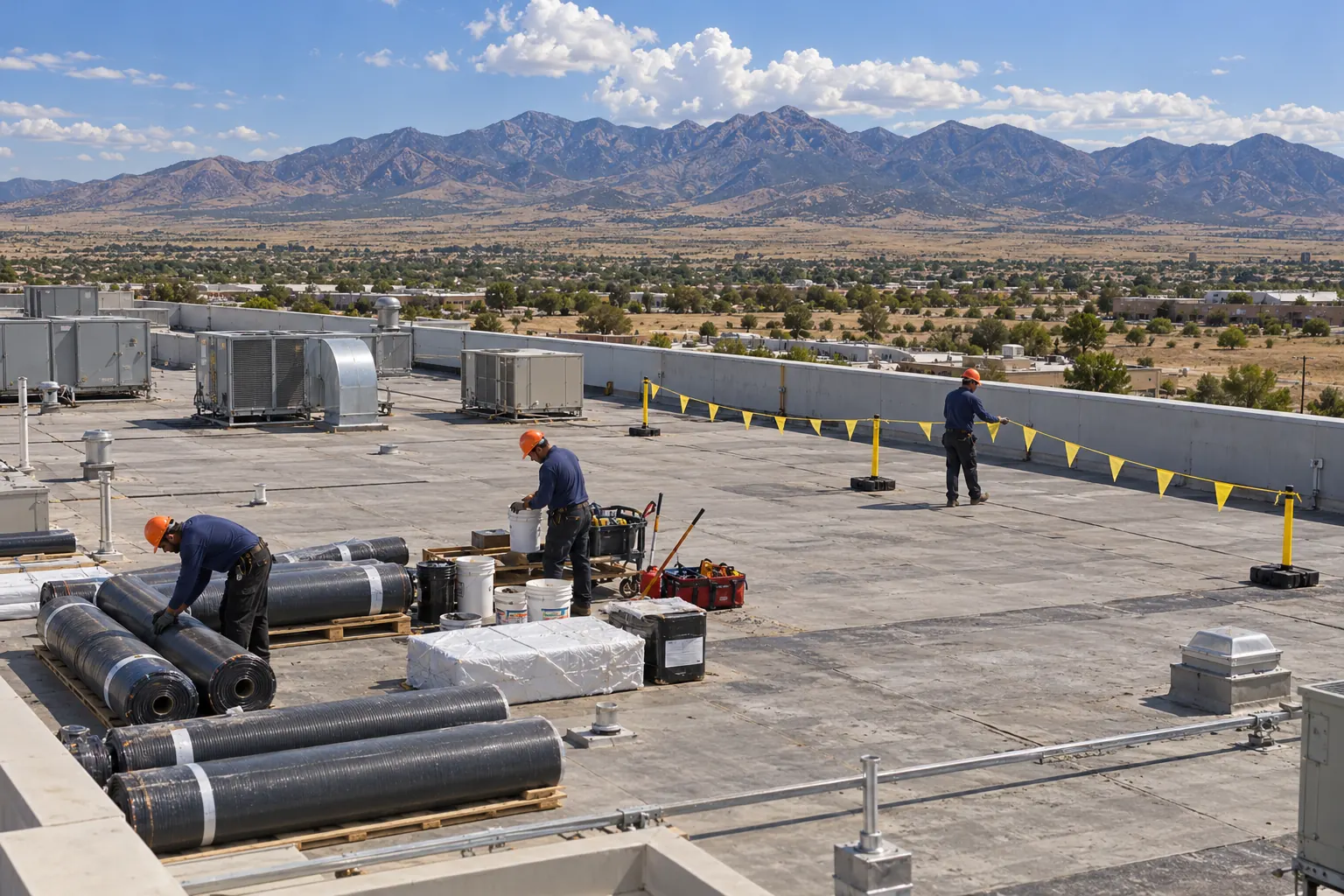
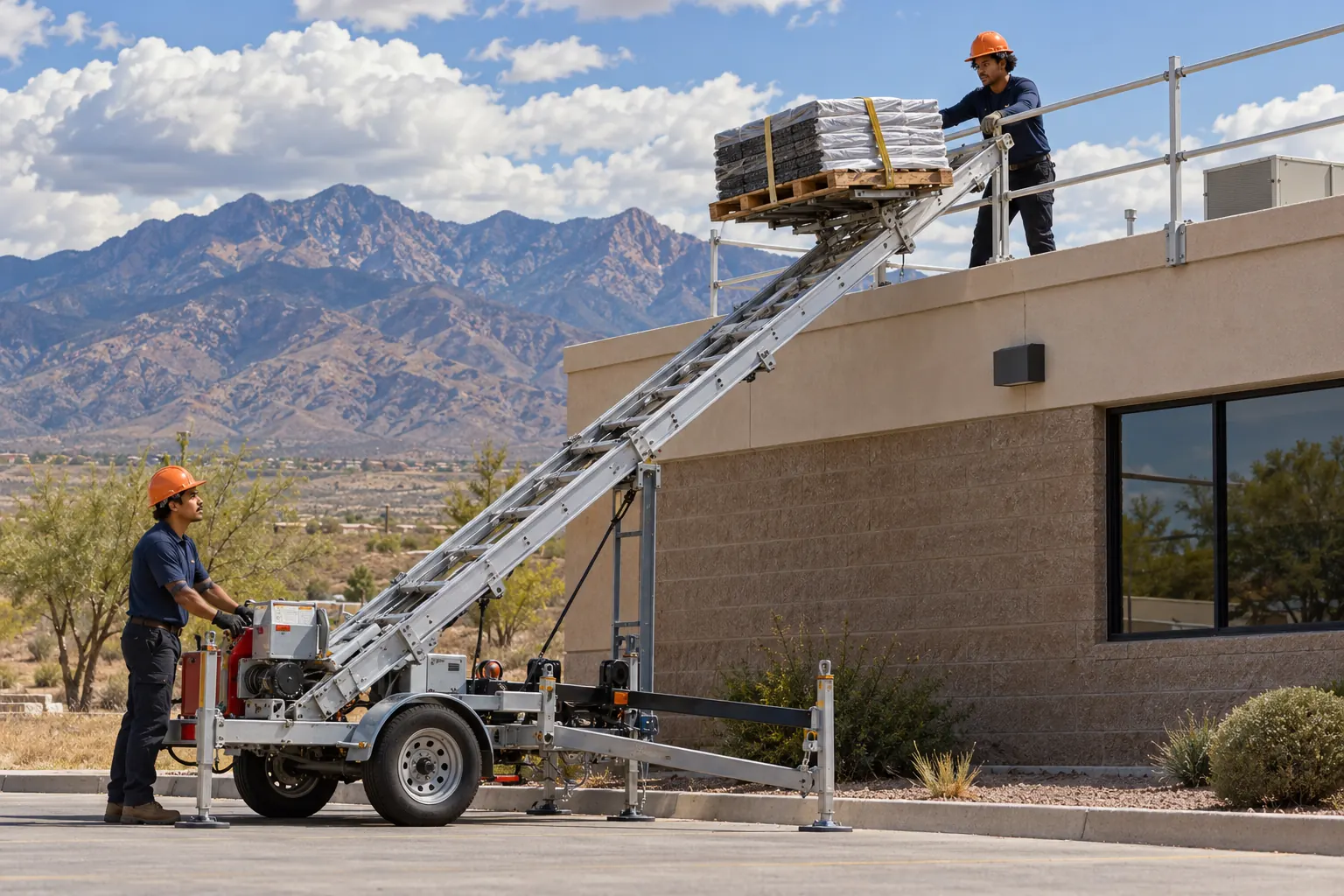
With the facility manager, the roofer walks the roof and maps stacks, process vents, curbs, and service paths, noting where exhaust discharges. Hot surfaces and moving parts are flagged on the map.
Leaks are traced from the plant floor to the roof, and wet areas are marked on the equipment map so the work order follows production needs. Leaks over critical equipment are scheduled first.
Lockouts or shutdowns are set, then flashing is rebuilt with heat- or chemical-resistant materials and walkway pads go down along worn paths. Work near each unit stops before its lockout window ends.
Repaired curbs and stacks are checked before equipment restarts. Photos tied to the equipment map go to the facility manager. Any equipment-related damage is flagged for plant maintenance.
Industrial roofs are either membrane or metal, so these apply too.
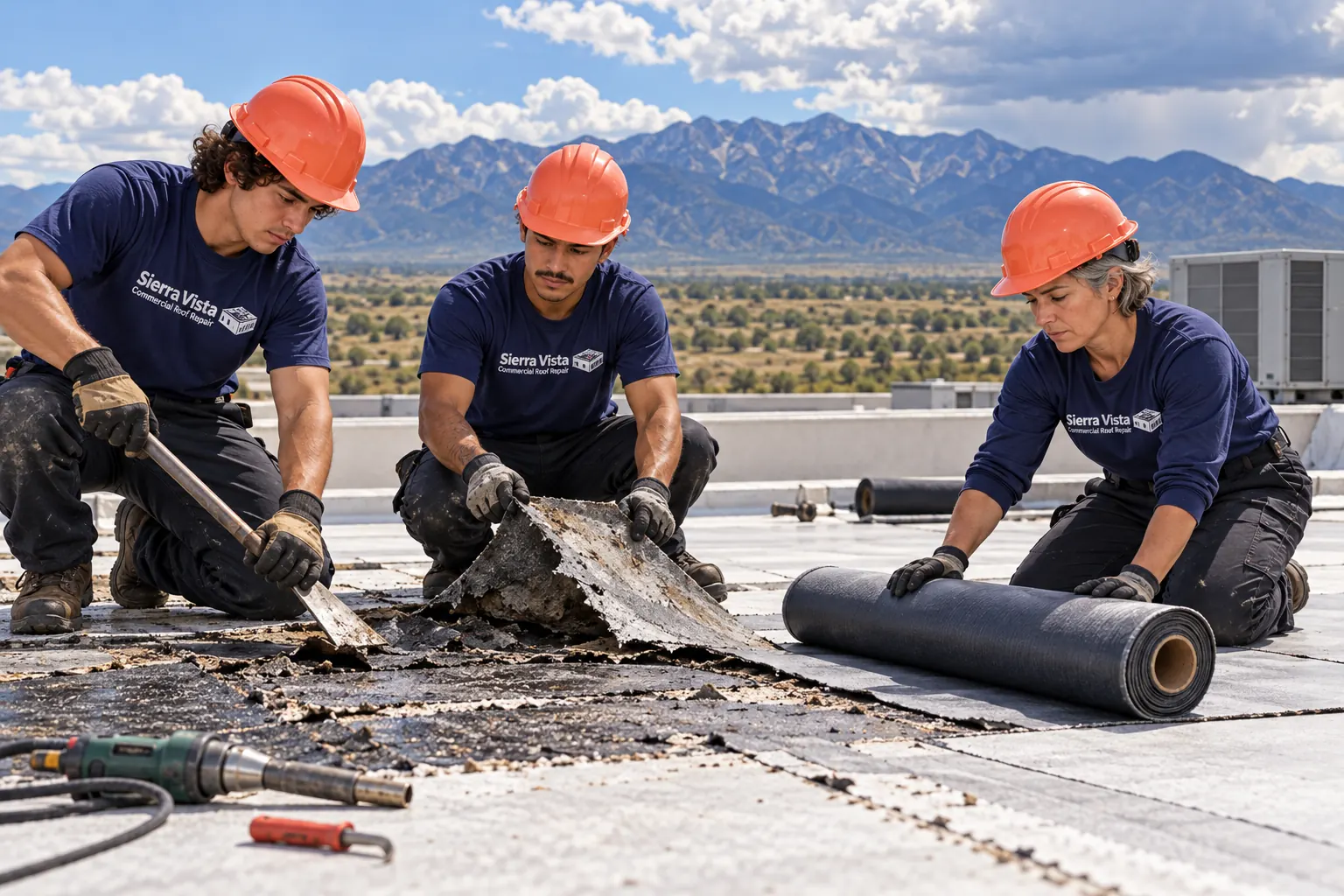
Membrane plant roofs need seams welded, wet insulation replaced, and drains reset away from the equipment as well. Drains near equipment get cleared and reset in the same visit.
Flat roof repair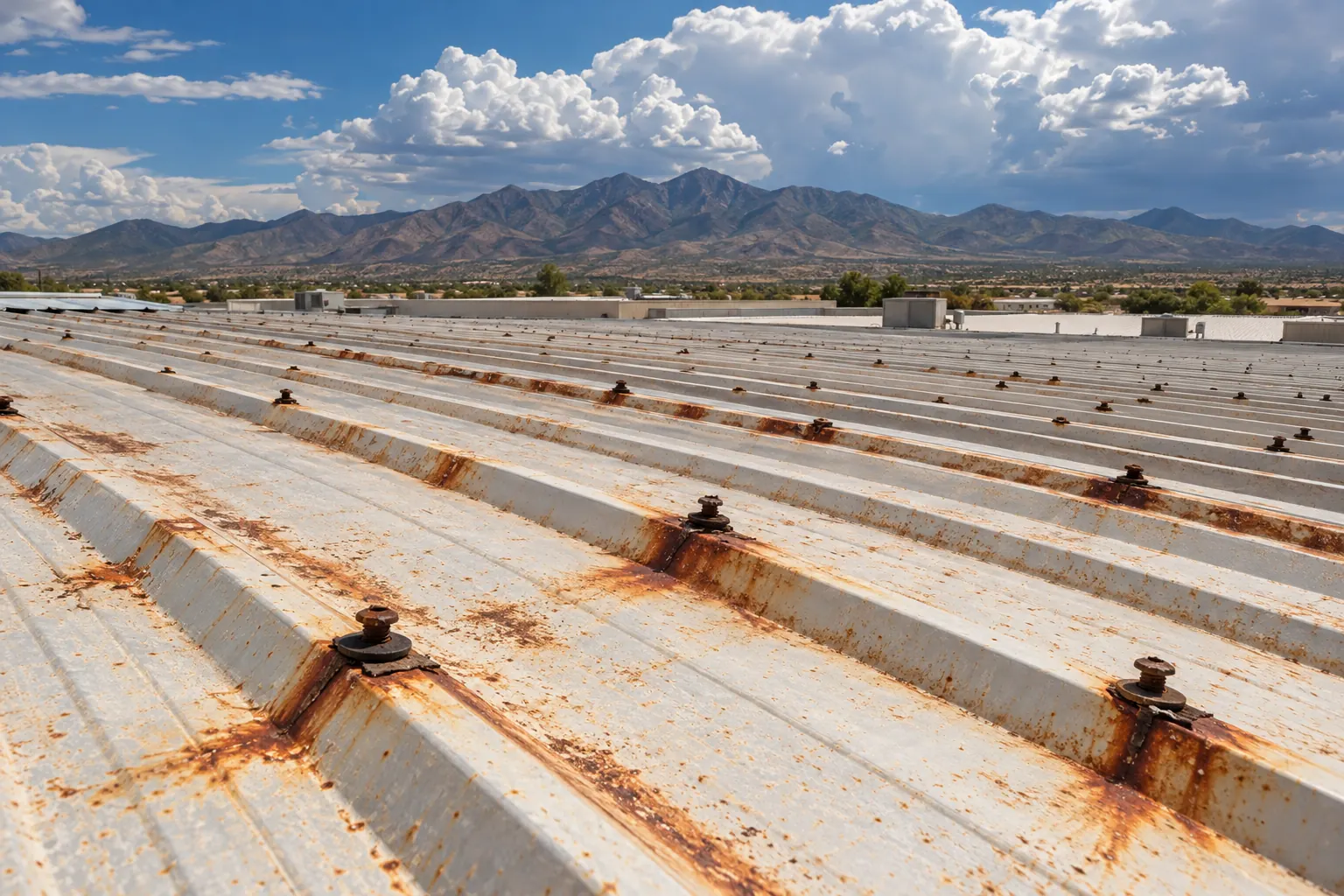
Metal plant roofs need fasteners, laps, and rust handled across the long spans between equipment curbs. Rust around curbs is treated before the panels near it give way.
Commercial metal roof repairCrews map stacks, vents, and curbs first, then coordinate lockouts or exhaust shutdowns with the facility manager before working near them. Work is phased so production lines underneath keep running.
They can. Hot or chemical exhaust softens some membranes and breaks down standard flashing, so materials near discharge points are chosen for heat or chemical resistance.
Many can. Work away from equipment goes on during normal hours, and only repairs close to stacks or units wait for a shutdown or lockout window.
Technicians servicing rooftop units walk the same route every visit. Pads spread that traffic so the membrane underneath stays intact.
Usually the facility manager and someone from maintenance who knows the equipment. They set shutdown windows and confirm which units can be locked out.
Yes. The wet roof area is split into sections that each open and close in one work period, so nothing stays exposed over the line overnight.
Flashing near hot or chemical exhaust is chosen for heat or chemical resistance, and it extends beyond the area where discharge settles on the roof.
Your site safety orientation, lockout procedures, and any permit-to-work steps are followed, and crews stay inside the roof zones your facility manager sets.
Send the plant address, what sits under the leak, and who manages shutdowns at your facility.
Leave your name and number and we will call you to talk through the leak or damage.
Rather talk now? Call (623) 310-0177