Spreading Wet Insulation
Water moves sideways through board joints across the deck, so the wet area can be many times larger than the opening. Readings on a grid show the true size of the wet area.

Commercial roof repair in Benson for rail and highway warehouses, starting with a moisture survey so patches cover all the wet insulation underneath.
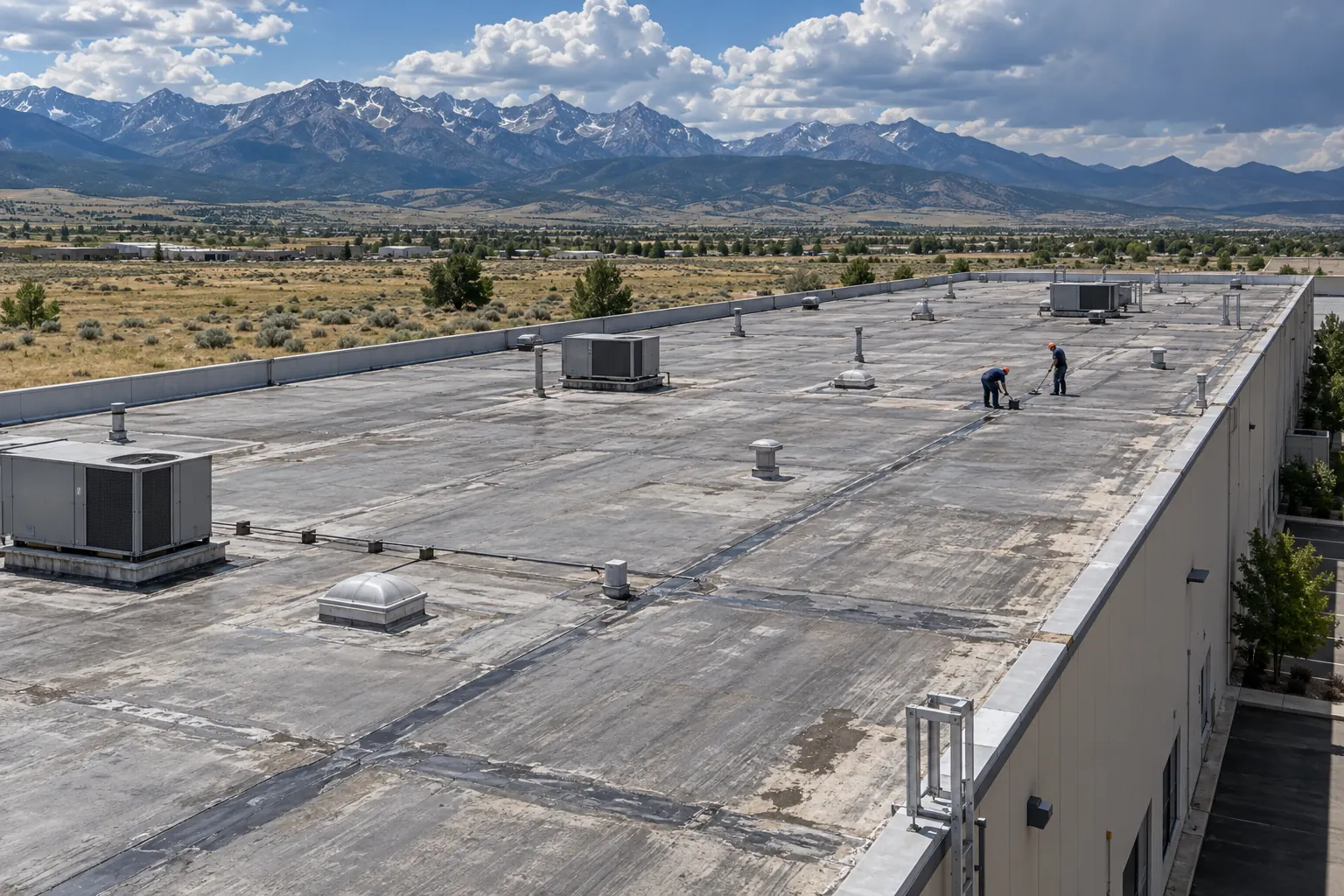
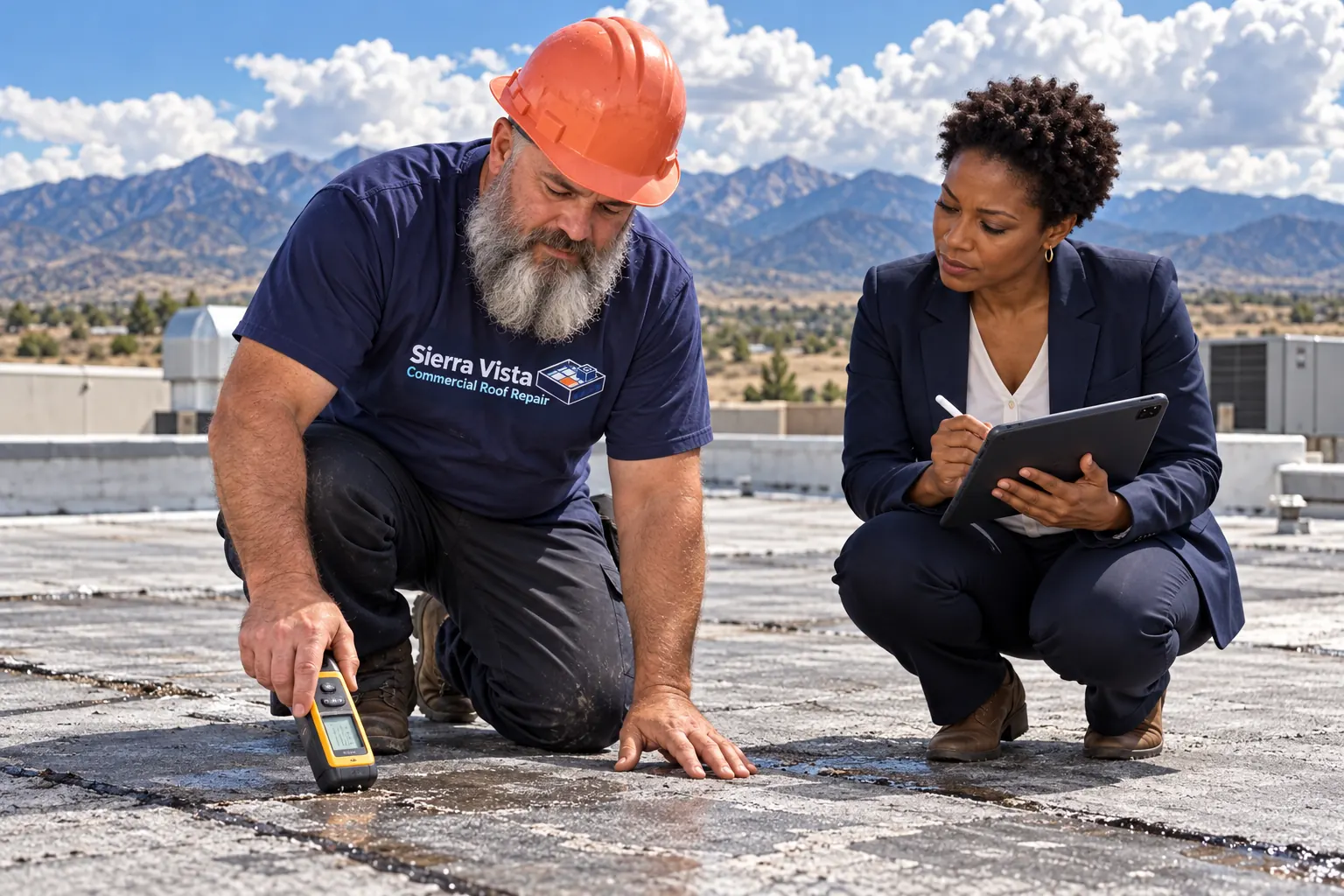
Rail and highway warehouses around Benson have wide roofs with long drain runs. A single opening can soak insulation across a big area before any stain shows on the high ceiling below, and a patch over the visible split leaves the rest of that water trapped.
That is why Benson repairs start with readings across the roof, then core cuts to confirm the edges. The readings also tell you whether the roof is still worth repairing.
Big roofs keep their problems out of sight longer than small ones.
Water moves sideways through board joints across the deck, so the wet area can be many times larger than the opening. Readings on a grid show the true size of the wet area.
Each drain collects runoff from far across the roof, and any low spot along the run turns into ponding over seams. Crickets or added drains fix low spots between drains.
High warehouse ceilings and open decks let water drip onto stock or the floor without leaving a clear stain. Drips land on stock or the floor, so nobody sees a ceiling stain.
Steel deck sitting under soaked insulation rusts quietly, and a soft spot underfoot is the first sign. Soft decking gets cut out and replaced before new insulation goes down.
Wide roofs carry long seams that expand and shrink across their length, and the far ends open first where movement adds up. Seam ends near corners and edges get probed on every visit.
Units and exhaust fans over loading areas take vibration from trucks and doors, cracking their curb flashing over time. Curbs over dock doors also catch rain blown off the trucks.
Knowing where the water went keeps the repair the right size.
Readings mark the edge of the wet area, so dry insulation stays and every soaked board comes out. That keeps the repair cost tied to the real damage.
Finding wet boards before the deck rusts through keeps the repair to insulation and membrane. Deck replacement costs far more than a few wet boards.
Closing the roof opening and replacing wet boards stops drips onto pallets and racks below. Pallets and racks stay usable through the next storm.
The survey shows whether repair covers it or the roof needs replacement planning, with readings to back it up. Owners get readings instead of guesses when budgeting.
Benson warehouse work draws on these two services.
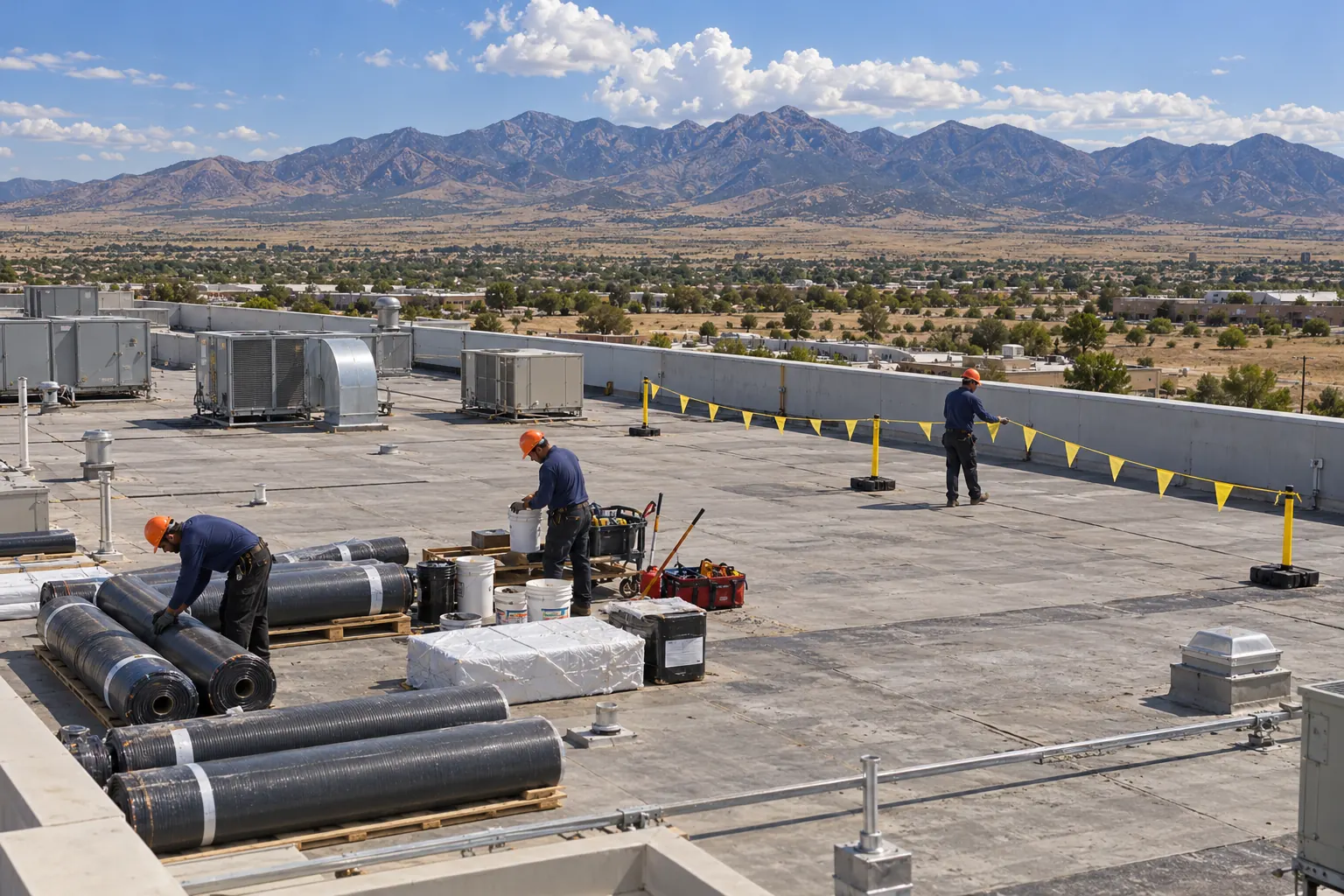
Seams, drains, and wet insulation replacement on the wide membrane roofs common to Benson warehouses. Drains along the long runs are cleared and their clamping rings reset.
Flat roof repair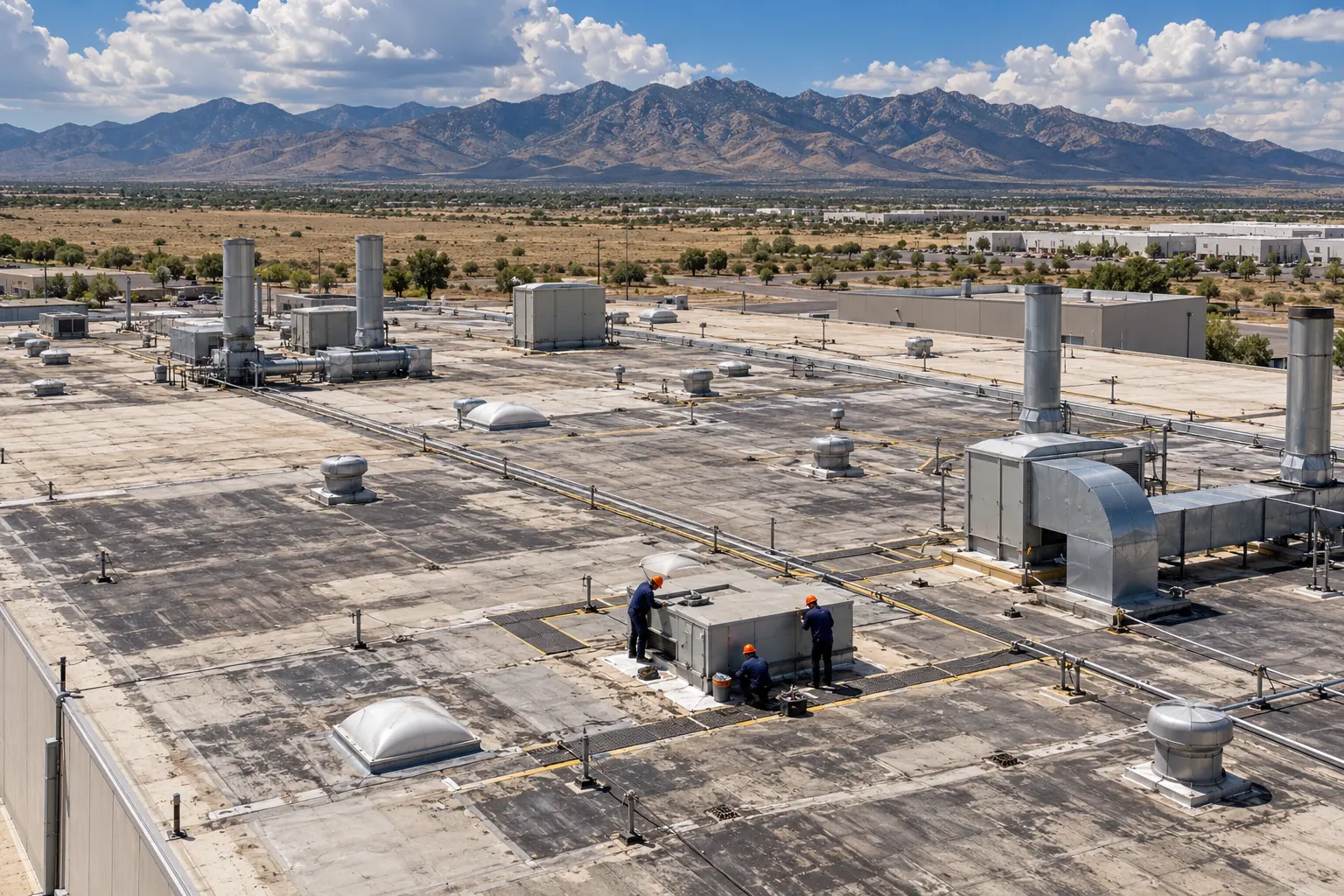
Warehouses with heavy equipment, docks, and exhaust get repairs planned around shipping and operations. Dock-side curbs and exhaust flashing are rebuilt around the truck schedule.
Industrial roof repairCall with the building size and the aisles where water lands. A moisture survey shows how far the water has spread.
Four steps, with the moisture survey at the center.
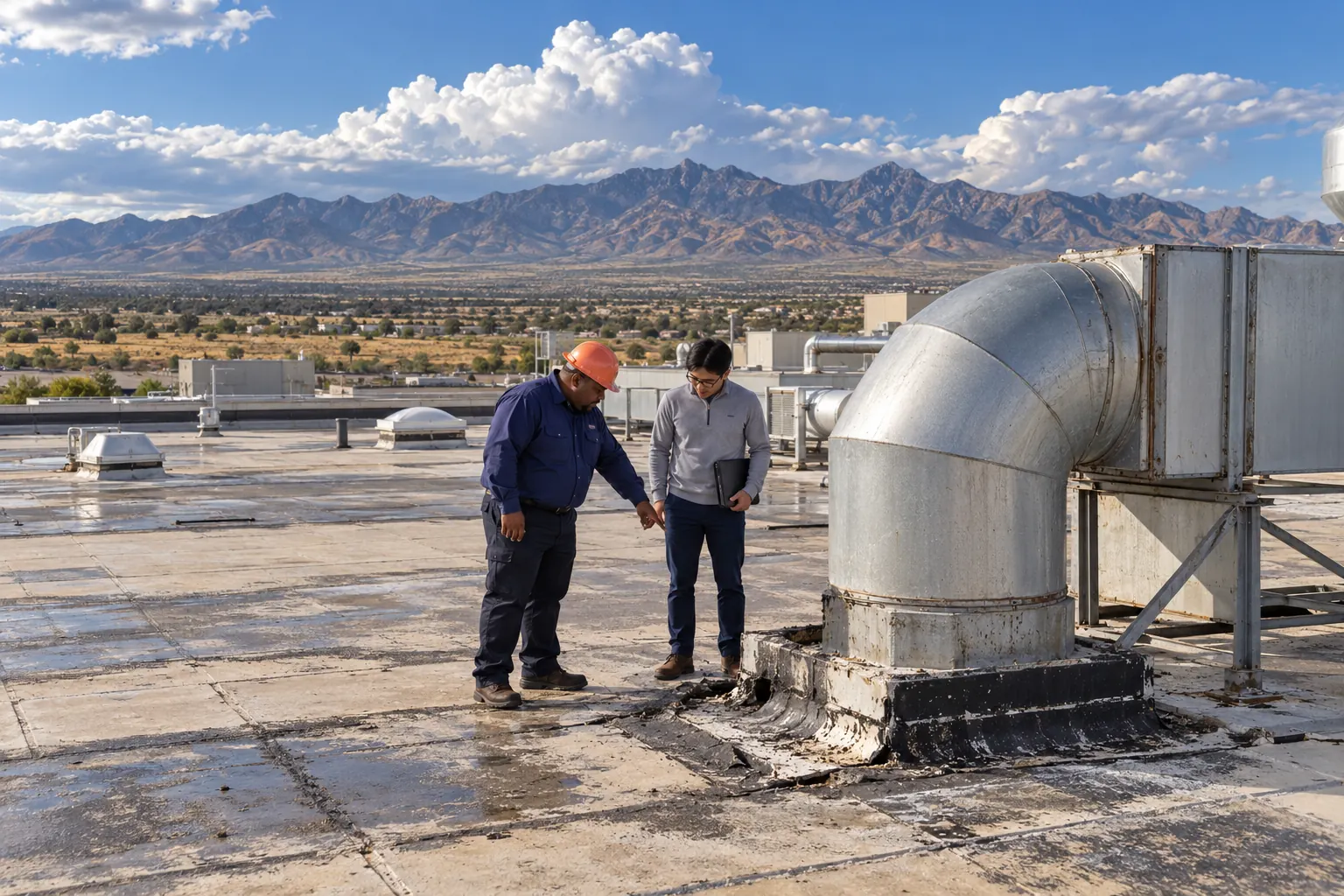
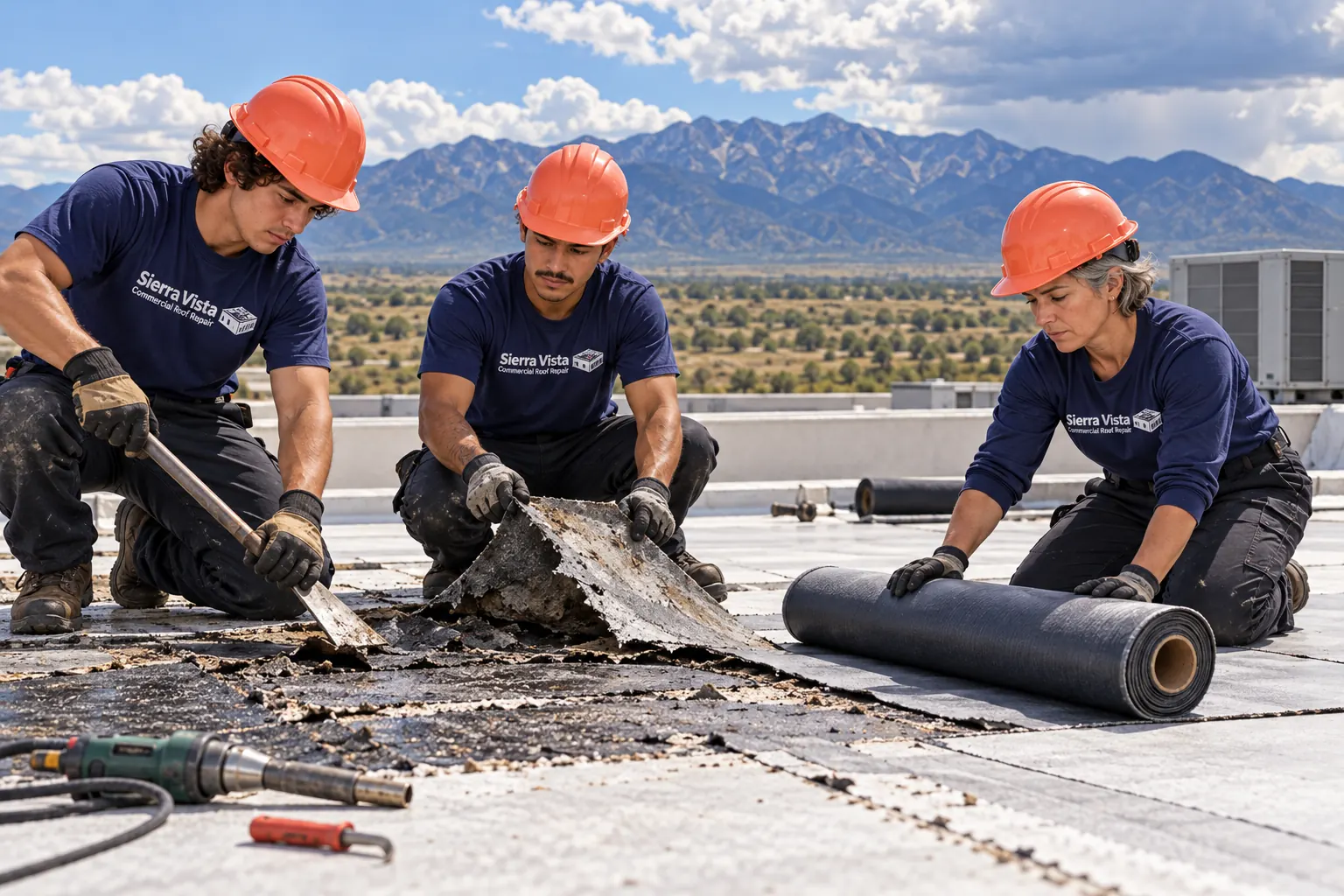
The whole warehouse roof gets walked, covering drains, seams, curbs, and edges, while drip points inside are marked on a floor plan. Soft spots in the deck are flagged as the roof is walked.
A grid of moisture readings shows where insulation is wet, and core cuts at the edges confirm the boundary before any cutting starts. The moisture map is drawn to scale over the roof plan.
Wet boards are cut out and replaced, the deck is checked for rust, and the opening is repaired in matching membrane. Replaced boards are tapered to keep water moving to drains.
Drains are flushed and repairs water-tested. You get the moisture map and photos of each repaired area. Readings are repeated on the new boards before the crew leaves.
Benson sits farthest north, near I-10, reached from Sierra Vista by SR 90. Its unit is highlighted on the map.
Rooftop units on off-post businesses, under town permits.
Long metal storage rows where eaves carry the runoff.
Historic storefronts; visible repairs wait on commission review.
Metal barns and equipment buildings checked after hail.
Shops on SR 92 with aging skylight panels.
It depends on how much insulation is wet, whether the deck is damaged, and the roof's age. Isolated problems favor repair. Soaked insulation well beyond the leak, rusted or flexing deck, and many old patches failing together point toward replacement.
The City of Benson Building Department handles commercial work inside city limits. Larger repairs that replace deck sections or drains need its sign-off first.
Moisture meters and core cuts handle most warehouse roofs. An infrared scan can help confirm the wet path on very large roofs.
Rarely. Materials go up to the roof away from the docks, and work over the dock area is timed around your truck schedule.
On a wide roof, much larger than the opening. Water follows board joints and deck flutes, which is why readings come before any patching.
Rusted deck sections are cut out and replaced before new insulation and membrane go down. Check with the City of Benson Building Department before deck work starts.
Wet insulation stays wet under a membrane for a very long time, so it is cut out and replaced. Only the membrane surface needs to be dry for the patch to bond.
Yes. Drain bowls, strainers, and clamping rings are repaired from the roof. Problems in the drain pipe inside the building go to a plumber.
Send the warehouse address, its rough size, and where water shows inside.
Leave your name and number and we will call you to talk through the leak or damage.
Rather talk now? Call (623) 310-0177