Screws Left On The Membrane
Loose screws from unit panels get stepped on and pushed through the sheet. Each one leaves a pinhole that weeps into the insulation. A magnet sweep around each unit finds the screws you cannot see.

Commercial roof repair in Huachuca City for off-post shops, offices, and restaurants, with a close look at the curbs, units, and service paths that leak first.
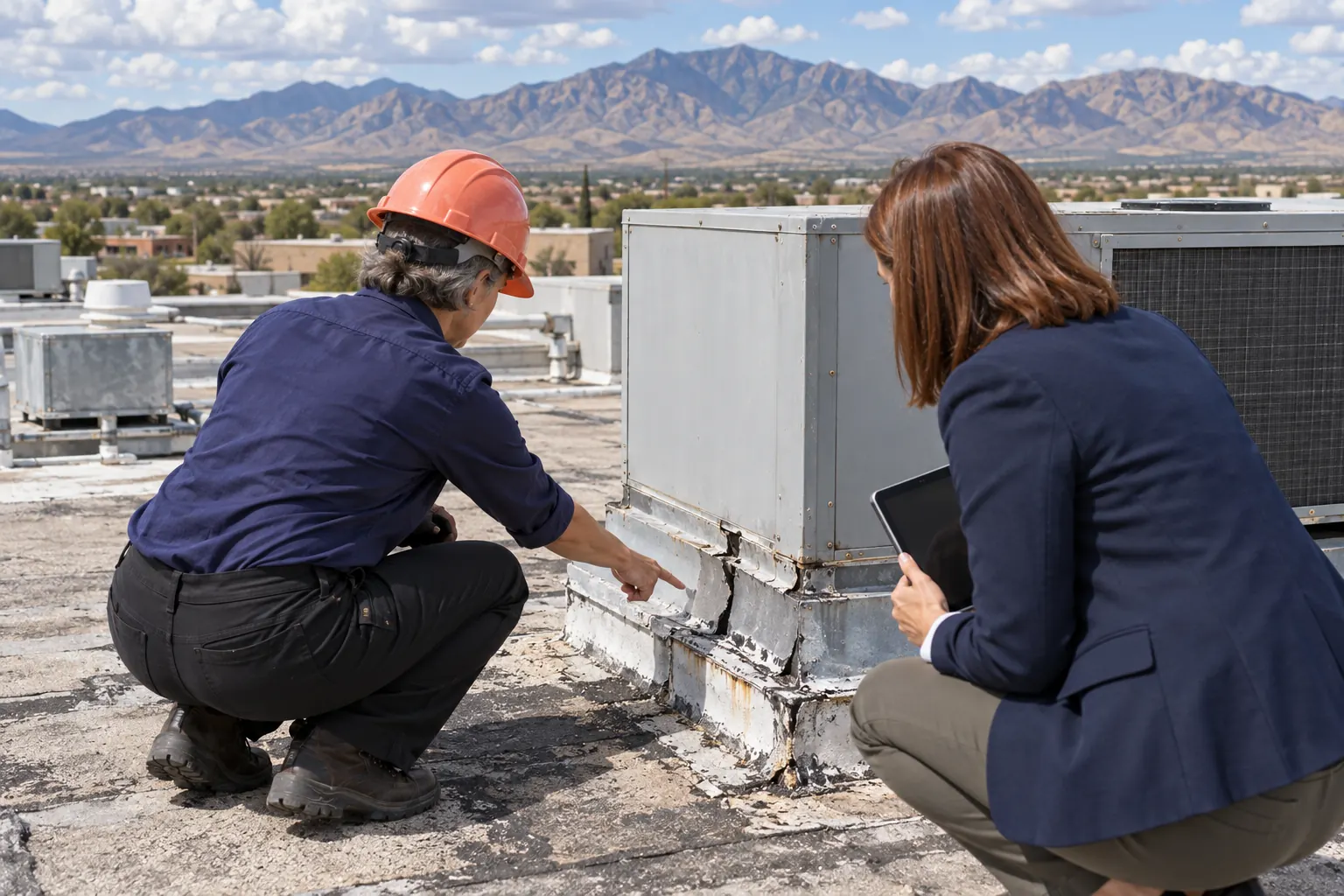
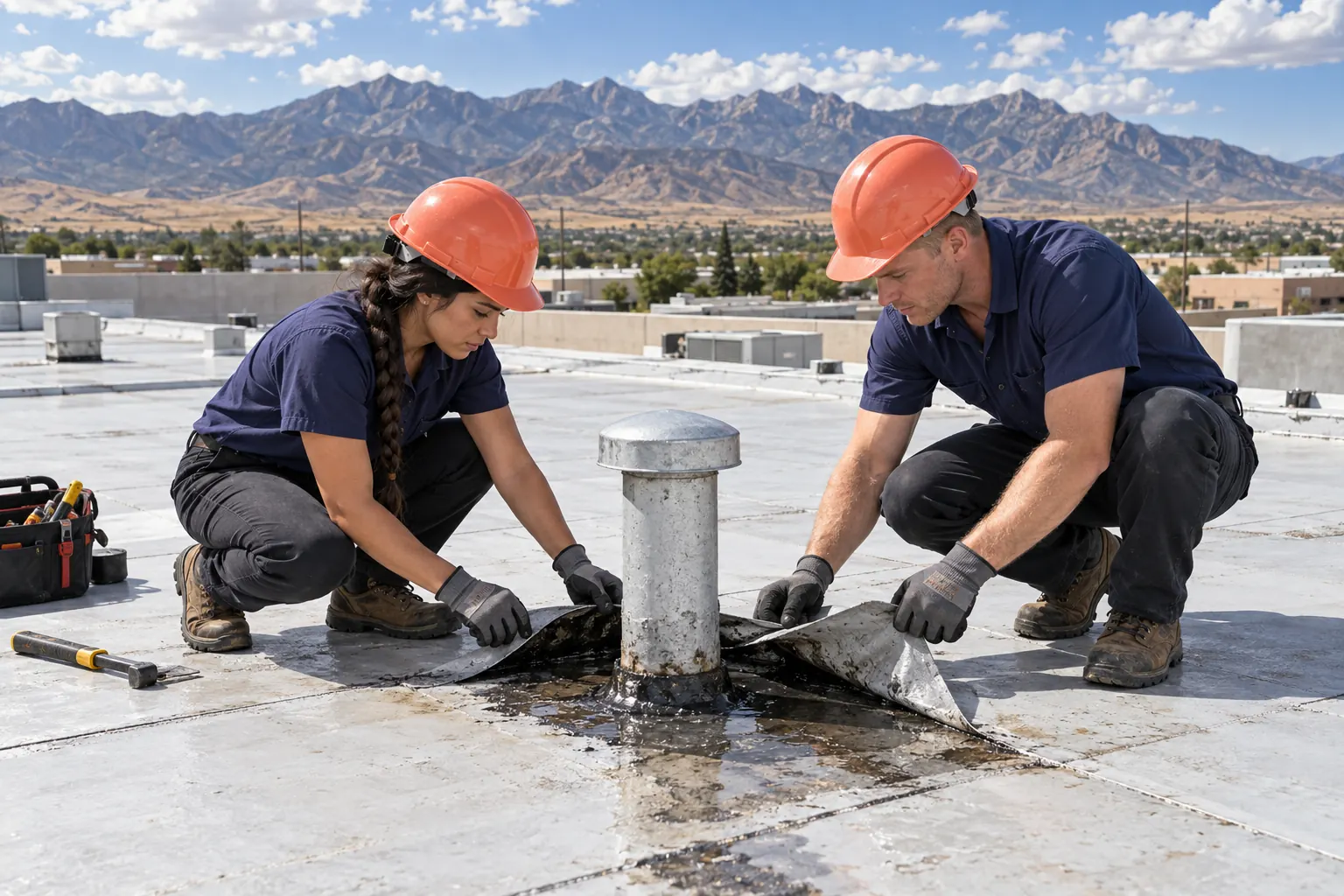
Off-post shops, offices, and restaurants near Fort Huachuca run rooftop units that need regular service, and every service visit puts boots and tools on the membrane around them. Dropped screws, slit sheet from a utility knife, and panels set down on the roof leave small openings that leak months later.
Our repairs here start at the units and work outward along the routes technicians walk. Walkway pads keep the same routes from wearing through again.
These four turn up most often on roofs with busy mechanical equipment.
Loose screws from unit panels get stepped on and pushed through the sheet. Each one leaves a pinhole that weeps into the insulation. A magnet sweep around each unit finds the screws you cannot see.
Units that get opened often shake their curbs, and the flashing splits at the inside corners where water collects. Corners get preformed flashing pieces instead of folded scraps.
The path from the hatch to each unit wears thin under repeated foot traffic, especially on hot afternoons when the membrane is soft. The thinnest spots usually sit right at the hatch landing.
A condensate line dripping onto the roof wears the surface below it and keeps that spot wet between rains. Pads under the drip line keep the sheet from wearing through.
Pipe boots and gas line supports near units get bumped during service and pull away from the membrane, opening a gap where rain runs straight in. New boots are sized to the pipe and clamped at the top.
Tape or mastic dabbed over damage during an earlier service call dries out in the sun and lifts, leaving the original hole open again. The old patch is cut away so the new one bonds to clean sheet.
Fixing the small damage near equipment keeps it from spreading under the whole unit.
Leaks near units tend to land over work areas and front counters. Patching the punctures keeps those ceilings clean. Fixing them early also keeps stains off finished ceilings.
Pinholes near a curb soak the boards right where they are hardest to reach later, under the equipment itself. Replacing a few boards now beats lifting a unit later.
Walkway pads spread the weight of technicians and their tools so the sheet lasts between repairs. They also show technicians exactly where to walk.
Photos of the damage around each unit help you raise it with whoever services the equipment. It makes the next service visit easier to plan around the roof.
Most Huachuca City calls fall under these two services.
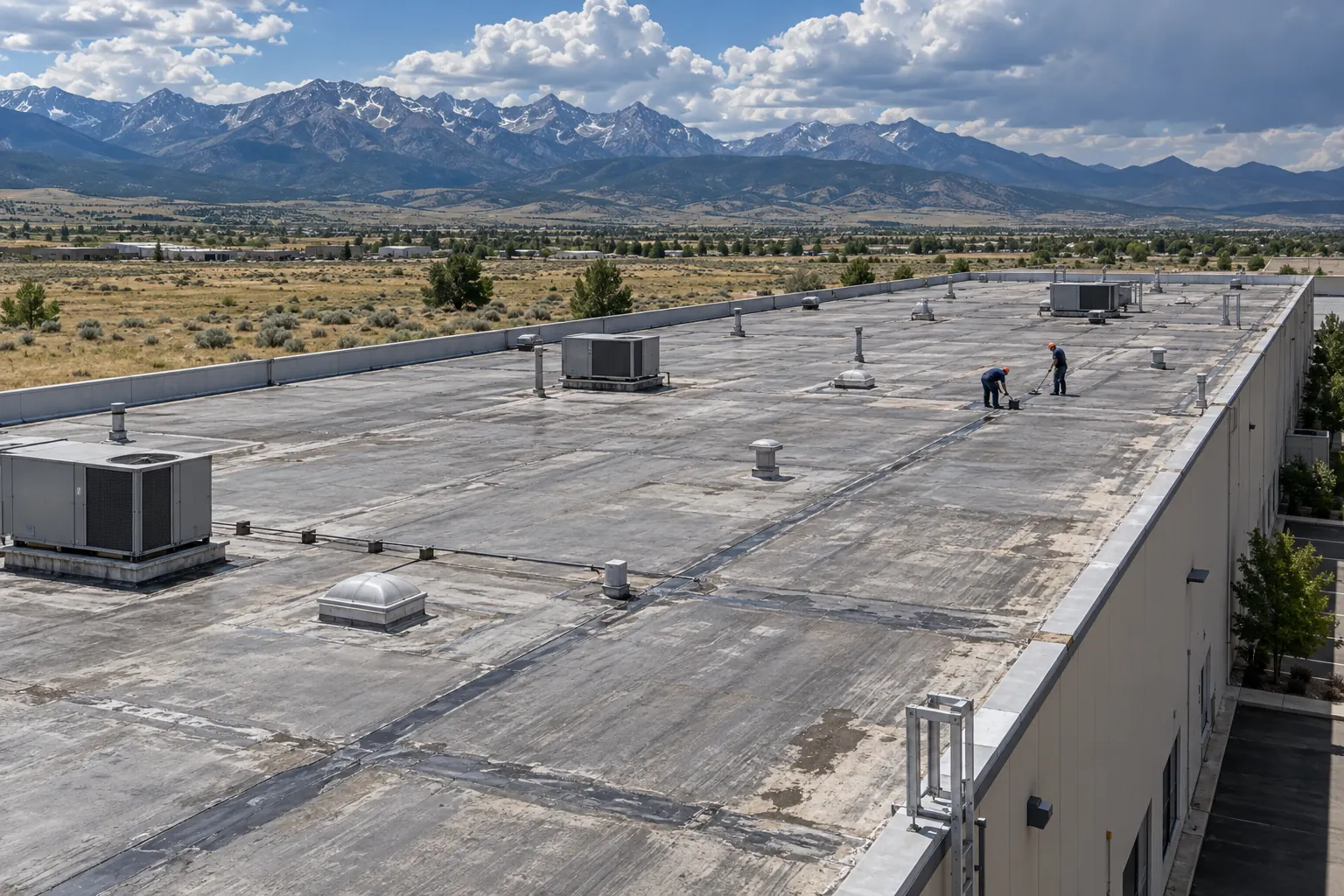
Membrane roofs on off-post shops and offices get punctures patched, curbs reflashed, and walkway pads added.
Flat roof repair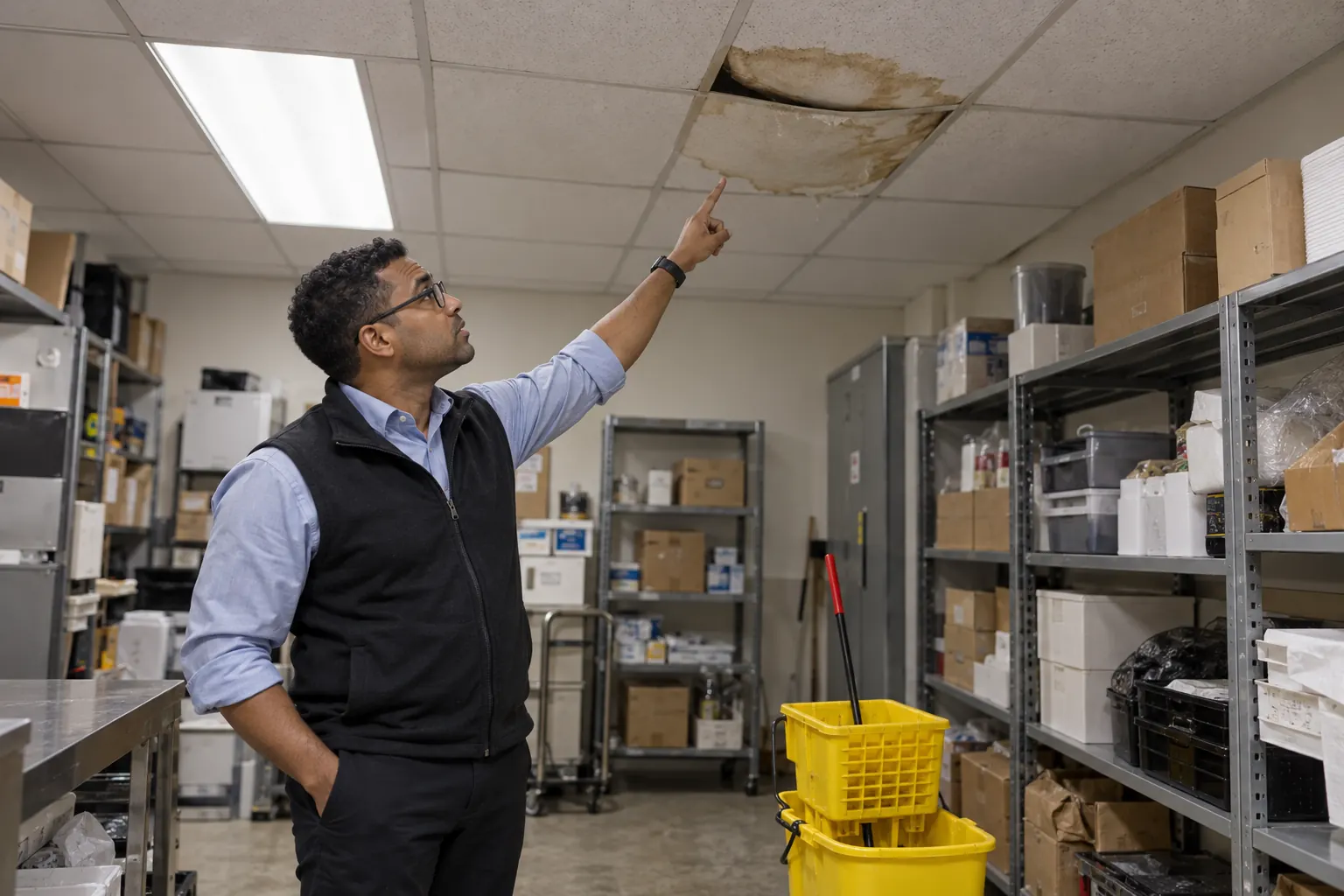
When a stain shows away from the units, tracing follows the water back to the curb or boot that let it in.
Commercial roof leak repairTell us which unit the drip sits under and when it was last serviced. Then call and we will plan the visit around it.
Four steps, starting at the equipment and moving out along the service routes.
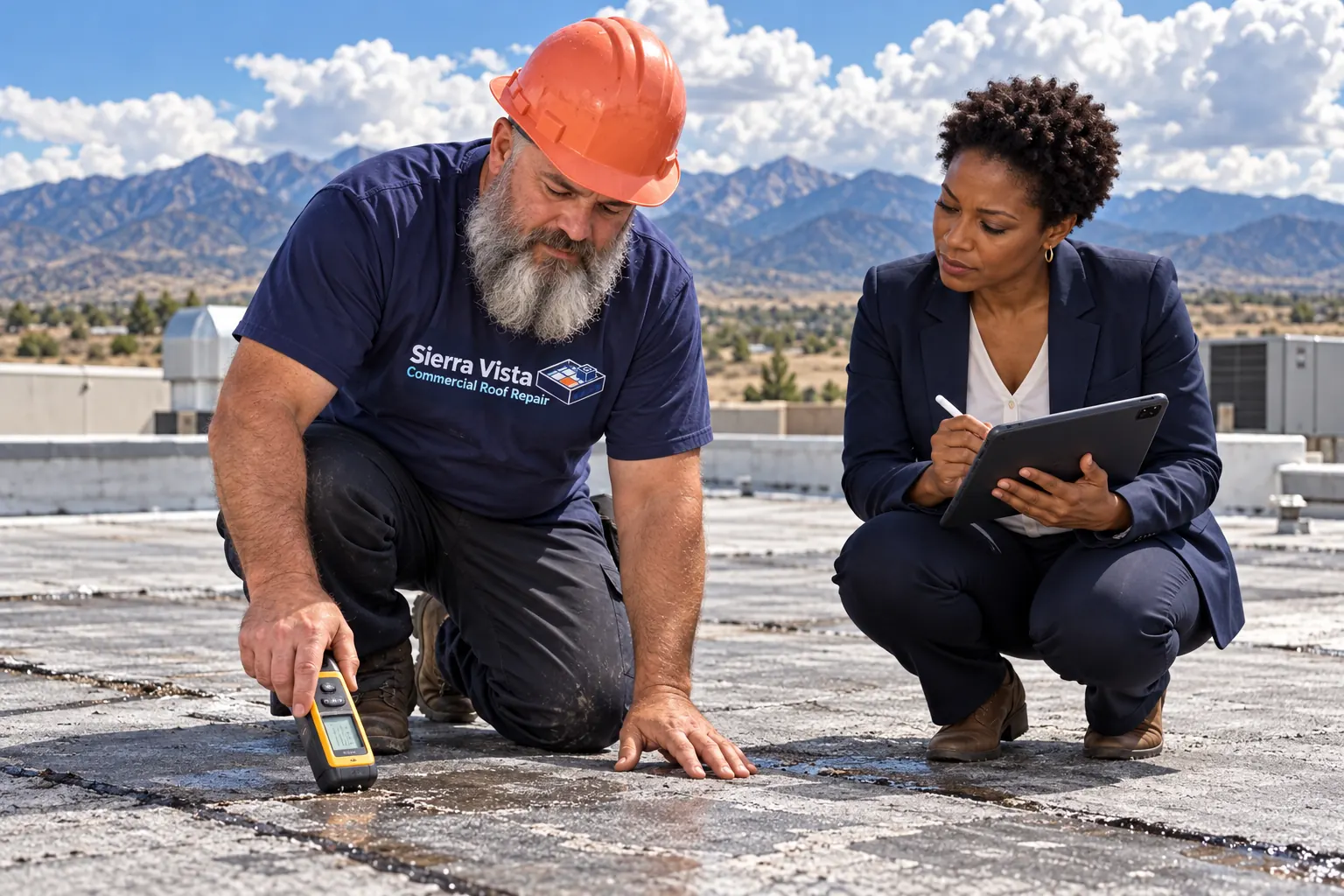
Each unit, curb, and condensate line gets checked, along with the path from the hatch. Loose screws are picked up and punctures circled. Service panels left loose on units get noted too.
Readings around each curb show how far water has spread under the units. Interior stains are matched to the unit above them. Wet boards under a unit are flagged for replacement.
Punctures get matching patches, cracked curb corners are reflashed, and new walkway pads go down along the technician routes. Condensate lines are rerouted onto pads where needed.
Curbs are water-tested where safe, and you receive photos of every repaired spot labeled by unit. Photos are labeled so your HVAC vendor can find each spot.
Huachuca City sits northwest of Sierra Vista on SR 90. The highlighted unit on the map is this town.
Long metal storage rows where eaves carry the runoff.
Historic storefronts; visible repairs wait on commission review.
Wide warehouse roofs along the rail line and I-10.
Metal barns and equipment buildings checked after hail.
Shops on SR 92 with aging skylight panels.
As long as the roof around it, if that membrane is still in good shape. A patch on an old sheet buys less time because the material keeps aging beside it. Walkway pads and matched material help the repair last.
The Town of Huachuca City Building Department handles commercial work inside town limits. Ask it before replacing deck sections or curb flashing on a larger repair.
Mostly. Patching and walkway pads happen with units running. Reflashing a curb close to a unit waits until it can be shut off for a short window.
It helps when curb flashing is being rebuilt, since the unit has to be shut off and sometimes lifted. For punctures and pads, it is not needed.
Stand legs press into the membrane and cut it over time, and condensate keeps the area wet. New pads under the legs and a patched sheet fix it.
Yes. Metal shops get loose fasteners replaced, laps resealed, and penetrations reflashed, using the same steps as membrane roofs.
Only where traffic wears the sheet. Pads go along the path from the hatch to each unit and around the service side of the equipment.
Small punctures and cuts usually can. Larger tears, or damage with wet insulation under it, get temporary control first and a full repair once materials are on hand.
Send the address and the unit or room where water shows, and we will set up the roof walk.
Leave your name and number and we will call you to talk through the leak or damage.
Rather talk now? Call (623) 310-0177