Backed-Out Screws
Daily expansion works exposed fasteners loose until the washer no longer seals. We replace them one size larger with new sealing washers.

We repair commercial metal roofs in Sierra Vista in place: new oversized fasteners, resealed laps, treated rust, and matching skylight panels.
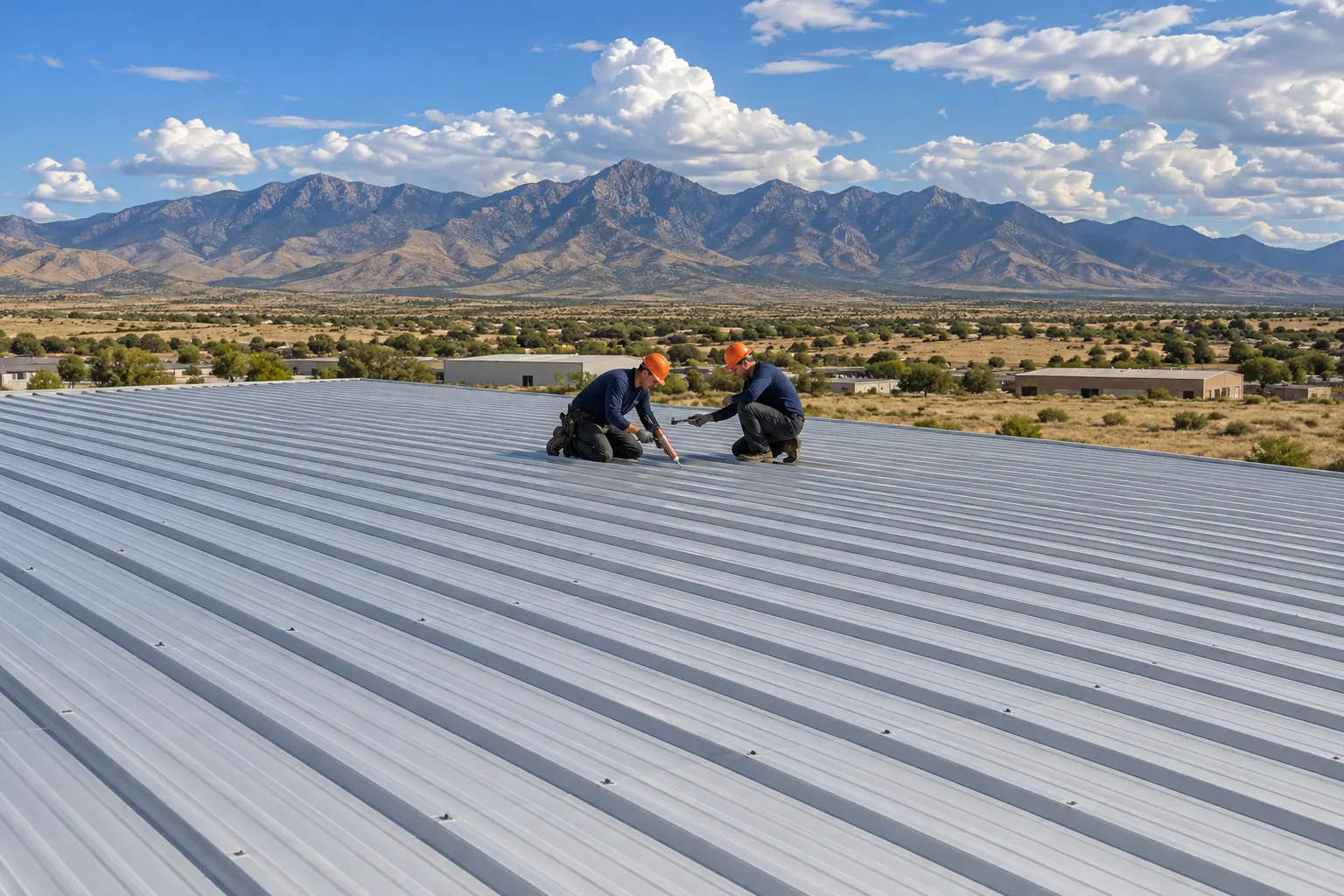
Most metal roof leaks come from a handful of details. Rust through the steel itself is what changes the answer.
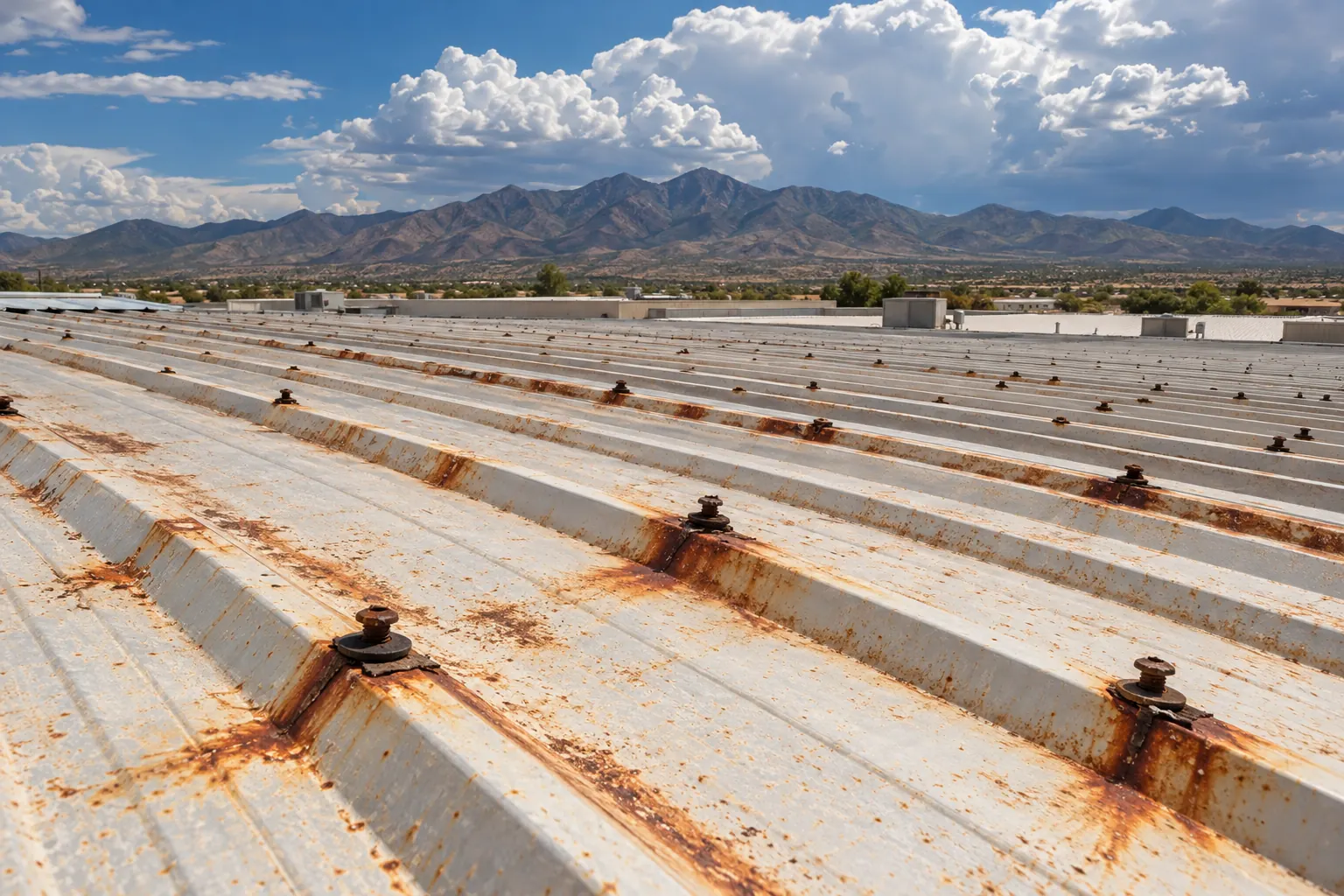
Steel roofs move with the sun every day. That movement is what opens them up.
Daily expansion works exposed fasteners loose until the washer no longer seals. We replace them one size larger with new sealing washers.
Rust starts around screw heads, cut edges, and laps where water lingers. Wire-brushing and primer stop the spread while the steel is still whole.
Old sealant at laps dries and cracks. Fresh butyl tape and stitch screws pull the panels back together and seal the joint.
Translucent panels yellow, turn brittle, and crack under hail. A matching profile replaces the panel without disturbing the steel beside it.
Foam closures shrink and fall out, and trim lifts in wind. New closures and refastened trim stop wind-driven rain at the roof edges.
Dents near a screw can break the washer seal even when the panel looks fine. Those screws get checked and replaced after a hailstorm.
These repairs cover most leaks on standing-seam and exposed-fastener roofs around Sierra Vista.
| Repair | What It Fixes | When It Is Enough |
|---|---|---|
| Fastener replacement | Loose screws and cracked washers | Holes are not stripped past the next size |
| Lap reseal | Open side and end laps | Panel edges still meet flat |
| Rust treatment | Surface rust at screws and edges | The steel is solid under the rust |
| Skylight panel swap | Yellowed or cracked translucent panels | The curb or lap around it is sound steel |
| Closure and trim work | Gaps at ridge, eave, and rake | The trim itself is straight |
Steel panels outlast their fasteners and sealants, so repairs keep a good roof working.
Replacing screws and washers costs a fraction of new steel, and the existing panels keep shedding water for years. New washers sit flat against the panel and seal again.
Treating bloom around fastener heads now keeps it from eating holes through the panel later. Primer holds as long as water stops pooling there.
Matching skylight panels keep shops and warehouses lit while ending the drips under cracked translucent panels. Bays under them stay lit without buckets on the floor.
Repairs happen from the roof surface, so shop floors, storage aisles, and equipment underneath stay in use. Most shops never have to empty a bay for a metal roof repair.
That pattern usually means failed washers. Call and tell us roughly where the drips land and how the panels are fastened.
Four steps, each one written up with photos of the panels involved.
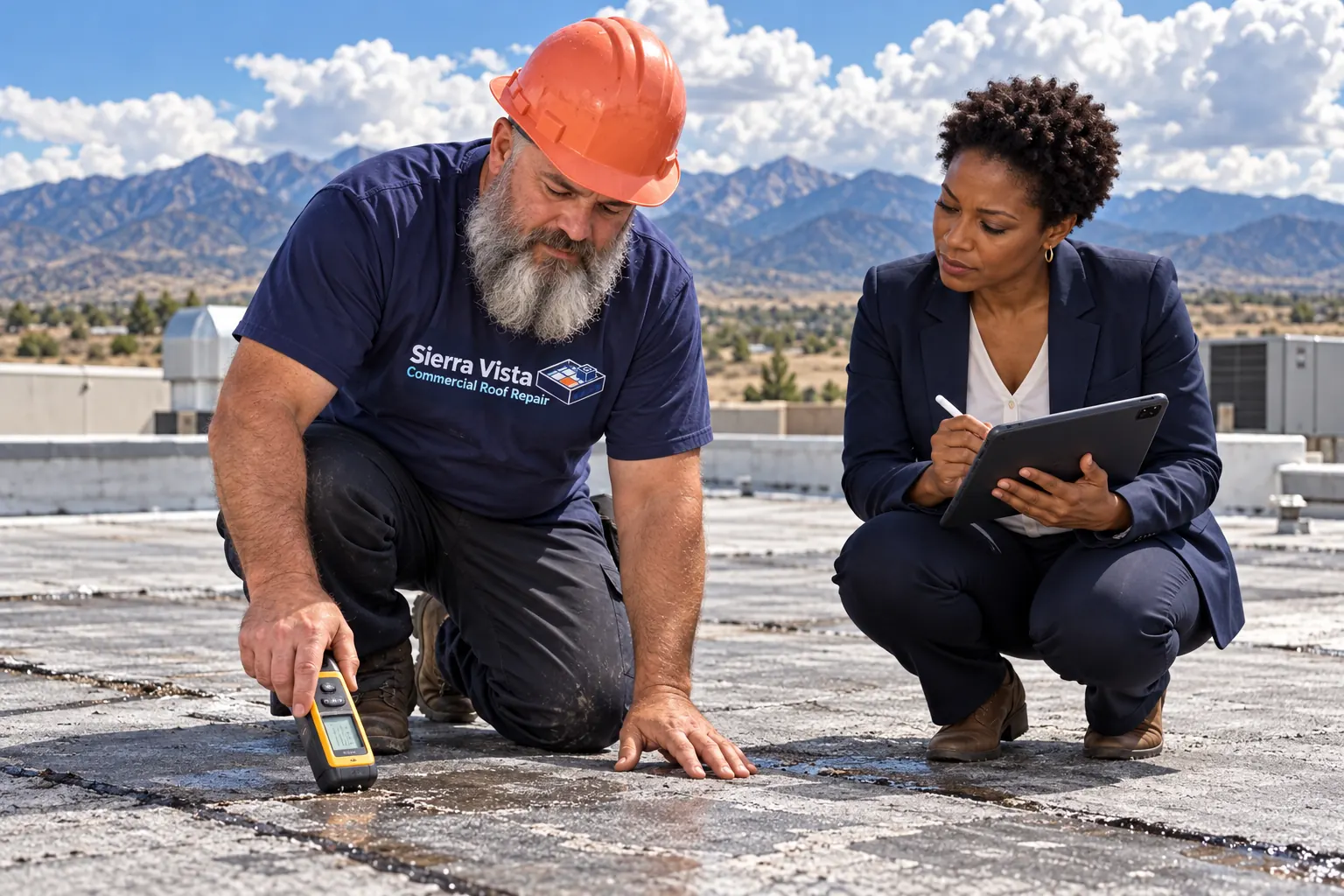
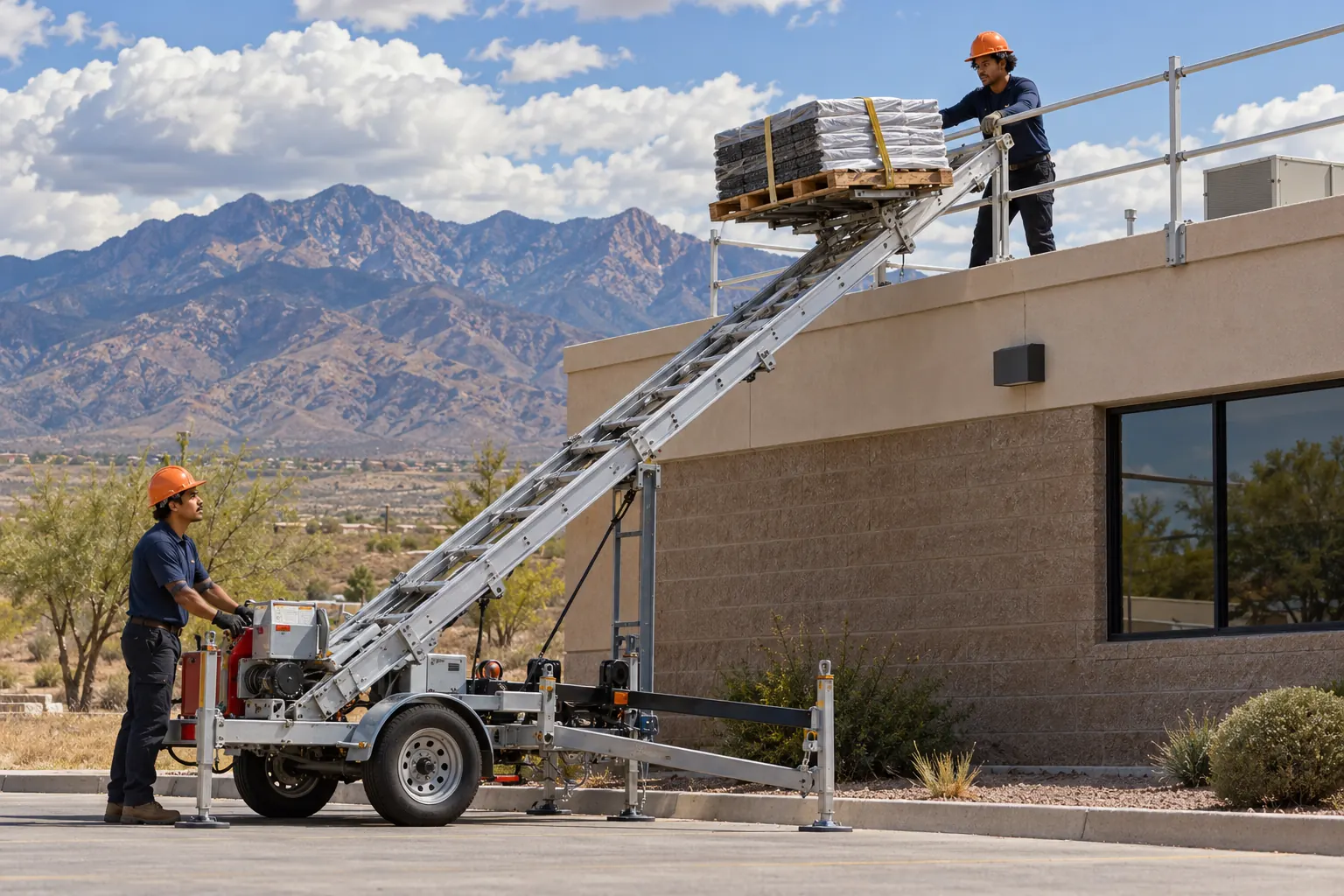
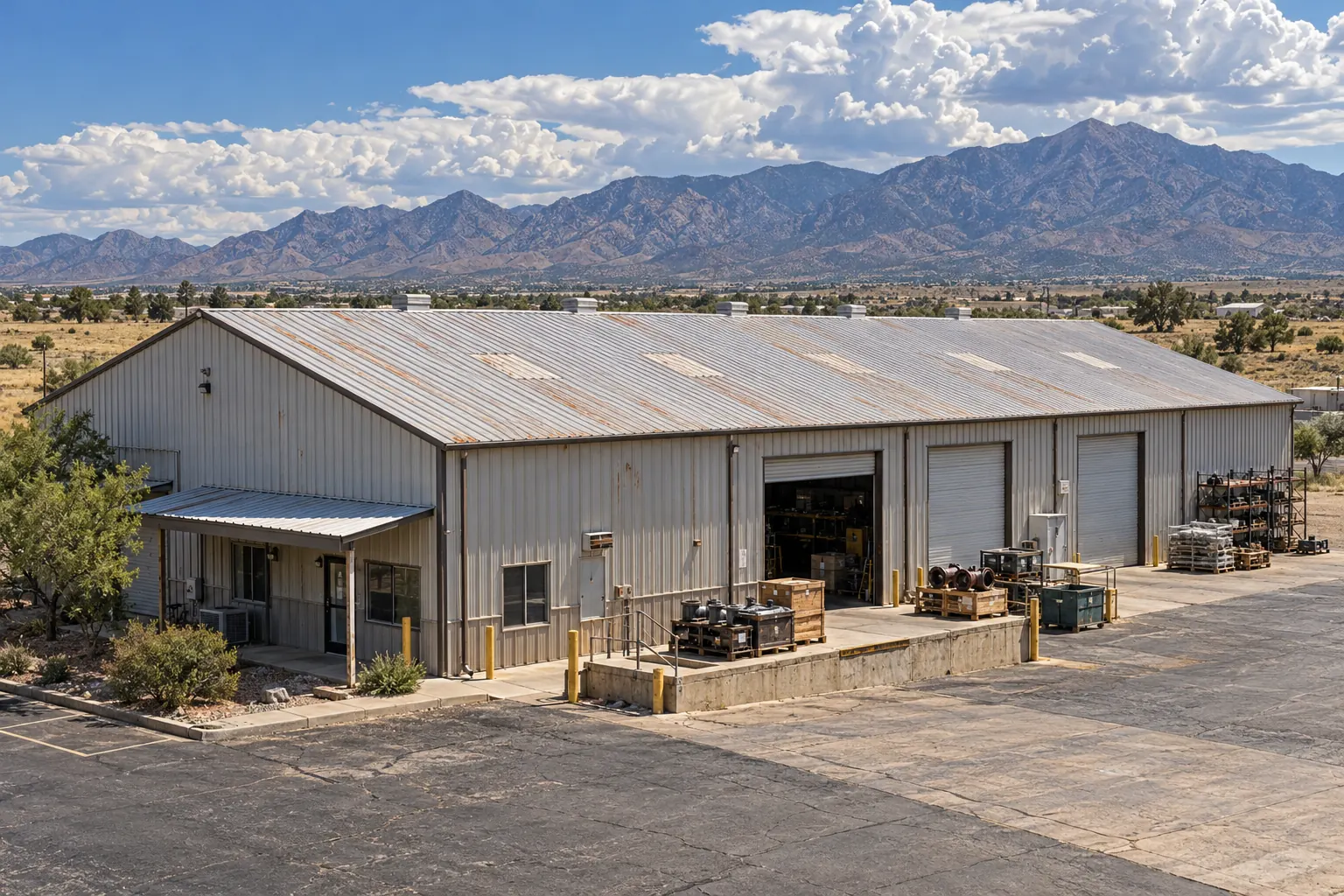
Screw rows, laps, ridge and eave closures, skylights, and gutters get checked across every panel run, along with any rust at cut edges and penetrations. Gutters and downspouts get a look for overflow marks.
Drips inside are matched to the panel run above. On metal, water often travels down a rib or purlin before it falls, so the trace follows the slope uphill. Stained purlins inside help confirm which lap is leaking.
Fasteners go in one size larger with new washers, laps get butyl tape and stitch screws, rust is brushed and primed, and cracked skylight panels are replaced. Every new screw is driven snug, never crushed, so the washer seals.
A hose test runs down the repaired laps and screw rows. You get photos of each fixed panel and notes on rust to watch. Panels close to failing are marked on the photos for later.
Metal buildings often need these too.
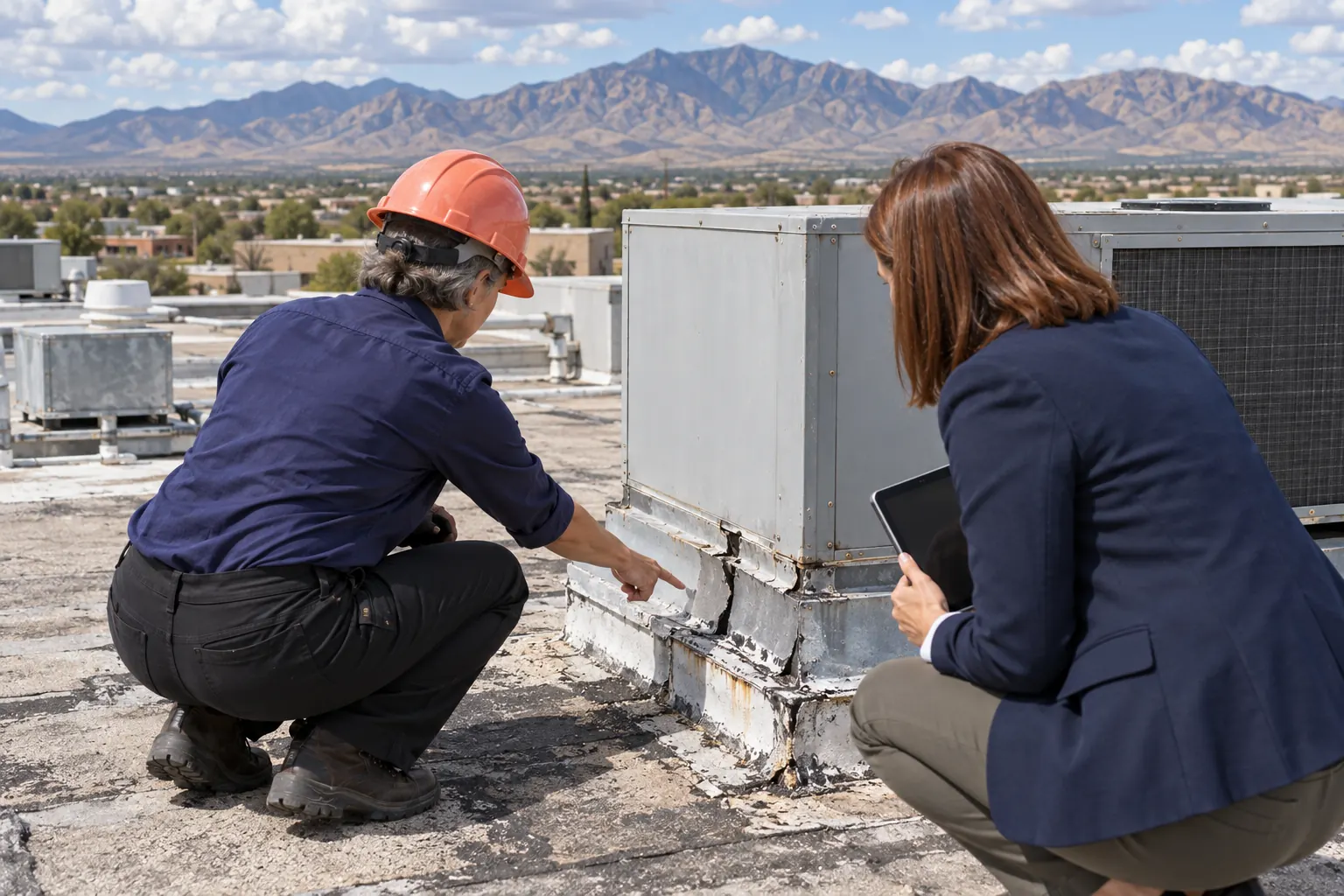
If drips show up far from any screw row, leak tracing follows the water back along ribs and purlins to its source.
Commercial roof leak repair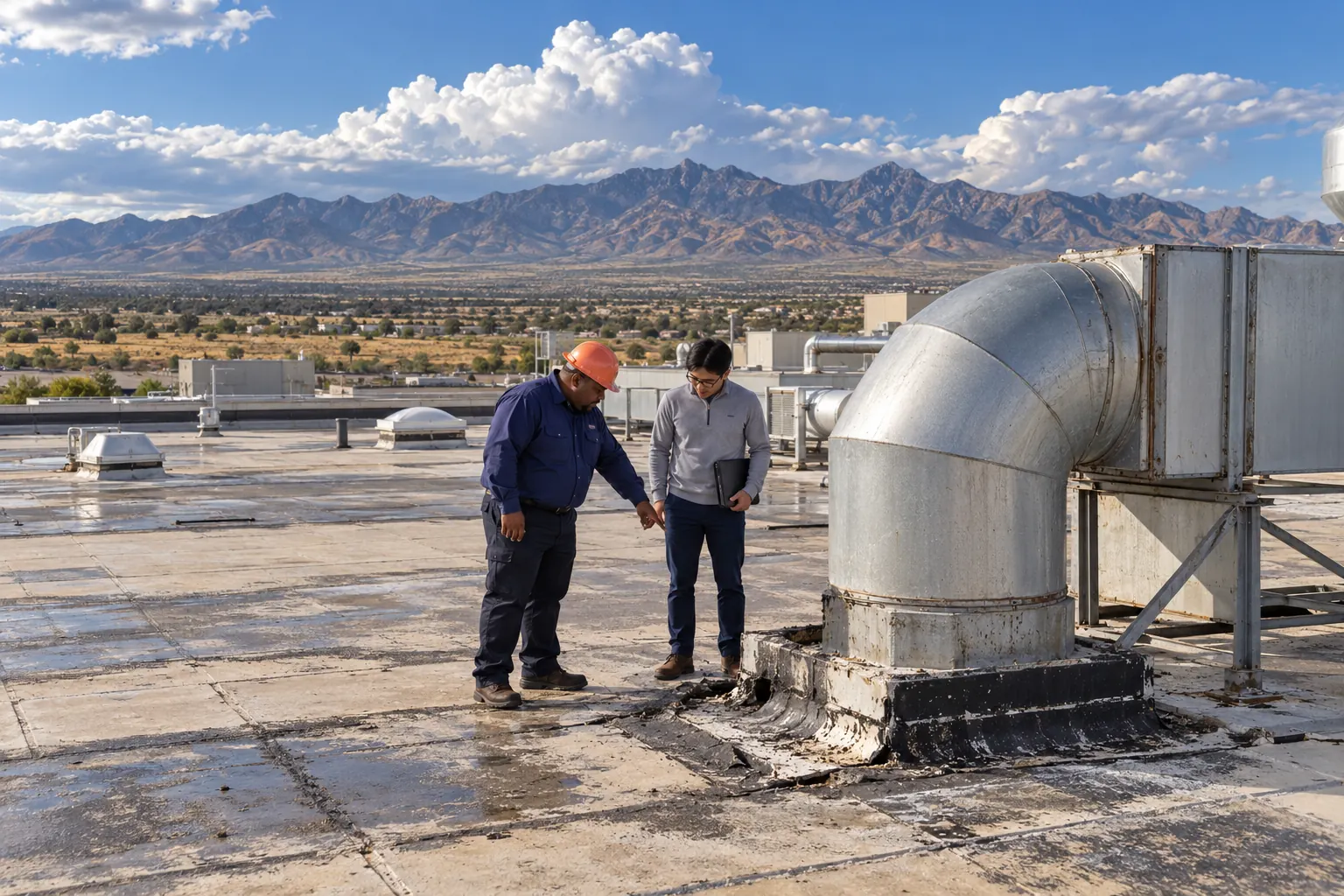
Metal plant roofs with ducts and stacks need flashing that handles heat and work scheduled around lockouts.
Industrial roof repairOften, yes. Most leaks trace to backed-out fasteners, opened laps, rust bloom, or cracked skylight panels, and each of those gets fixed in place on the existing steel.
Panels expand on hot afternoons and shrink overnight. That movement slowly turns screws loose and cracks old washers, which is why fastener checks belong on every roof walk.
Not always. Screws that hold tight with intact washers stay. Loose ones and any with cracked or missing washers get replaced, and a roof with most screws failing calls for a full refastening.
Water sits around the screw head where the washer has failed, and cut steel edges have no protective coating. Catching it as surface bloom keeps the panel solid.
Less often at fasteners, since the clips hide under the seam. They leak at end laps, penetrations, ridge closures, and where seams were bent open by foot traffic.
Cosmetic dents in solid steel can stay. Dents that crack a washer seal or open a lap need repair, so every screw near a dent gets checked.
Yes. Gutter seams are resealed, loose hangers refastened, and rusted sections replaced in matching size. Clear gutters keep water from backing up under the panel ends at the eave.
Closures are shaped foam or metal strips that fill the gaps between panel ribs and the trim. When they shrink or fall out, wind drives rain and dust through the openings.
Send the address and describe the building, whether panels have exposed screws, and where drips show inside.
Leave your name and number and we will call you to talk through the leak or damage.
Rather talk now? Call (623) 310-0177