Opened Heat Welds
TPO and PVC laps let go where the original weld was cold or where foot traffic flexed the seam. We probe the full lap, clean it, and weld a matching cover strip.

We repair low-slope membrane roofs in Sierra Vista: rewelded seams, rebuilt curb and parapet flashing, reset drains, and wet insulation cut out and replaced.
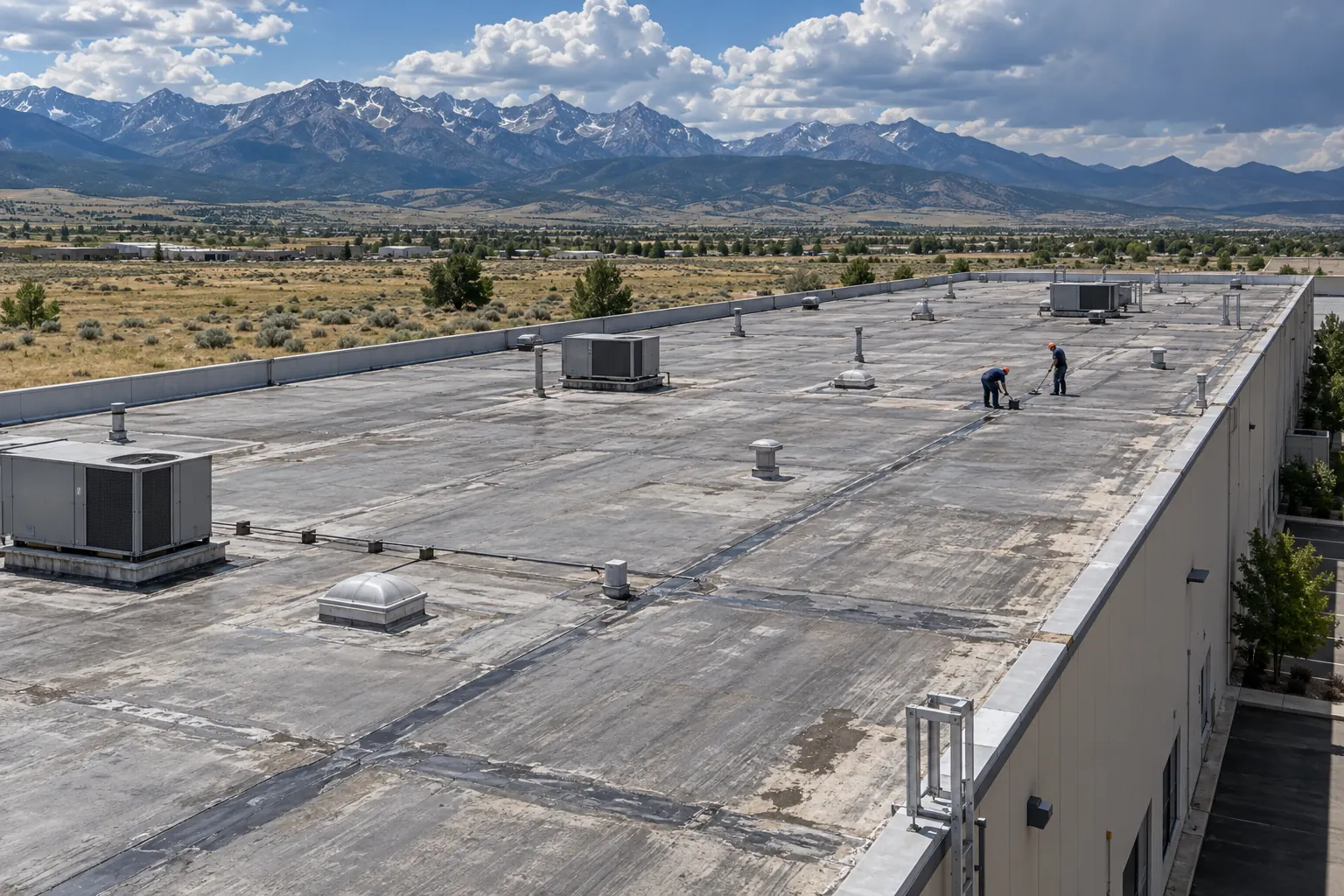
A flat roof with a few failed details is a repair job. One with water spread through the insulation is a replacement plan.
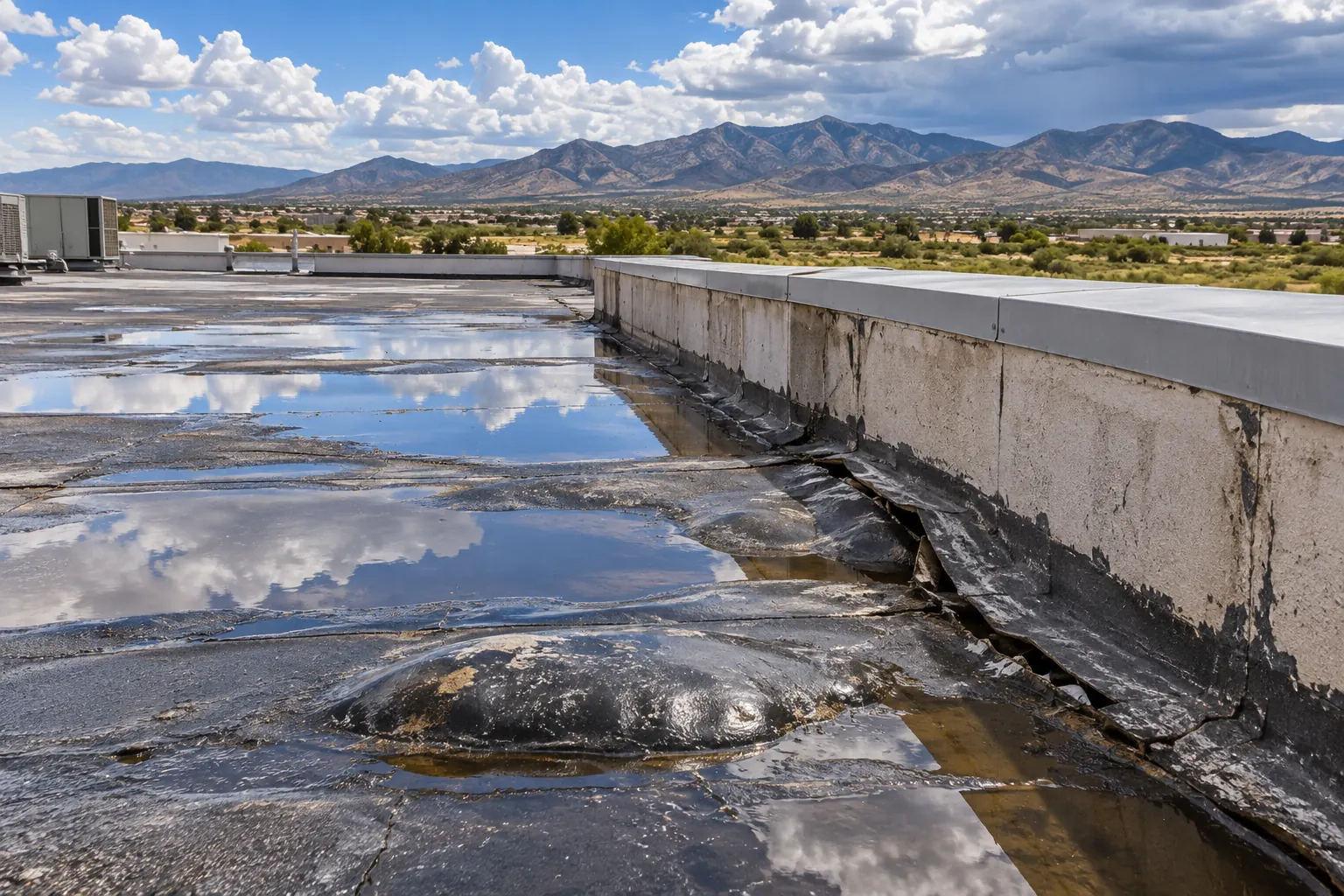
On a low-slope roof, joints, edges, and drains fail long before the open field of membrane wears through.
TPO and PVC laps let go where the original weld was cold or where foot traffic flexed the seam. We probe the full lap, clean it, and weld a matching cover strip.
Rubber roofs leak where seam tape edges curl up after years of sun. The lap is reprimed and covered with new tape plus a cover strip at T-joints.
A loose clamping ring or a bowl packed with debris lets water sit against the membrane. Resetting the ring and clearing the strainer restores the flow path.
Base flashing under rooftop units splits at inside corners first. New flashing is wrapped up the curb and terminated under the counterflashing.
Trapped moisture lifts blisters on built-up and modified roofs, and standing water speeds the damage. Blisters get cut out and patched in kind.
Where the membrane turns up a parapet wall, sun and movement open the top edge. Rebuilt base flashing goes under the coping or a new termination bar.
Each flat roof system has its own repair. These are the ones we make most often on Sierra Vista offices, clinics, and retail roofs.
| Repair | What It Fixes | When It Is Enough |
|---|---|---|
| Seam weld or cover strip | Open laps on TPO and PVC | The rest of the lap probes tight |
| Seam tape and primer | Curling EPDM laps and T-joints | The rubber stays flexible near the lap |
| Cut-out and replace | Wet insulation under a damaged area | Readings show the wet area has an edge |
| Flashing rebuild | Curbs, parapets, walls, and pipe boots | The membrane field around it holds |
| Drain reset | Loose clamping rings and clogged bowls | The drain body and pipe are intact |
Water on a flat roof has nowhere to go but sideways, so small openings grow fast.
Every storm that gets past an open seam soaks more board. A repair done after the first stain cuts out a few boards instead of a whole bay.
Clearing and resetting drains keeps ponding water from sitting on seams for days, which slows wear across the whole field.
High-desert UV hits curb and parapet flashing hardest. Rebuilding it before the hot months stops the cracking that starts monsoon leaks.
Patching a membrane that still bends cleanly gives you seasons, sometimes years, to budget a new roof on your own schedule.
Ponding two days after rain points to a packed drain or a low spot. Call and tell us where the water sits and whether a stain has shown up inside.
Four steps on every membrane roof, from the first reading to the final photo.
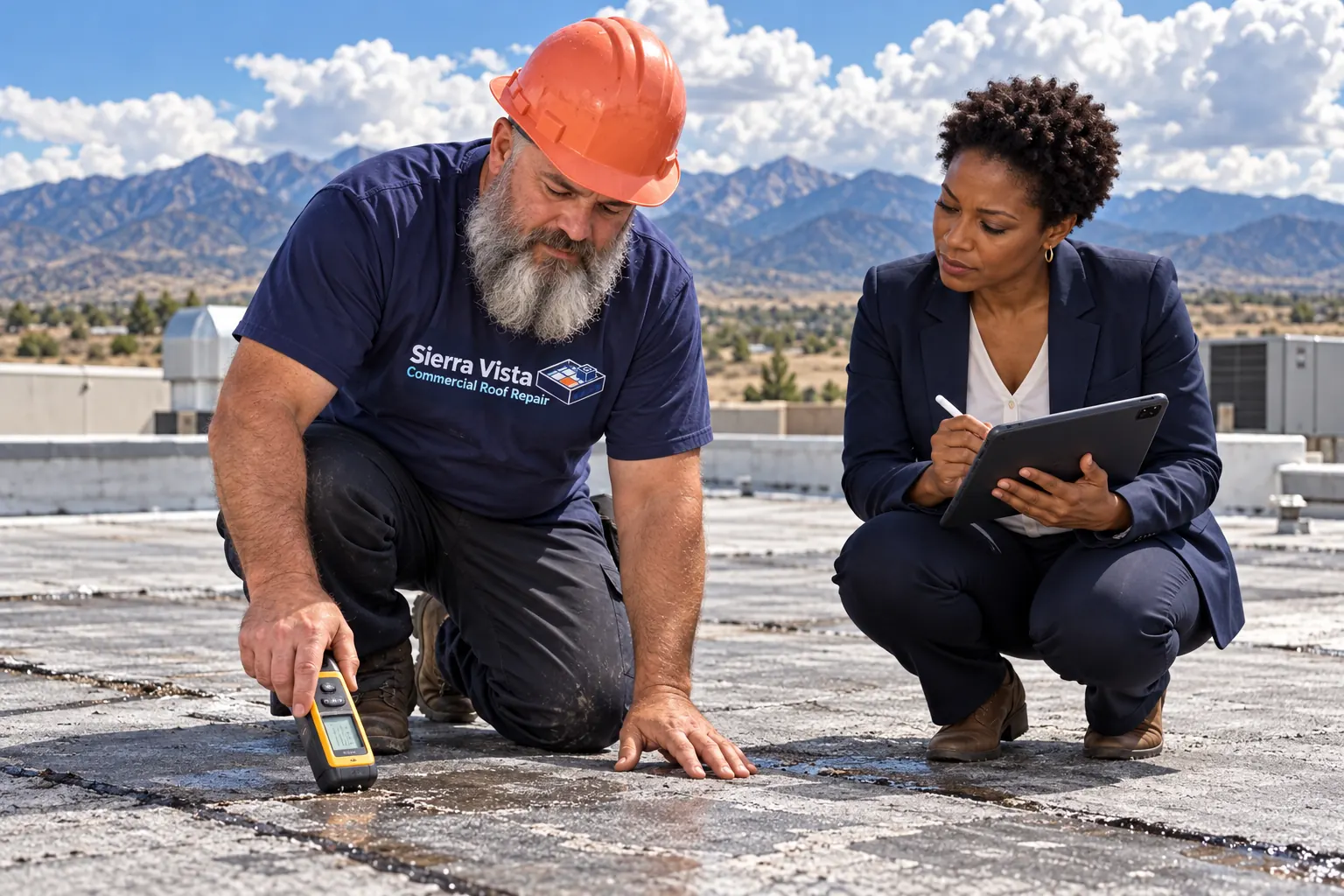
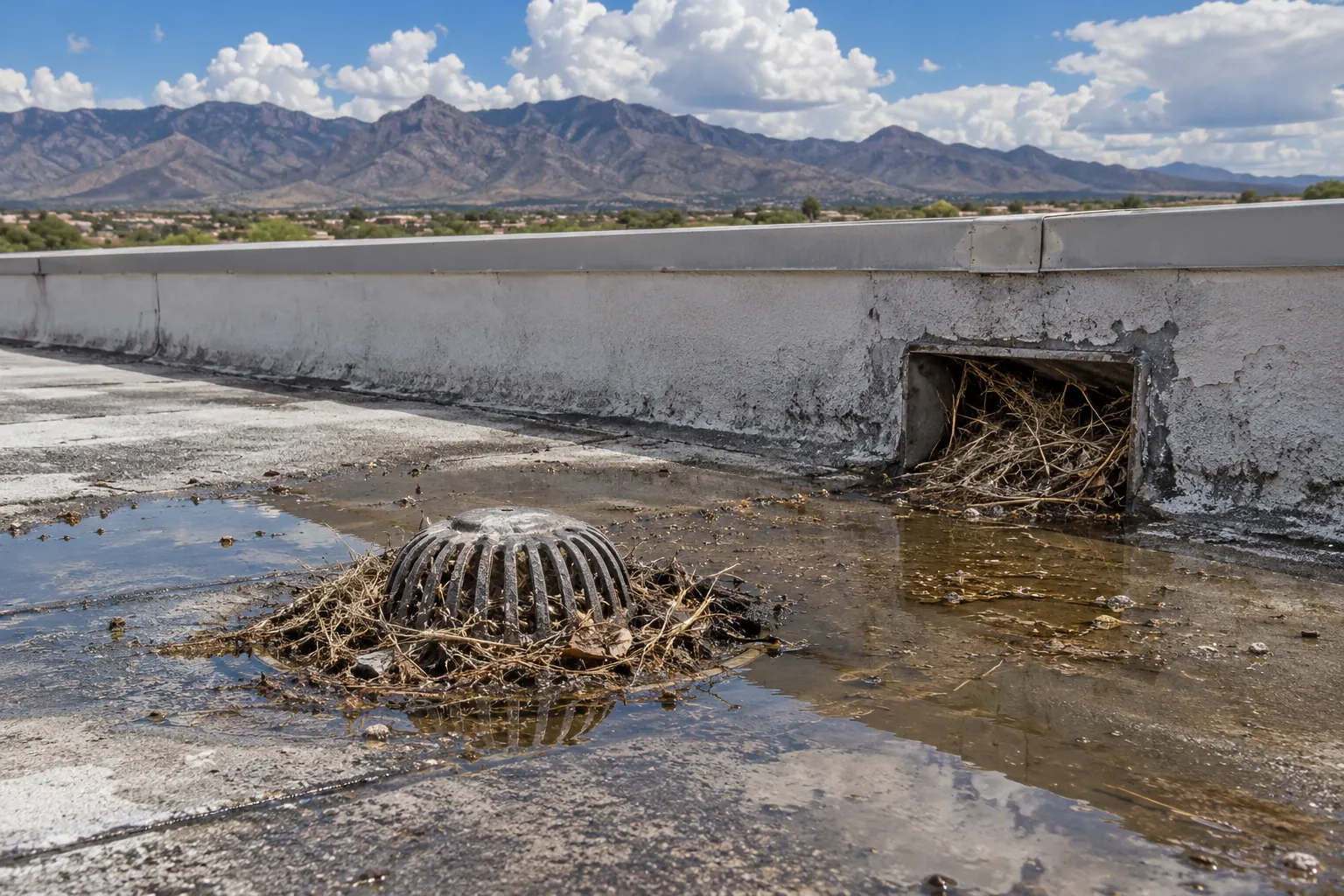
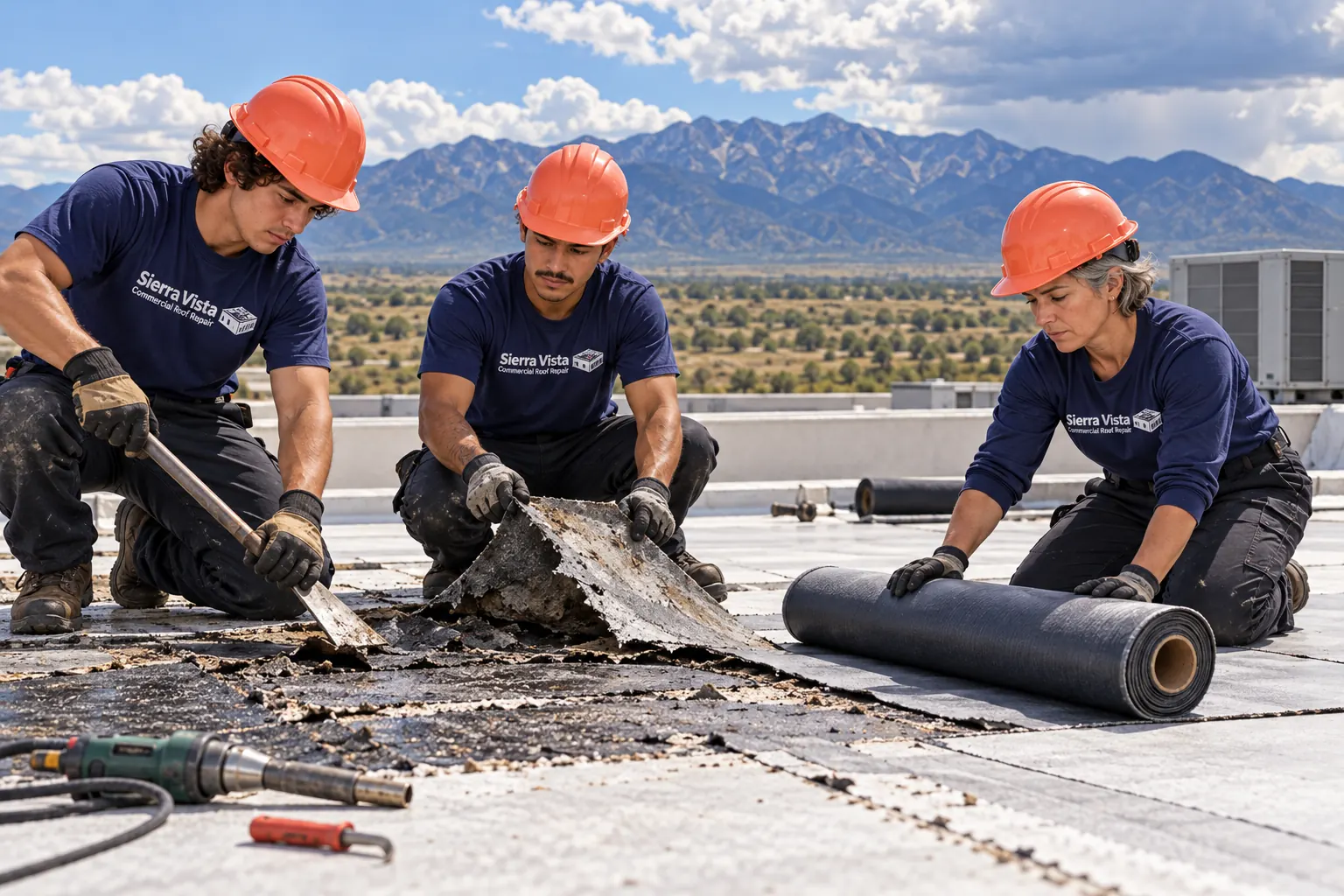
Every lap, curb, drain, and parapet edge on the membrane gets walked and probed, along with the area over the stain. Blisters and ponding rings are marked on a roof sketch. Ponding areas are measured after the last rain.
Moisture readings across the deck show where wet insulation starts and stops. A core cut at the edge of the wet area confirms what the meter shows. Core plugs are patched before the crew leaves the roof.
Laps are welded or taped to match the sheet, wet boards come out and get replaced, and flashing is rebuilt at curbs, walls, and pipe boots. Patches are rounded at the corners so edges do not lift.
Drains get flushed and repaired laps get a water test where it is safe. Photos of each repair go to you with the roof sketch. The sketch notes any seams to watch on the next roof walk.
Flat roofs often need these two as well.
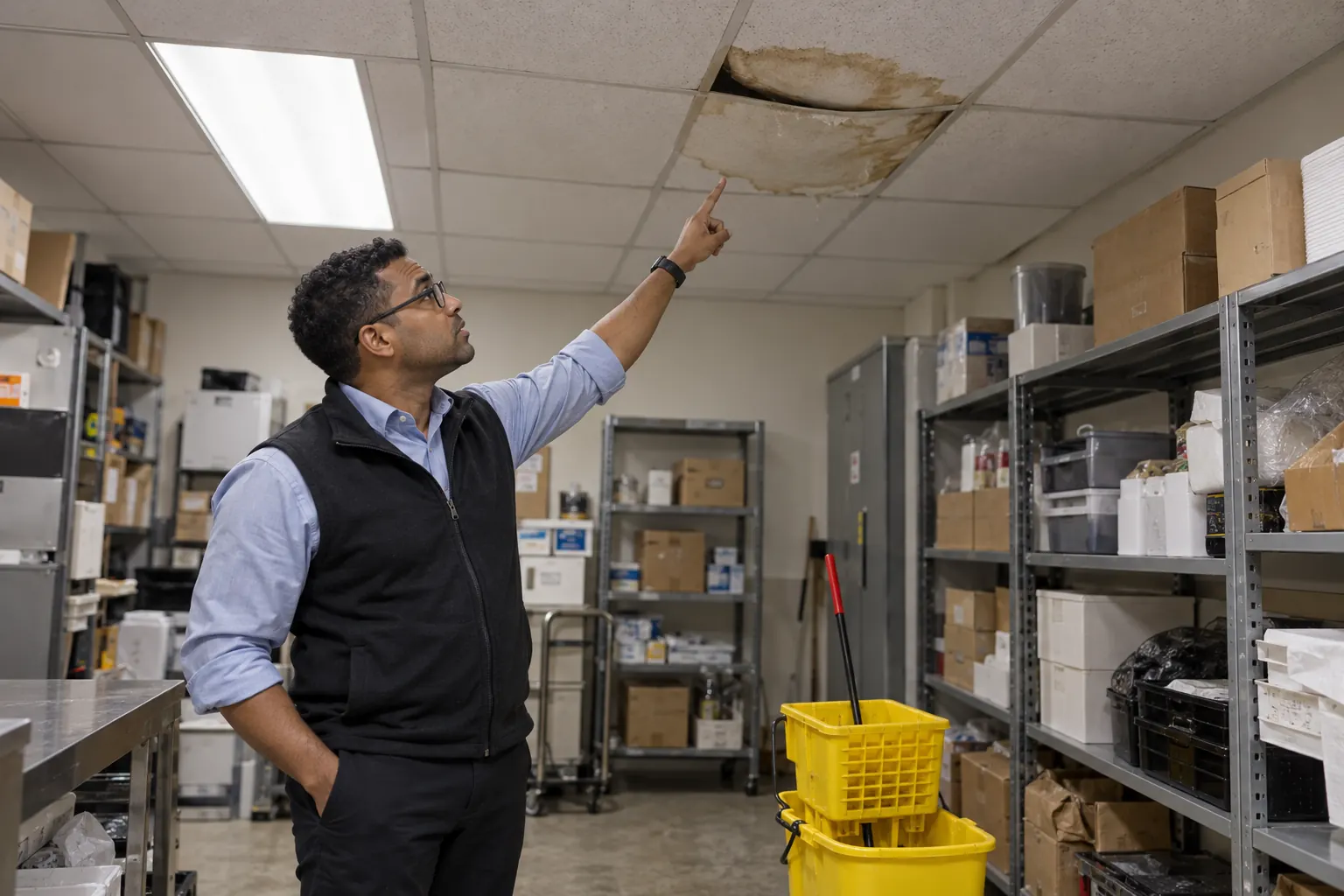
When the stain inside is nowhere near the obvious seam, leak tracing finds the entry point before any patch goes down.
Commercial roof leak repair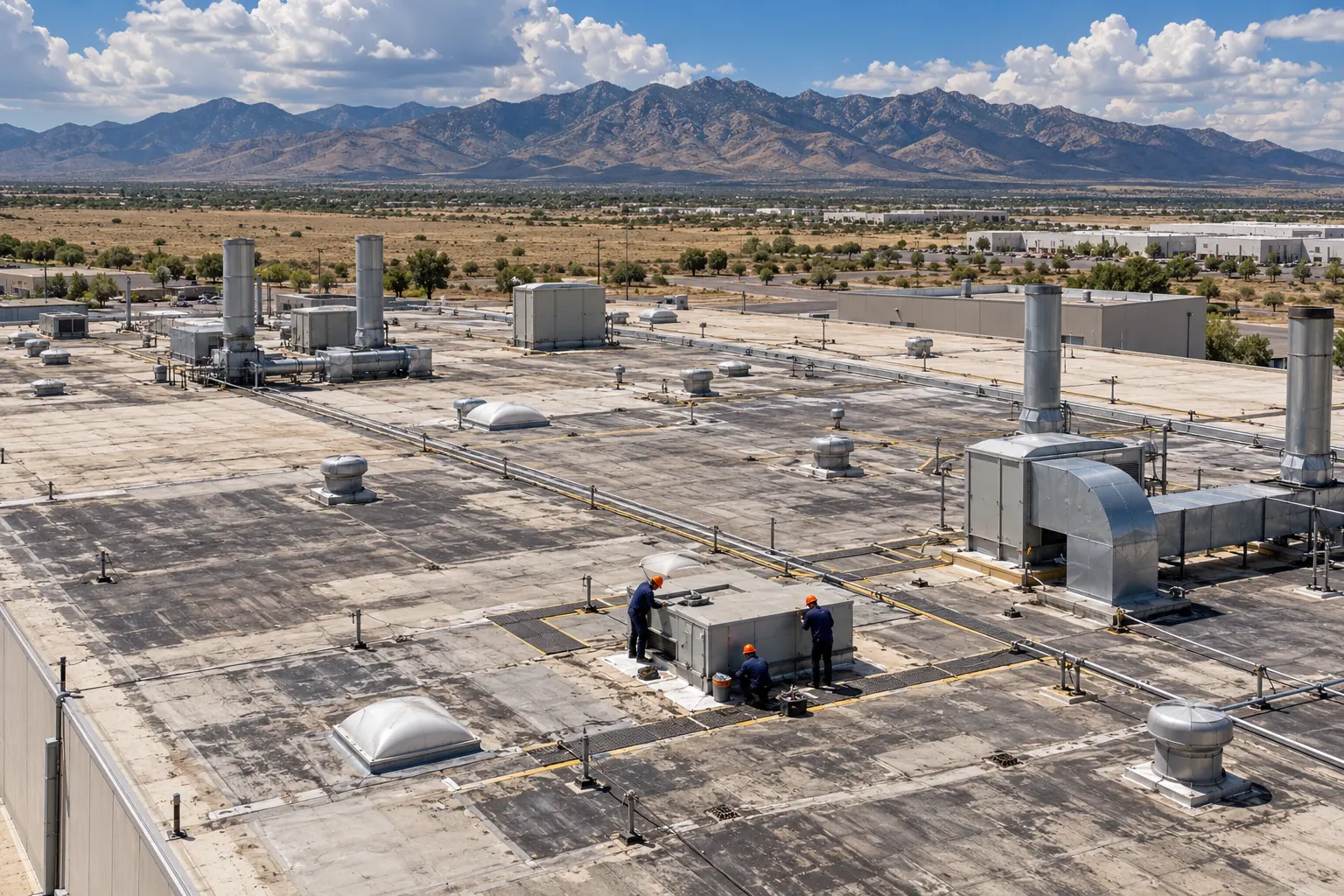
Plant roofs with membrane around stacks and process vents need heat-resistant flashing and work planned around production.
Industrial roof repairAt joints and edges far more often than in the open field. Check seams that have split, drains and scuppers holding debris, curbs under rooftop units, parapet coping and counterflashing, and flashings at walls and pipe boots.
TPO is repaired with TPO. A heat-welded patch fuses with the existing sheet, while tape or mastic from another system loses its bond within a season or two in this sun.
Sometimes the low spot sits away from the drain because the deck has deflected or insulation crushed. Clearing the bowl helps, and a tapered insulation cricket or a new drain location fixes the slope.
Only the boards that read wet. Moisture readings and a core cut set the edge of the wet area, and the replacement stops there so dry insulation stays in place.
Small, firm blisters on a built-up roof can be watched. Blisters that are soft, split, or sitting in ponding water get cut out and patched before they open.
Yes, with the work shifted to mornings when the membrane is cooler and safer to walk. Welding and adhesives behave better before the afternoon heat peaks.
The area around the hole is cleaned and primed, then a cured EPDM patch with rounded corners is pressed down with seam tape. Larger tears get a cover strip over the patch edges.
The clamping ring holds the membrane down inside the drain bowl. When its bolts loosen or the membrane under it tears, water slips past the ring, so the ring is reset with new membrane under it.
Tell us the roof system if you know it, where water is showing, and whether ponding stays after rain.
Leave your name and number and we will call you to talk through the leak or damage.
Rather talk now? Call (623) 310-0177